
Picture your home in 2026. The spaces that feel fresh and intentional today will look tired tomorrow, and that’s exactly why forward-thinking homeowners are already eyeing what’s next. The good news? The upcoming trends blend nostalgia with innovation in ways that feel surprisingly achievable, even on a Canadian budget.
We’re moving away from the stark minimalism that dominated recent years. Instead, expect to see warmth return through layered textures, artisan-made pieces, and colors that evoke natural landscapes. Think rust oranges inspired by prairie sunsets, deep forest greens, and the kind of creamy neutrals you’d find in a heritage cottage. These aren’t just Pinterest-perfect fantasies. They’re livable, functional choices that work beautifully in Canadian homes transitioning between seasons.
The trends taking shape for 2026 also embrace a more personalized approach. Cookie-cutter staging looks are out. Curated collections that tell your story are in. This shift makes DIY projects more relevant than ever because authentic character can’t be mass-produced. Whether you’re adding handcrafted shelving or updating your cold winter decor with textural layers, small changes create big impact.
What makes this moment exciting is the focus on sustainability and longevity. The throwaway culture is losing its grip. People want furniture and finishes that last, pieces with provenance, and spaces designed for real living rather than social media perfection.
Let’s explore what’s coming and how you can start preparing your home now.
Why 2026 Will Transform Canadian Home Aesthetics
Three powerful forces are reshaping how Canadians think about their homes, and 2026 marks the tipping point where these influences fully merge into something distinctly ours.
Climate consciousness isn’t abstract anymore. Record wildfires, flooding, and temperature swings have pushed sustainability from nice-to-have to non-negotiable. Canadian homeowners are questioning everything: where their furniture comes from, how their spaces use energy, whether their decor choices contribute to or combat environmental damage. This shift goes deeper than swapping out light bulbs. We’re rethinking entire rooms around longevity, natural materials, and pieces that won’t end up in landfills after one design cycle.
The hybrid work evolution has permanently altered our relationship with home. After years of Zoom calls from kitchen tables, Canadians have realized we need spaces that genuinely multitask without looking like we live in an office. A room that functions as a workspace at 10 AM, a yoga studio at noon, and a dinner party setting by 7 PM requires thoughtful design, not just a folding screen shoved in the corner. We’ve learned the hard way that our mental health depends on spaces that shift with us throughout the day.
Our multicultural identity is finally showing up in mainstream design. Canadian homes are moving past generic Scandinavian minimalism to celebrate the rich craft traditions of our diverse communities. Indigenous art, South Asian textiles, African patterns, and Asian ceramics aren’t trending because they’re exotic. They’re here because they reflect who actually lives in Canadian homes. This cultural confidence is creating interiors that feel authentically local rather than imported from design magazines shot in Copenhagen lofts.
These three forces intersect in 2026, creating design solutions uniquely suited to Canadian life.
Biophilic Design Gets a Cold-Weather Makeover
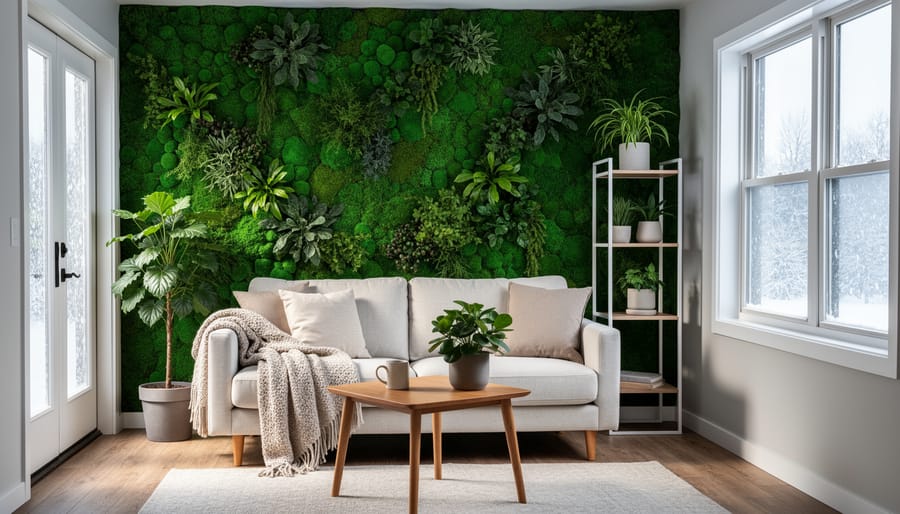
DIY Moss Wall Installation for Small Spaces
Preserved moss walls bring biophilic design into the smallest Canadian spaces without the maintenance headaches of living plants. Unlike fresh greenery that struggles through our dry winter heating, preserved moss stays lush year-round and never needs watering or sunlight.
Start with a shallow wooden frame or canvas (8×10 inches works well for first-timers). You’ll find preserved reindeer moss at craft stores like Michaels for $15-20 per bag, which covers about one square foot. Grab a hot glue gun, tacky craft glue, and optionally, preserved sheet moss for textural contrast.
- Clean your frame backing and lay it flat on newspaper to protect your work surface.
- Fluff the reindeer moss gently to restore its natural volume after packaging compression.
- Apply tacky glue in small sections (working about 4 square inches at a time prevents drying).
- Press moss clusters firmly into the glue, varying the density for an organic look rather than uniform coverage.
- Fill gaps with smaller moss pieces using hot glue for quick adhesion on touch-ups.
- Let cure for 24 hours before hanging vertically.
The result looks stunning above a desk or bed, adding that coveted nature connection without stealing precious floor space. Preserved moss stays soft to the touch and naturally absorbs sound, making it ideal for condo living where noise carries. Skip the spray bottle entirely, humidity actually degrades preserved moss. Just dust it occasionally with a soft brush and keep it away from direct sunlight, which can fade the color over time.
Warm Minimalism: The Cozy Response to Sterile Spaces
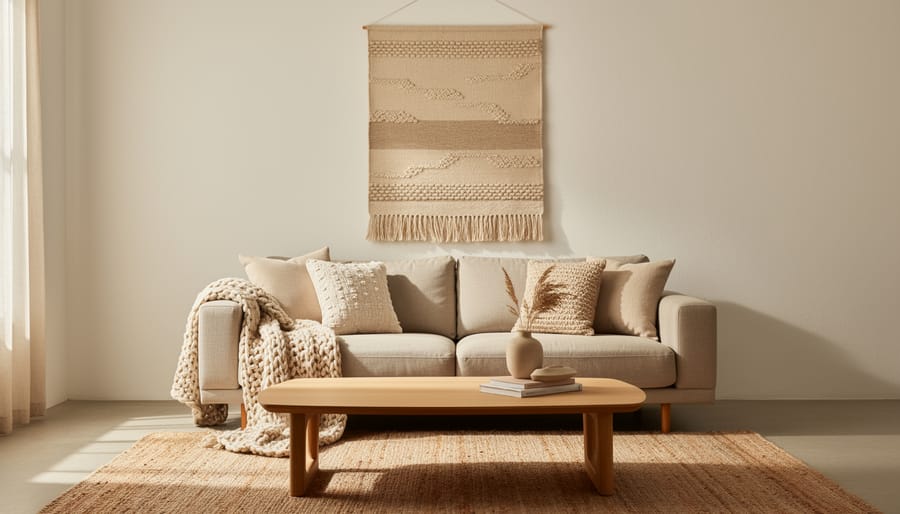
Create Your Own Textured Wall Hangings
Grab three wooden dowels, a pair of scissors, and about 200 yards of cotton rope from Michaels or your local Dollarama. That’s all you need to create a textured wall hanging that brings warmth to any minimalist space. Start with a 24-inch dowel as your base, cut thirty 8-foot lengths of rope, and fold each strand in half before looping it onto the dowel using a lark’s head knot.
For a simple macramé design, divide your strands into groups of four and tie square knots down the length, leaving the bottom third unraveled for a fringed effect. If you prefer a woven look, weave horizontal strands through the vertical ones in an over-under pattern, pulling tighter in some areas for texture variation. The beauty of these pieces is their imperfection, irregular spacing and mixed knot patterns create visual interest that feels handmade rather than mass-produced.
Once you’ve reached your desired length (typically 36 to 48 inches works well), trim the bottom into a V-shshape or leave it blunt. These hangings look stunning above beds, on empty walls, or can even decorate a brick wall in lofts and older homes. The entire project costs under $25 and takes two to three hours, making it perfect for a weekend afternoon when you’re craving a creative outlet that transforms your space immediately.
Multifunctional Spaces That Actually Work
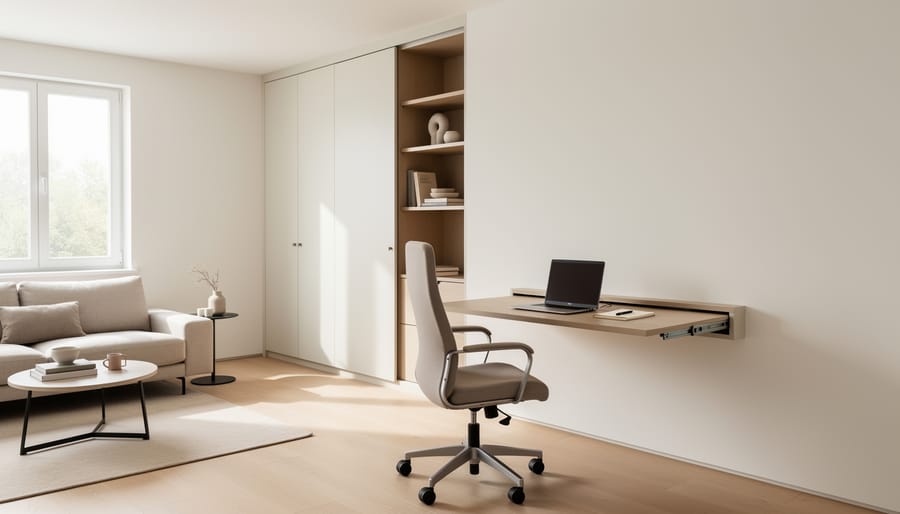
Build a Murphy Desk for Tight Quarters
A fold-down desk solves the space crunch without sacrificing functionality. This project takes about four hours and costs roughly $80 in materials from Home Depot or Rona, creating a workspace that disappears when you’re done working.
You’ll need a piece of ¾-inch plywood (24 inches deep by 36 inches wide works for most people), two heavy-duty folding shelf brackets rated for at least 150 pounds, wood screws, sandpaper, and your choice of stain or paint. The plywood forms your desk surface, so pick a piece with minimal knots if you’re staining it.
- Sand the plywood smooth, paying extra attention to edges where your arms will rest. Wipe clean with a damp cloth.
- Apply your finish of choice. Two coats of water-based polyurethane in satin gives a durable, modern look that dries quickly in dry Canadian winter air.
- Locate wall studs at your desired height (30 inches from the floor is standard desk height). Mark where the brackets will mount.
- Attach the folding brackets to the wall first, ensuring they’re level with each other. Use 3-inch wood screws driven into studs for solid support.
- With the brackets in the down position, center your desk surface on top and secure it from underneath using the screws provided with your brackets.
- Test the fold mechanism several times before loading it with your laptop and office supplies.
The beauty of this setup is its adaptability. Mount it in your bedroom for a morning work session, then fold it up to reclaim floor space by evening. Add a small cork board or magnetic strip to the wall above for notes and reminders. Some people mount a shallow shelf underneath the folded desk to hold pens and charging cables, keeping everything organized yet hidden. This single project transforms how a small Canadian home functions, giving you dedicated work space without permanently sacrificing precious square footage.
Global Craft Revival: Celebrating Cultural Heritage
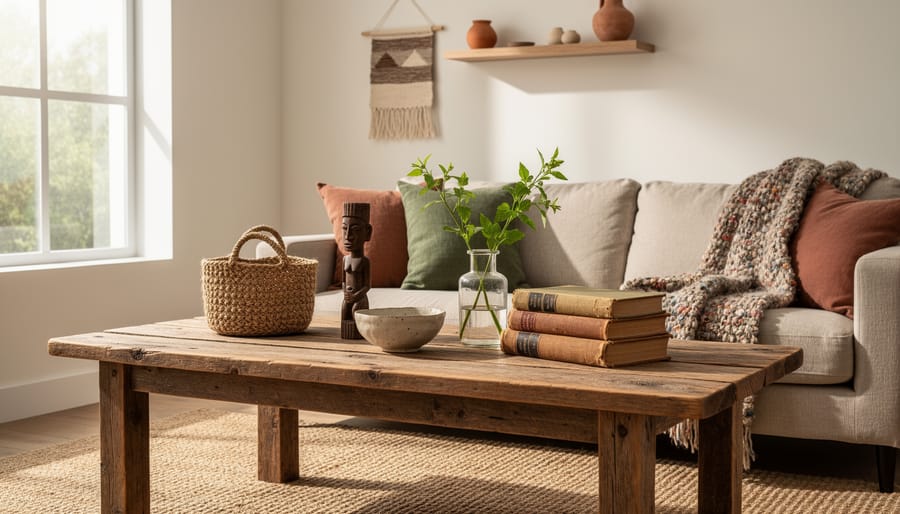
Canadian homes are becoming living galleries of global craftsmanship, and 2026 will see this movement reach new heights. From Indigenous beadwork to West African mudcloth, from Japanese ceramics to Latin American textiles, homeowners across Canada are curating spaces that honour the rich cultural tapestry of our communities. This isn’t about surface-level appropriation or buying mass-produced “ethnic” decor from big-box stores. It’s about seeking out authentic handcrafted pieces, supporting artisan communities, and telling stories through objects that carry real cultural significance.
Walk into homes in Toronto, Vancouver, or Montreal, and you’ll notice hand-knotted Moroccan rugs anchoring living rooms, carved wooden masks from family heritage displayed as art, and ceramic pieces from local immigrant artisans filling shelves. The trend reflects a deeper shift: Canadians want their homes to feel personally meaningful rather than catalogue-perfect. They’re shopping at cultural festivals, commissioning pieces from neighbourhood craftspeople, and preserving family heirlooms instead of hiding them away.
What makes this particularly exciting is how these global elements layer beautifully with contemporary Canadian design. A sleek, minimalist condo becomes warm and storied with the addition of a handwoven basket collection. A suburban family room gains depth through vintage embroidered textiles draped over modern furniture. Even those drawn to easy maximalist DIYs can blend patterns and textures from multiple traditions without the space feeling chaotic.
The key is intentionality. Choose pieces that resonate with your own heritage, travels, or genuine appreciation, and give them space to breathe rather than crowding every surface.
Sustainable Materials Take Center Stage
Transform Thrifted Finds into Statement Pieces
Thrift stores like Value Village, Salvation Army, and Facebook Marketplace across Canada overflow with solid wood furniture waiting for a second life. That veneer dresser for $40 or vintage side table for $25 can become a statement piece that looks custom-made once you know a few simple refinishing techniques.
Start by assessing the bones. Look for real wood construction, dovetail joints, and sturdy frames. Surface scratches and dated finishes are fine, those come off. Avoid pieces with structural damage or particle board that’s water-damaged and swollen.
The basic refinishing process works for most wooden pieces. Strip the old finish with a citrus-based remover (safer for indoor use), sand with 120-grit then 220-grit paper, and apply your chosen finish. For 2026’s aesthetic, skip heavy stains. Instead, try a natural oil finish that shows the wood grain, or paint in warm terracotta, sage green, or soft clay tones that align with current earth-tone palettes.
Swap outdated hardware for modern pulls from Home Hardware or online Canadian retailers. Brass and matte black finishes instantly update any piece. For extra personality, add cane webbing to cabinet doors (kits available at Lee Valley) or stencil geometric patterns on drawer fronts using painter’s tape and sample-size paint.
Budget about $50 for supplies per piece, plus a weekend afternoon. You’ll end up with furniture that costs one-third of retail while looking distinctly yours, exactly what sustainable, personalized 2026 design celebrates.
Color Forecast: Earthy Tones Meet Bold Accents
Canadian winters demand color strategies that do more than look good, they need to energize spaces during months of grey skies and short days. The 2026 palette reflects this reality, anchoring rooms in warm, earthy bases while strategically deploying saturated accents that lift spirits without overwhelming.
Think terracotta, warm taupe, sage green, and soft clay as your foundation colors. These tones reference natural materials and create cocoon-like comfort during heating season. They’re forgiving with Canadian light conditions, looking equally good under overcast skies and bright snow reflection.
The shift happens with accent colors. Rather than the dusty pastels of recent years, 2026 brings in jewel tones and saturated hues: deep teal, burnt orange, rich plum, and golden mustard. These aren’t timid touches. They appear as painted accent walls, large upholstered pieces, or bold textile choices that command attention.
The combination works because contrast creates visual interest our brains crave during long winters. A terracotta living room gains energy from teal throw pillows. Sage walls pop against burnt orange curtains. The earthy base keeps spaces grounded while bold accents provide the dopamine hit we need when stepping inside from another grey February day.
Start with one accent color in a single room. Test it through a full season before committing to more. Paint is cheap; regret isn’t.
Your 2026 Decor Action Plan
Start small and strategic. Pick one trend that genuinely excites you rather than trying to overhaul your entire home at once. A moss wall installation or textured wall hanging can transform a room in a weekend without requiring professional help or expensive tools.
Create a three-month rolling plan. Month one, tackle a simple DIY project like refinishing a thrift store find or adding biophilic elements through plants and natural textures. Month two, address color through affordable updates like throw pillows, curtains, or a feature wall. Month three, work on functionality with a space-saving solution like a Murphy desk or room divider.
Shop your own home first. That unused corner can become a cozy reading nook with warm minimalist styling. Those dated picture frames can be spray-painted to match your new earthy palette. Before buying anything new, audit what you already own and consider how it might fit into your updated vision.
Budget strategically using proven finance hacks like the 60-30-10 rule: spend 60% on foundational pieces that last, 30% on accent items with personality, and 10% on trendy experimental pieces you can swap out easily. Set aside a monthly decor fund, even if it’s just $50, to avoid the temptation of impulse purchases that derail your overall plan.
Track your progress with before-and-after photos. They’ll keep you motivated during the messy middle stages and help you see how far you’ve come with minimal investment.
The beauty of 2026’s home decor trends lies in their flexibility. You don’t need to overhaul your entire space or drain your savings account to create a home that feels current and distinctly yours. Start small. Pick one DIY project from this guide that speaks to you, whether it’s a simple moss wall panel or refinishing a thrifted chair in warm, earthy tones.
These trends aren’t about following rigid rules. They’re about responding to how we actually live in Canadian homes today: working from our dining tables, craving natural elements during February’s grey days, and celebrating the diverse cultural influences that make our spaces unique. The moss wall you hang this weekend might inspire you to tackle that Murphy desk next month. That thrifted sideboard could become the foundation for an entire room transformation.
Great design has always been about intention, not expense. The 2026 trends simply give you permission to blend function with beauty, sustainability with style, and global inspiration with deeply personal touches. Your home should tell your story. These projects are just the beginning of that narrative. What will you create first?