
Handcrafted home decor transforms ordinary rooms into spaces that tell your story, combining artisan-made pieces with personal style to create interiors that feel genuinely one-of-a-kind. Unlike mass-produced alternatives, handcrafted items carry the marks of their makers: slight variations in glaze on a ceramic vase, the texture of hand-woven textiles, or the grain patterns in turned wooden bowls. These pieces bring warmth and character that factory-made decor simply can’t replicate.
The appeal goes beyond aesthetics. When you choose handcrafted decor, you’re supporting individual artisans and small workshops that preserve traditional techniques while experimenting with contemporary design. The global handicrafts market reached $740.0 billion in 2024, reflecting growing consumer interest in authenticity and craftsmanship. As the broader home decor market continues its expansion to $716.53 billion in 2026, handcrafted pieces are carving out a meaningful niche for homeowners who want their spaces to feel less catalog-perfect and more lived-in.
Starting a handcrafted collection doesn’t require a premium budget. Many artisans offer accessible price points, and you can blend handmade focal pieces with existing furnishings. Local craft fairs, online marketplaces, and artisan cooperatives provide direct access to makers, often with the opportunity to commission custom work or learn the stories behind each piece.
Whether you’re drawn to rustic pottery, hand-dyed linens, or carved wooden accents, incorporating handcrafted elements helps you build a home that reflects your values and visual preferences rather than following trends that fade within seasons.
The Rise of Handcrafted Pieces in a Mass-Market World
The $716.53 billion global home decor market has room for everything, from IKEA flatpacks to luxury designer showpieces. Yet somewhere between mass production and high-end galleries, handcrafted decor is carving out its own expanding territory. This isn’t a passing fad. It’s a direct response to how people now think about what they bring into their homes.
Buyers today ask different questions than they did five years ago. They want to know who made an item, how it was produced, and whether it supports practices they believe in. Mass-market decor answers the need for speed and cost efficiency. Handcrafted pieces answer the need for meaning. When you place a hand-thrown ceramic bowl on your shelf, you’re not just filling space. You’re choosing an object with visible thumbprints in the clay, slight variations in glaze, a maker’s signature on the base.
This shift aligns with the broader traditional comeback gaining momentum across interior design. Consumers are rejecting cookie-cutter sameness in favor of items that feel rooted in craft traditions and human skill. The global home decor growth reflects this appetite, with handmade goods representing a substantial and growing segment.
Handcrafted decor also taps into sustainability concerns. Artisans typically work with responsibly sourced materials, produce in small batches, and avoid the environmental toll of factory-scale manufacturing. Supporting independent makers keeps money circulating in local economies rather than disappearing into corporate balance sheets. These aren’t abstract values anymore. They influence purchase decisions daily, especially among younger homeowners building their first spaces.
What separates handcrafted from mass-tier products isn’t just price. It’s the absence of uniformity. No two handwoven baskets match exactly. Wood grain patterns differ. Pottery emerges slightly asymmetrical. These irregularities, once considered defects, now signal authenticity in a world drowning in identical reproductions.
What Makes Home Decor ‘Handcrafted’
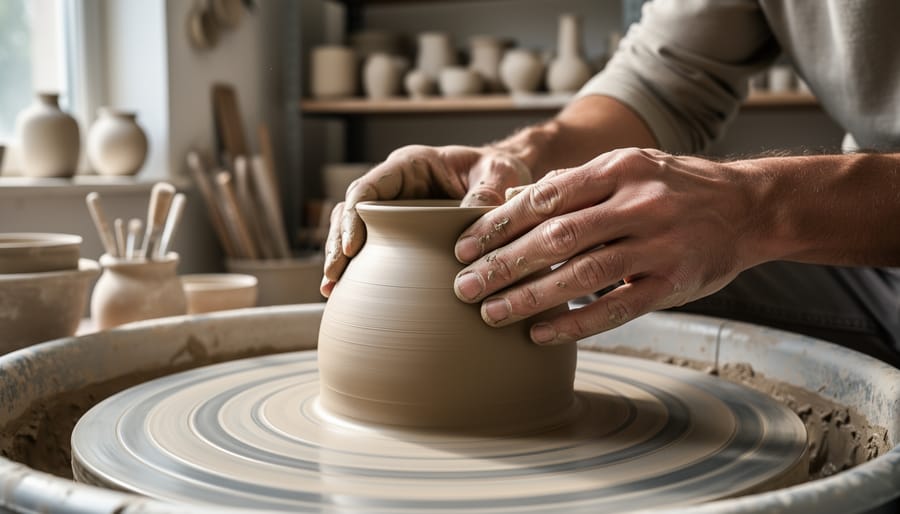
Handcrafted home decor refers to pieces created primarily by hand, where an artisan’s skill and personal touch shape the final product. Unlike factory-made items stamped out by machines in identical batches, handcrafted pieces carry the marks of their making: slight variations in glaze thickness on a ceramic bowl, the organic rhythm of hand-thrown pottery, or the unique grain patterns selected for a carved wooden tray.
The distinction lies in the degree of human involvement. Fully handcrafted items undergo minimal mechanization. A potter centers clay on a wheel, shapes it with their hands, trims excess material with hand tools, then fires and glazes each piece individually. Compare this to slip-cast ceramics, where liquid clay pours into molds and machines handle most processing. Semi-handmade falls between these extremes, perhaps combining machine-cut components with hand-finished details or assembly.
True handcrafted work demands substantial time and developed skill. A hand-woven rug might require weeks or months at the loom, with the maker controlling every thread’s tension and placement. Woodworkers spend years learning to read grain direction, select joinery methods, and finish surfaces without power sanders. Metalworkers develop the physical strength and precision to forge, hammer, and weld pieces into functional art.
- Pottery and Ceramics
- Clay formed on a wheel or by hand-building techniques like coiling or slab construction, then fired in a kiln. Each piece shows the maker’s hand movements and deliberate imperfections.
- Weaving
- Interlacing threads or fibers on a loom or frame to create textiles, rugs, or wall hangings. Pattern complexity and fiber choice determine the time investment.
- Woodworking
- Shaping solid wood through sawing, carving, turning, and joining techniques. Artisans highlight natural grain patterns and wood characteristics in each piece.
- Metalwork
- Forging, welding, or casting metals into decorative or functional objects. Hand-finishing techniques create distinctive surface textures impossible to replicate mechanically.
The materials themselves often come from natural or reclaimed sources: local hardwoods, plant-based fibers, clay dug from specific regions, or salvaged metals. This connection to raw materials adds another layer of authenticity. When you hold a handcrafted item, you’re experiencing not just the maker’s skill but their material choices, their process decisions, and the hours invested in a single piece.
Types of Handcrafted Decor That Transform Your Home
Textiles and Woven Art
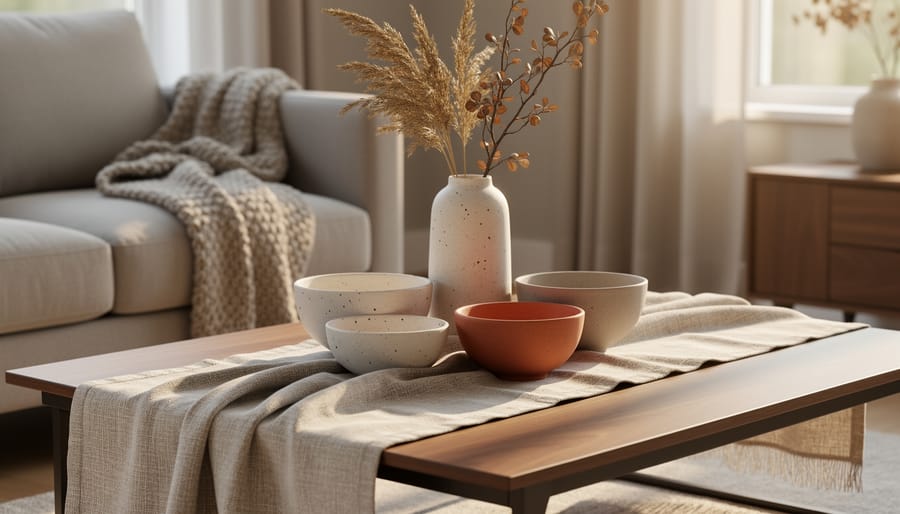
Handwoven textiles bring an unmistakable warmth to any room, transforming bare walls and hard floors into inviting, layered spaces. A handwoven rug anchors a seating area with rich texture and subtle irregularities that machine-made versions can’t replicate, each knot and color variation tells the story of the maker’s hands at work.
Macramé wall hangings soften blank expanses with their organic drape and tactile appeal, while quilts introduce pattern and coziness whether draped over furniture or displayed as art. Tapestries add visual weight and narrative depth, often incorporating traditional motifs passed down through generations of weavers.
These pieces excel at balancing minimalist or industrial interiors that risk feeling stark. Layer a chunky woven throw over a leather sofa, hang a macramé piece beside sleek shelving, or position a handwoven runner along a concrete hallway, the contrast highlights the craftsmanship and creates a lived-in, intentional feel.
Pottery and Ceramics
Handmade pottery and ceramics bring an organic irregularity that machine-made pieces can’t replicate. A hand-thrown vase might show subtle ridges from the potter’s fingers, while a glazed bowl reveals variations in color depth and texture that make it one of a kind. These imperfections aren’t flaws, they’re proof of human touch.
Planters in raw terracotta or smooth stoneware add earthy warmth to any room, whether they hold succulents on a windowsill or trailing plants on a shelf. Decorative plates work as wall art or table centerpieces, their hand-painted patterns or carved textures catching light differently throughout the day. Each ceramic piece doubles as functional object and sculptural accent, grounding a space with tactile, lived-in character that mass-produced decor rarely achieves.
Wood and Metal Creations
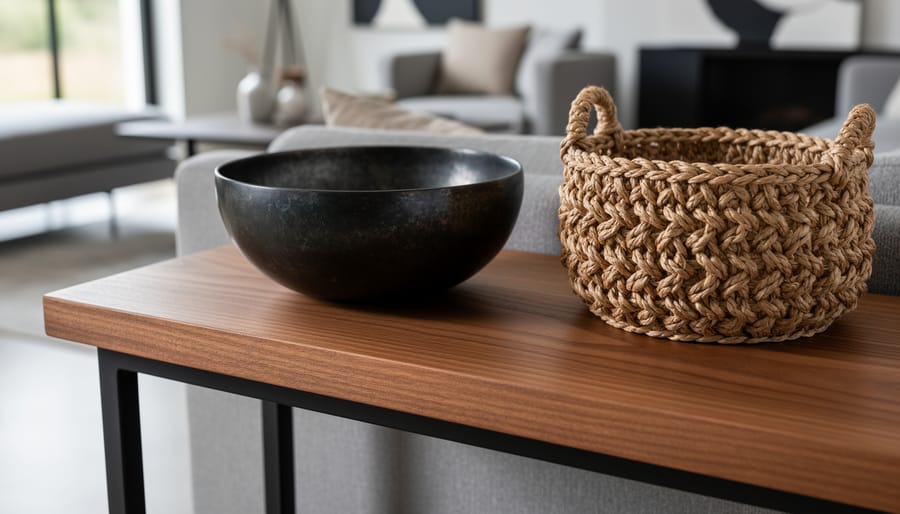
Wood and metal bring weight and permanence to a room in ways softer materials can’t. A hand-carved wooden bowl on a console table or mantel becomes a statement piece, the grain patterns and chisel marks visible up close reveal hours of skilled work. Look for turned wooden vessels, sculptural driftwood pieces, or geometric wall art that celebrates the natural variation in the timber.
Metal work offers similar impact. Hand-forged iron candle holders develop character as they age, while copper or brass accents catch light throughout the day. Furniture hardware, drawer pulls, shelf brackets, coat hooks, transforms from functional necessity to decorative detail when made by a blacksmith rather than stamped in a factory.
Architectural salvage pieces like reclaimed wooden corbels or vintage metal registers add historical depth to modern spaces without requiring full renovations.
Fiber Arts and Paper Crafts
Fiber arts and paper crafts bring unexpected texture and dimension to walls and corners often left bare. Embroidered wall art ranges from simple botanical motifs stitched onto linen to elaborate threadwork tapestries that capture entire landscapes, each stitch adding depth you can’t achieve with paint. Handmade paper lampshades filter light beautifully, casting soft patterns across rooms, many feature pressed flowers, natural fibers, or delicate cutwork that transforms functional lighting into sculptural art.
Origami installations create dramatic focal points with minimal material: folded paper cranes suspended from ceiling corners, geometric paper sculptures arranged on shelves, or layered paper flowers mounted in shadow boxes. Natural fiber baskets serve double duty as storage and decor, woven from seagrass, rattan, or jute in patterns that vary by region and technique. Stack them beside furniture, hang them as planters, or group varied sizes on open shelving to add organic warmth while keeping spaces tidy.
How Handcrafted Decor Fits Every Budget
The assumption that handcrafted means breaking the bank keeps many people from exploring artisan-made pieces. In reality, handcrafted decor spans every price tier in the home decor market, from mass/value to premium and luxury segments, making it accessible regardless of your budget.
At the mass/value level, you’ll find smaller handcrafted items like hand-painted ceramic coasters, woven placemats, or small macramé plant hangers, typically under $50. These pieces deliver authentic craftsmanship without significant investment. The premium tier offers mid-range handcrafted furniture accents, larger pottery pieces, and substantial woven wall art, generally ranging from $100 to $500. Luxury handcrafted decor includes bespoke furniture, large-scale sculptures, and commissioned art pieces that can reach several thousand dollars.
Start with one meaningful piece rather than trying to transform an entire room at once. A handwoven throw pillow or artisan-made bowl introduces handcrafted character without overwhelming your space or wallet. You can layer additional pieces over time as your budget allows.
Consider mixing handcrafted accents with your existing decor. A single hand-thrown vase on a mass-produced shelf creates visual interest and tells a story. Pairing affordable redesign ideas with strategic handcrafted purchases maximizes impact while controlling costs.
Look for emerging makers whose prices reflect their developing reputations rather than established names. Seasonal craft markets and maker platforms often feature talented artisans offering quality work at accessible price points. The key isn’t spending more, it’s choosing pieces that genuinely resonate with you and contribute to the specific atmosphere you’re creating at home.
Styling Your Space with Handcrafted Elements
Start with a single statement piece rather than scattering multiple handcrafted items throughout a room. A large ceramic vase on a console table, a handwoven wall hanging above the sofa, or a carved wooden coffee table can anchor your space while letting other furnishings stay simple. This approach prevents visual clutter and allows each handcrafted element to shine without competing for attention.
Handcrafted pieces blend beautifully with warm modern decor mid-century furnishings, and even minimalist spaces. The key is balancing the organic, tactile quality of handmade objects with cleaner-lined furniture. A sleek sofa looks more inviting when paired with a chunky knit throw or hand-dyed pillows. Glass and metal surfaces gain warmth when you add pottery or woven baskets nearby.
Pay attention to texture contrast rather than matching everything perfectly. Smooth ceramic beside rough linen creates visual interest. Glossy finishes next to matte handcrafted wood add depth. Limit your color palette to three main tones so varied textures don’t overwhelm the eye.
Group smaller handcrafted items in odd numbers on shelves or mantels. Three pottery pieces of varying heights look intentional; four can feel awkward. Leave breathing room around each grouping so the eye can rest and appreciate individual details. Negative space matters as much as the objects themselves when showcasing handmade character.
DIY Handcrafted Decor Projects to Try
Creating your own handcrafted pieces lets you infuse personality into your space without the premium price tag of artisan work. These projects require minimal investment and basic skills, making them perfect starting points for anyone new to easy DIY decor.
Beginner: Hand-Painted Terra Cotta Planters
Transform plain terra cotta pots with acrylic paint in geometric patterns or organic designs. The porous surface accepts paint beautifully, and imperfections add character. Materials cost under $15, and the project takes about an hour including drying time.
Beginner: Macramé Plant Hangers
Master three basic knots, square knot, spiral knot, and lark’s head, and you can create elegant plant hangers in an afternoon. Cotton rope (about $12 for enough cord to make three hangers) works best for beginners because it shows knot definition clearly and forgives mistakes.
Intermediate: Wooden Bead Garlands
String natural wooden beads onto jute twine, varying sizes and adding painted accents for visual interest. These versatile garlands work draped across mantels, wrapped around vases, or coiled in decorative bowls. A bag of mixed beads costs $8-10 and yields multiple garlands.
Intermediate: Embroidery Hoop Wall Art
Stretch fabric remnants or vintage linens across embroidery hoops, then add simple hand-stitched designs or leave the textile as the focal point. This project lets you experiment with texture and pattern without committing to large-scale needlework.
Each project teaches fundamental handcraft techniques you can apply to more ambitious work later. Start with materials you already have or can source inexpensively from craft stores, then upgrade to specialty supplies as your skills develop.
Where to Find Authentic Handcrafted Pieces
Finding authentic handcrafted pieces requires knowing where to look and how to verify what you’re buying. The good news is that genuine artisan work is more accessible than ever, whether you prefer shopping in person or online.
Local artisan markets and craft fairs remain one of the best places to discover handcrafted decor. These venues let you meet makers directly, see their techniques firsthand, and ask about their process. You’ll often find pieces at various price points, from small ceramic bowls to larger woven textiles. Many cities host seasonal markets or year-round maker spaces where independent craftspeople sell their work.
Online marketplaces dedicated to independent makers have expanded access to handcrafted decor significantly. These platforms connect you with artisans worldwide, though you’ll need to do more homework to verify authenticity. Look for detailed maker profiles, clear descriptions of materials and techniques, and photos showing the creation process.
Gallery shops and studio visits offer a more curated experience. Many artisans welcome visitors to their working studios by appointment, giving you insight into their craft while you shop. Galleries that focus on functional art typically vet their makers carefully, though prices tend toward the premium and luxury tiers.
Before you buy, ask questions to ensure you’re getting genuine handcrafted work:
- Who made this piece, and what techniques did they use?
- What materials are involved, and where do they come from?
- How long does a typical piece take to create?
- Can you describe your training or background in this craft?
- Is this entirely handmade, or does it combine hand and machine work?
Genuine makers will answer enthusiastically and specifically. If answers seem vague or rehearsed, the piece may not be as handcrafted as advertised. Trust your instincts and don’t hesitate to walk away if something feels off.
Bringing handcrafted decor into your home isn’t about filling every surface or committing to a complete overhaul. It’s about choosing pieces that resonate with you, objects that spark something when you see them. A single handwoven basket, a ceramic bowl shaped by someone’s hands, or a carved wooden frame can shift the entire feeling of a room. These aren’t just decorative objects, they’re reminders that thoughtfulness and care went into creating something meant to last.
The beauty of handcrafted pieces is their accessibility. Whether you’re working with a tight budget or have room to invest in statement pieces, there’s a place for artisan-made decor in your home. Start with one item that speaks to you. Display it where you’ll see it daily. Over time, you’ll build a collection that reflects your taste and tells your story, not a designer’s vision or a showroom’s layout.
Each handcrafted object carries the mark of its maker, the slight variations, the visible brushstrokes, the grain patterns that make it unlike any other. That individuality is what transforms a house into a home. You don’t need special skills or a designer’s eye to incorporate these pieces. You just need to trust what you’re drawn to and give those objects space to stand out.
Your living space should feel like you made it, even if you didn’t craft every piece yourself.