
The best stores for home decor depend on three things: your budget, your style, and how much hunting you’re willing to do. Big-name retailers give you reliable quality and easy returns. Independent shops offer pieces nobody else on your street will have. Secondhand stores and online marketplaces stretch a small budget the furthest. Most well-decorated homes use a mix of all four.
Think of it like building a wardrobe. You buy basics where consistency matters, like linen curtains or a sturdy sofa, then hunt for the one-of-a-kind finds that give a room its personality. A brass lamp from a thrift shop sitting next to a new rug from a national chain looks collected, not accidental.
Below, we sort stores by type and price tier so you can match each one to your taste and wallet. You’ll find budget-friendly options in every category, plus practical tips for judging quality in person and online. We’ve also included a simple DIY project to give a secondhand find new life, and a look at global homes that show how people around the world mix shop-bought and found pieces. Start with the type of store that suits your budget today, then branch out as your style takes shape.
Start With Your Style, Not the Store
Find Your Three Style Words
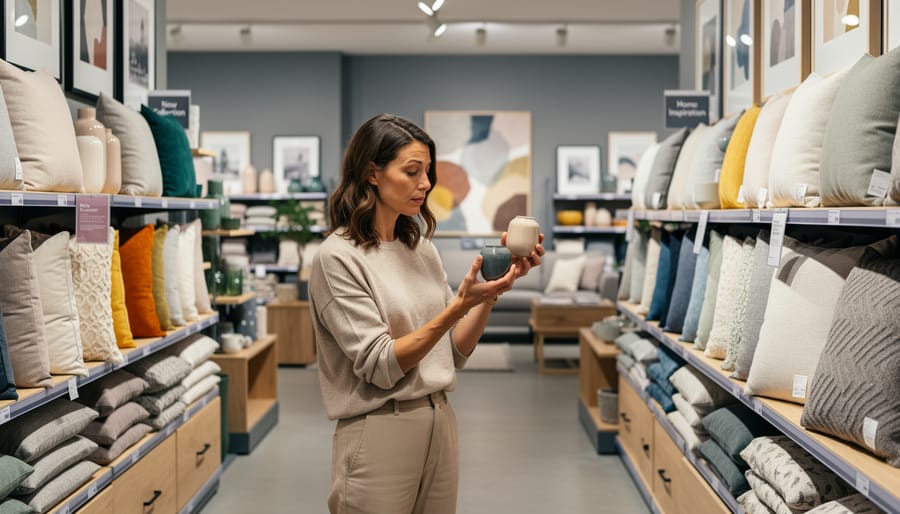
Before you set foot in any store, pick three words that describe how you want your home to feel. Maybe it’s “warm, earthy, relaxed” or “bright, airy, playful.” That’s it. Three words are enough to work with, and limits help reduce choice overload when every aisle is shouting for your attention.
Picture Maya, a renter hunting for living room accessories. Her words were “calm, natural, layered.” Standing in front of a wall of glossy metallic vases, she paused and asked herself: is this calm? Natural? Not quite. So she walked past, and a few steps later found a linen throw and a hand-thrown ceramic bowl that fit all three.
Keep your words on your phone and check each pick against them. If an item matches two out of three, it’s worth a closer look.
Know Your Numbers Before You Go
Before you set foot in a store, or open a single browser tab, grab a tape measure and a notebook. The numbers you collect now will save you from the classic heartbreak of a gorgeous sofa that won’t fit through your front door.
Start with the room itself. Measure the length and width of the floor, then the height of the ceiling. Next, measure the walls you plan to decorate, noting any windows, outlets, or radiators that interrupt them. Don’t skip the path your purchases will travel: doorways, stairwells, hallway corners, and elevators. A piece can fit the room perfectly and still never make it inside.
If you’re a visual person, mark the footprint of a furniture piece on the floor with painter’s tape. Standing next to a taped rectangle tells you more about scale than any product page.
Now for the money part. Set a budget for each room, not one big number for the whole house. A living room might get $800 while a bedroom gets $400, and a cozy entryway just $75. Add a small cushion of about ten percent for surprises like shipping or hardware.
With measurements and a budget in your pocket, every product becomes a quick yes or no.
The Big-Name Home Stores Worth Knowing
One-Stop Shops for Every Room
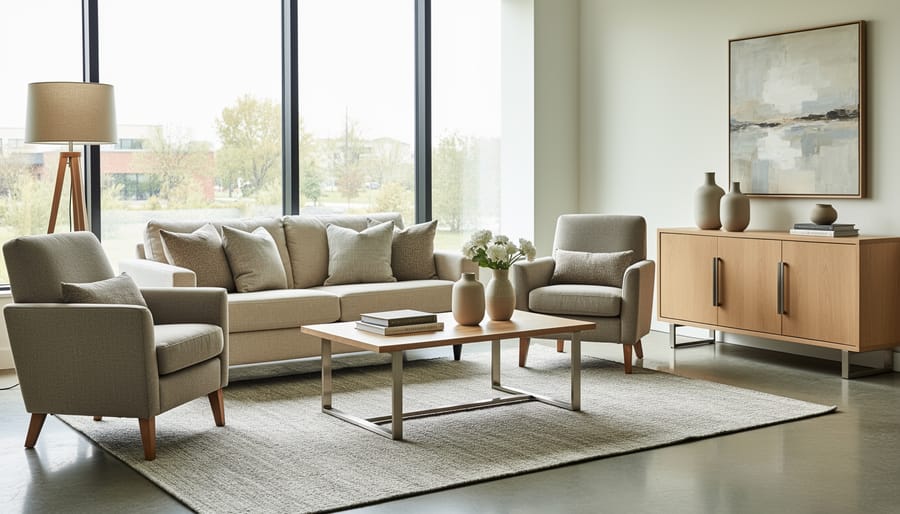
Large home retailers earn their spot on this list for one simple reason: you can walk in with an empty room and leave with a plan. Sofa, rug, lamps, curtains, throw pillows, and even a few frames for the wall often live under the same roof, so everything arrives in one trip and tends to play nicely together.
That convenience matters most if you’re a first-time decorator or a renter. You get to see pieces styled together in showroom vignettes, which takes the guesswork out of pairing colors and scale. Many of these stores also sell matching collections, so a coffee table and side table already belong to the same family.
Think of them as your foundation. Cover the big, practical needs here, then layer in personality elsewhere, perhaps with original abstract art that makes the room feel like yours and not a catalog page.
Budget-Friendly Favorites
Affordable doesn’t have to mean disposable. Discount home retailers, big-box chains, and flat-pack stores are where many of us start, and they’re great for pillows, frames, vases, baskets, and basic shelving. Treasure-hunt style discount shops reward frequent visits, since stock changes often and the best finds go fast.
Quality is easy to spot if you slow down. Lift the item: weight usually signals sturdier materials. Check seams, joints, and drawer glides, and look for solid wood or metal over thin veneer where it matters. Give lamps and textiles a good look under real light, since cheap fabric tends to show its flaws quickly.
Then do the mix. Spend your budget on trend-driven accents you can swap out easily, and save a little extra for one anchor piece, like a rug or a good reading chair. That single splurge makes everything around it look intentional.
Mid-Range and Premium Picks
Once you move past the big budget chains, you’ll find mid-range and premium stores that put their money into solid wood frames, natural fibers, and finishes meant to last. These retailers tend to favor timeless shapes over passing trends, so a piece you buy now can still look right in ten years.
Spend more where you touch and use things daily. A sofa is the clearest example: a hardwood frame and quality cushion fill will hold up through years of movie nights. Rugs are another smart splurge, since wool or other natural fibers resist wear and clean better. Lighting deserves the same attention, because good fixtures shape the mood of a whole room.
Save on items you’ll likely swap out. Throw pillows, vases, picture frames, and seasonal accents change with your taste, so a lower price makes sense here. A simple rule: invest in what anchors a room, and keep the accessories playful and affordable.
Independent Shops, Artisans, and Hidden Gems

There’s a particular joy in finding something that no one else on your street owns. Independent shops, artisan markets, and small online makers are where that happens. Their pieces tend to carry a story: a hand-thrown glaze, a loom-woven pattern, a slightly imperfect edge that tells you a person made it.
A local boutique is a good place to start. Owners often curate with a clear point of view, so you can ask them where something came from and who made it. Artisan markets work the same way, and you can often meet the maker, touch the work, and sometimes request a custom size or color. If you can’t get out to a market, small online makers on handmade marketplaces and their own websites offer a similar range, from ceramics to textiles to hand-carved wood.
Around the world, homeowners lean on their local craft traditions to give their spaces character. Picture a Moroccan-inspired apartment: the owner wanders the souk for a hand-knotted wool rug, a pierced brass lantern, and a set of painted tiles for the entryway. None of these items match perfectly, and that’s exactly the charm. Think of a Scandinavian cottage, where a family might collect linen throws from a regional weaver, a hand-turned wooden bowl from a neighbor’s workshop, and a simple ceramic vase from a nearby studio. Everything feels calm and lived-in because each piece has a purpose and a maker.
Now consider a Japanese-influenced minimalist home. The owner keeps things sparse, so each object matters: a handmade washi paper lamp, a stoneware tea set from a local kiln, a single ikebana vase on a low shelf. With so few items, quality and craft are what make the room feel full.
You don’t need a big budget to borrow this approach. Start small with one handmade mug, a printed tea towel, or a candle poured by a local maker. These pieces often cost less than you’d expect, and they add a layer of personality that mass-produced accessories rarely match. Over time, a home built this way starts to feel less like a showroom and more like a collection of good stories.
Thrifting, Vintage, and Secondhand Treasures
A Weekend DIY Makeover for a Thrifted Find
Here’s a simple project to try: a scuffed thrifted side table that looks tired but has solid bones. If you want more ideas like this, there are plenty of budget-friendly DIY projects to explore.
Here’s what you’ll need: fine-grit sandpaper, a small can of primer, paint in your favorite color, a brush or mini roller, and new knobs or pulls.
Start on Saturday morning. Wipe the piece clean, then sand it lightly until the old finish feels dull and smooth. Wipe away the dust with a damp cloth. Next, brush on a thin coat of primer and let it dry for a couple of hours.
By the afternoon, add your first coat of paint. Keep the coats thin, since thick ones drip and take forever to dry. Let it rest overnight, then add a second coat on Sunday morning.
Once everything is fully dry, swap the old hardware for new knobs. This one small change makes the whole piece feel fresh. A brass knob can make a plain table look like a boutique find.
Expect to spend roughly $25 to $60 on supplies, depending on the paint and hardware you pick. If you already have sandpaper and brushes on hand, you’ll spend even less.
Shopping Online vs. In Person
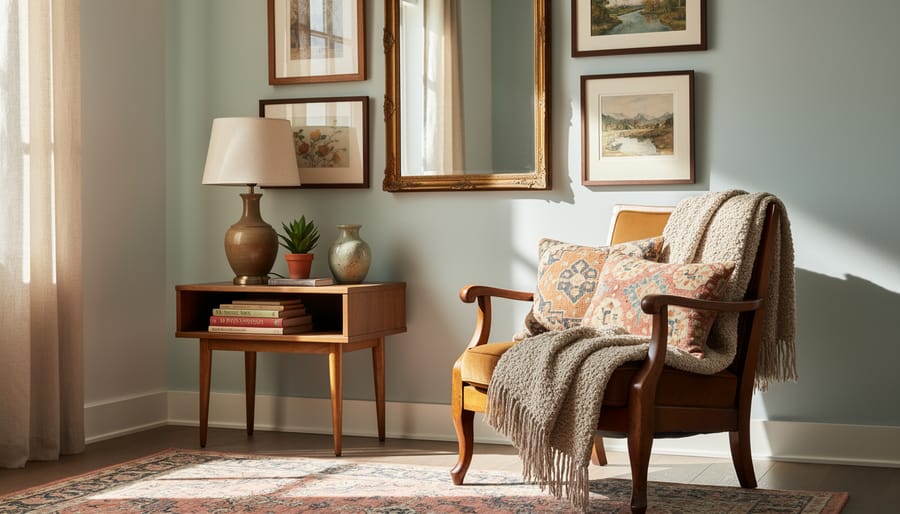
Both ways of shopping have a place in a well-decorated home, and the smartest shoppers use each one for what it does best. Online is wonderful for casting a wide net. You can compare dozens of lamps in ten minutes, filter by size or color, and read what other buyers say about how a piece looks and wears after a few months. In a store, you get the things a screen can’t deliver: the weight of a curtain, the real shade of a paint-matched sofa, and a sense of whether that chair is cozy or enormous.
Pros
- Online shopping offers a far wider selection than any single showroom.
- Side-by-side comparison and customer reviews make it easier to weigh quality and price.
- In-store visits let you touch fabrics, test comfort, and judge true scale.
- Seeing colors in person helps you avoid surprises once an item is home.
Cons
- Screens can shift colors and textures, so online buys may look different in real life.
- Returning bulky online orders can be a hassle if a piece misses the mark.
- Store inventory is limited to what fits on the floor, so choices can feel narrower.
- Browsing in person takes more time and travel than a quick online search.
A few habits make either route smoother. When you shop online, order fabric swatches before committing to a sofa or curtains, and hold them up in your own light, morning and evening. Read the dimensions carefully, then tape the measurements out on your floor or wall with painter’s tape so you can see the footprint. Check the return policy before you buy, especially for large items, and note who pays for return shipping.
In person, bring your measurements, a few photos of your room, and your paint or fabric samples. Sit on the furniture, open the drawers, and look at the underside of a piece to judge how well it’s built. If you love something, take a photo and sleep on it. If it’s still on your mind tomorrow, it’s probably a keeper.
Smart Shopping Tips for Any Budget
Timing is one of the easiest ways to save. Home decor goes on clearance when seasons change, so buy patio pieces in late summer, throw blankets in spring, and holiday-neutral items like candle holders and serving trays right after the holidays. If you have a tight budget, wait for those markdowns and keep a running list of what you need so you only grab what’s useful.
Mixing price points is the next trick. Spend a little more on the pieces you touch and use every day, like a sofa, a good rug, or a lamp you’ll still love in ten years. Then fill in around them with budget finds, such as frames, vases, and pillow covers. Nobody can tell which items cost $8 and which cost $80 once they’re styled together.
Versatile pieces earn their keep. A simple wooden stool works as a side table, a plant stand, or extra seating. Neutral baskets hold blankets in the living room today and toys in the playroom next year. If an item can serve two jobs or move between rooms, it’s worth buying.
Start small before you commit to big furniture. Swap pillow covers, add a plant, hang a mirror, or change your lamp shades and see how the room feels. Our roundup of affordable home decor ideas has plenty of low-cost swaps that can transform a space in an afternoon. A few pots of succulent home decor are another inexpensive way to bring life and texture to a shelf or windowsill.
Common Questions About Buying Home Decor
Shopping for decor raises the same handful of questions again and again, so here are warm, practical answers to the ones readers ask most.
How do I choose a store for a small apartment?
Look for shops that list clear dimensions and offer compact, multi-purpose pieces like storage ottomans and wall shelves. Measure first, then shop for scale before style.
How can I match decor from different shops?
Stick to your three style words and a limited color palette of two or three shades. Repeating a material, like warm wood or brass, ties mismatched pieces together.
What should I buy first when starting from scratch?
Begin with the essentials you use daily, such as a bed, seating, and lighting. Add rugs, pillows, and art later, since small accessories are easy to swap as your taste settles.
How do I shop as a renter?
Choose removable and portable items: floor lamps, large rugs, leaning mirrors, and peel-and-stick hooks. Check your lease before drilling or painting.
A few of these answers share one idea: start small and stay flexible. You don’t need to settle your whole style on day one. Seasonal pieces are a lovely low-pressure place to experiment, and if you’re curious, these Diwali decor ideas show how a few well-chosen touches can transform a room without a big spend. Treat every purchase as a small trial, keep what feels right, and let your home grow at its own pace.
Remember that cart full of things that almost worked together? That moment isn’t a failure. It’s a sign you’re learning what you really love. The best home decor shopping was never about filling a room as fast as possible. It’s about finding the pieces that tell your story: the thrifted mirror with a little history, the handmade bowl from a market stall, the lamp that makes your evening corner feel like yours.
A home built from thoughtfully chosen things does more than look good. It supports how you actually live, whether that means slow Sunday mornings, loud family dinners, or quiet nights with a book. Every store type we’ve covered has something to offer, from big chains to flea market finds.
So here’s your next step. Pick one kind of store from this article, set a small budget you feel good about, and choose a single room or corner to start with. One lamp, one rug, one shelf. Begin there, and let your home grow with you.