
The best home decor items are the ones that change how a room feels without changing the room itself: an area rug, layered lighting, a statement mirror, throw pillows and blankets, wall art, indoor plants, decorative trays with stacked books, and a sculptural vase. Eight pieces, each one easy to buy, make, or style, and each one friendly to renters and tight budgets.
Why these eight? Because they do the heavy lifting. A rug warms up a cold floor. Lamps and sconces fix harsh overhead glare. A mirror bounces daylight into dark corners. Pillows, art, and plants add color and personality, while trays and vases pull the finishing details together.
You’ll find a mix of price points here, plus simple DIY projects and ideas borrowed from homes around the world, from tiny Tokyo apartments to sun-washed Lisbon townhouses. If you’re just starting out, our guide to affordable decor ideas pairs nicely with this list.
Start with one item. Your space will thank you.
How We Chose These Home Decor Items for Your Inspiration Board
Picking just eight home decor items from the thousands out there wasn’t about chasing trends. It was about asking which pieces keep showing up in homes that feel warm, lived-in, and complete, from tiny city apartments to sunny courtyard houses abroad.
To be clear, this is an editorial selection built on design principles and real-home examples, not hands-on product testing. Think of it as a friendly guide for your inspiration board rather than a lab report. Each pick had to meet a few simple standards:
- Visual impact: it changes how a room looks the moment it’s added.
- Flexibility across styles: it works in modern, boho, traditional, and everything between.
- Budget range: there’s a path from thrifted finds to a worthwhile splurge.
- Renter-friendliness: no drilling, painting, or permanent changes required.
- Easy styling: you don’t need a designer’s eye to get it right.
Price mattered just as much as looks. Every item has an affordable route, whether that’s a flea market find or a budget-friendly DIY you can finish over a weekend.
A couple of terms will pop up as you read. “Layering” simply means combining different textures, heights, or light sources so a room feels rich instead of flat. A “focal point” is the one spot your eye lands first, like a bold mirror or a striking vase.
1. Area Rugs: Ground the Room and Add Instant Warmth
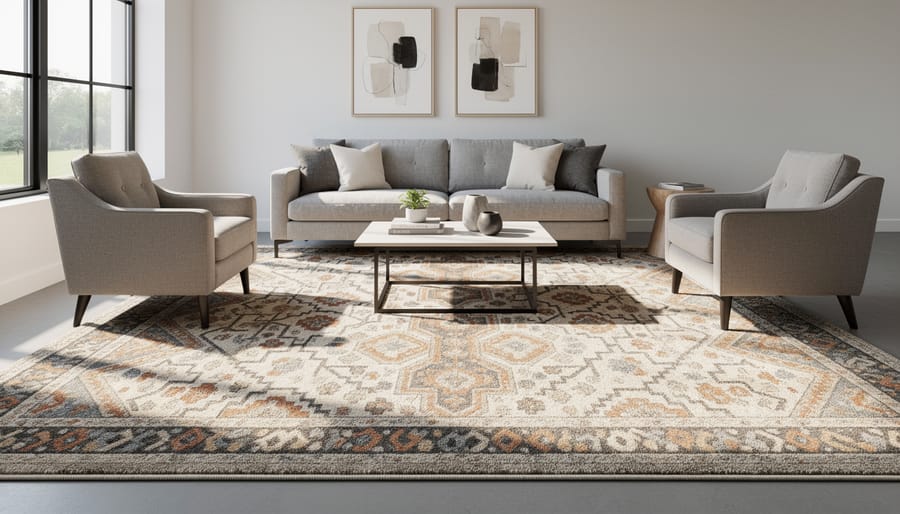
A rug does more than cover the floor. It draws a boundary around a seating or sleeping area, so scattered furniture suddenly reads as one cozy, intentional zone. It also brings in color, pattern, and a soft landing for bare feet, which is why a room with a good sofa can still feel cold until a rug arrives.
Size is where most people go wrong. A rug that’s too small looks like a postage stamp floating in the room. Aim for at least the front legs of every seating piece resting on the rug. In a living room, an 8×10 foot rug suits most standard layouts, while a smaller 5×8 works well in a compact sitting area or under a reading chair. In a bedroom, choose a rug that extends about two feet beyond each side of the bed, so your feet land on something soft when you get up.
Think of a Moroccan-inspired living room: a richly patterned wool rug in deep reds and indigo sits beneath low sofas and a hammered brass tray table, and the whole space feels collected around it. Flip to a Scandinavian home, and you’ll often find a plain, neutral wool rug in oatmeal or soft gray, layered with a few textured throws, letting the quiet palette do the work.
You don’t need to spend much to get this look:
– Flatweave rugs are thin, affordable, and easy to clean.
– Secondhand finds from estate sales, flea markets, and online listings often include quality wool for a fraction of retail.
– Carpet remnants can be bound at the edges by a local carpet shop to create a custom size for very little.
2. Layered Lighting: Lamps, Sconces, and Warm Bulbs
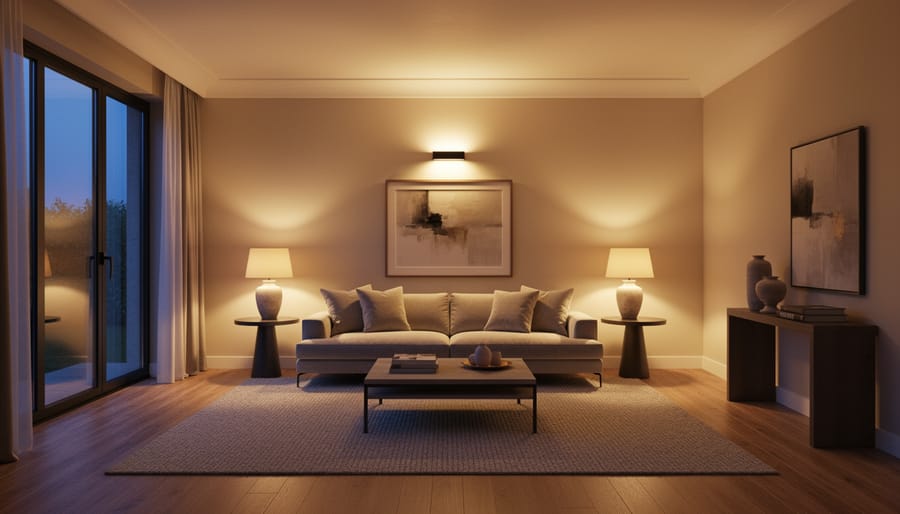
Overhead lighting does one job: it floods a room. That’s useful for finding a lost earring, but it flattens everything and leaves corners dull. Layered lighting simply means using several lower light sources at different heights, so the glow feels soft and the room has depth.
A table lamp on a side table, a floor lamp beside the sofa, and a plug-in sconce near the bed each add a pool of light at a different level. Switch off the ceiling fixture, turn those on, and the whole space shifts from “office” to “evening at home.”
Here’s the one tip worth remembering: choose warm white bulbs rated around 2700K for living rooms and bedrooms. That number is the color temperature, and 2700K gives the golden, candle-like tone that feels relaxed. Bulbs labeled “daylight” or 5000K can make a cozy room feel like a dentist’s waiting area.
Renting? Plug-in sconces are your best friend. They hang from a single hook, run on a cord you can tuck under a cord cover painted to match your wall, and come off without a trace when you move. Tired of a lamp you already own? Swapping the shade is a cheap refresh. A linen or woven shade can cost less than a coffee-shop lunch and changes the whole look.
On a tour of a tiny Copenhagen apartment, the owners skipped the ceiling light entirely. Three small lamps at different heights, all with warm bulbs, made the narrow living room feel like a hug.
3. Statement Mirrors: Bounce Light and Add Depth
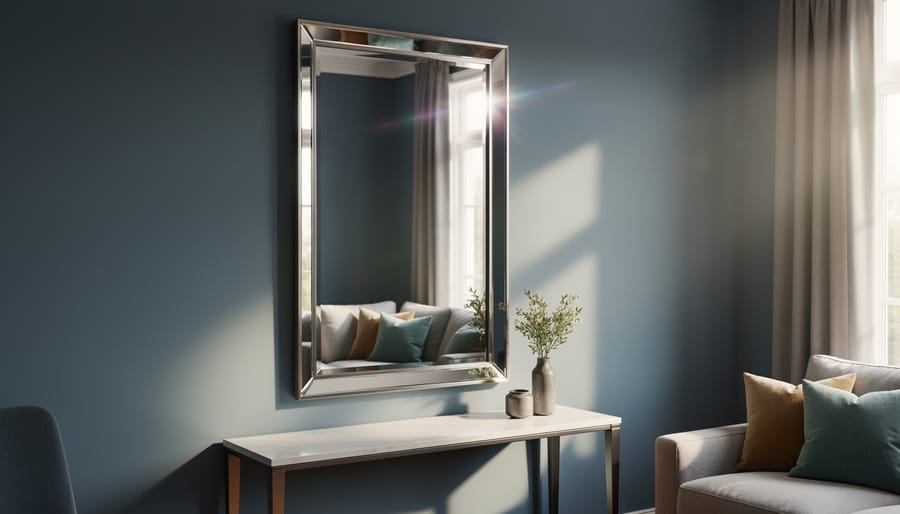
A mirror is the closest thing a room has to a second window. In a small or dim space, it catches daylight and throws it back across the room, making the whole space feel bigger and brighter. A large mirror also works as art, which is why it earns a spot on this list.
Placement matters more than size. Hang one directly opposite a window so it doubles the natural light. Over a console table or entryway bench, it adds depth and gives you a last-look spot before you head out. Leaning a tall floor mirror against the wall feels relaxed and collected, and it needs no drilling, which is great for renters. If you want a mirror to feel like a true focal point, treat it like a canvas: pair it with a piece of original abstract art on a neighboring wall and let the two play off each other.
Shape sets the mood. An arched mirror feels modern and a little architectural, a round one softens a room full of straight lines, and a sunburst adds a graphic, vintage-glam spark.
Here’s an easy DIY: take a plain frameless mirror and glue on painted wood trim, such as simple lumber strips or picture-frame molding. Paint it black, warm white, or a bold color to suit your room.
On a budget, flea markets and thrift stores are goldmines. Look for solid mirrors in dated frames, then repaint the frame for a fresh look.
4. Throw Pillows and Blankets: The Easiest Style Refresh
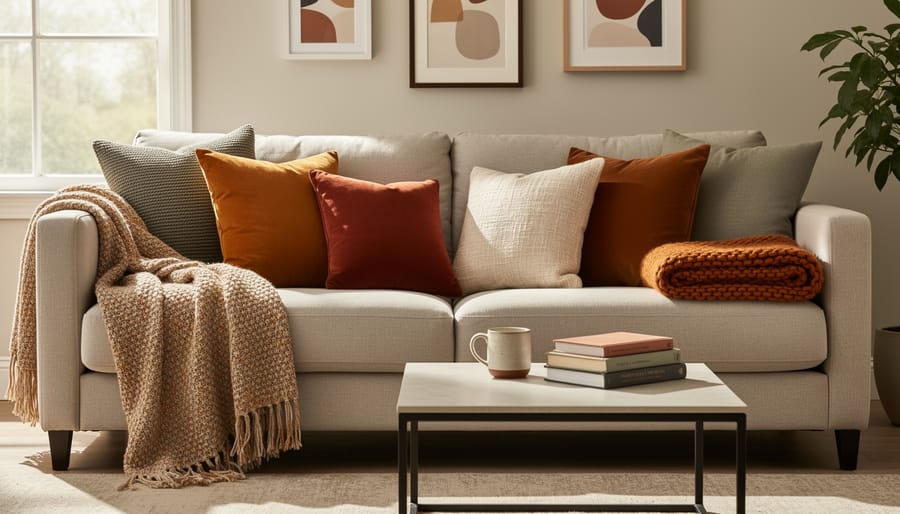
Few changes cost so little and shift a room so fast as swapping your textiles. A sofa that felt flat in January can feel completely different with a chunky knit throw and a few fresh pillows. Plenty of people pair this with succulent plant tips for a quick, low-cost refresh that touches several corners at once.
The easiest formula for mixing is three pieces in one color family. Start with a solid, then add a pattern such as stripes or a small geometric, and finish with something textured like bouclé, linen, or velvet. Keep the shades related (say, warm creams, rust, and soft tan) and the combination will look collected instead of chaotic. Vary the sizes too, mixing a couple of square pillows with one lumbar for depth.
DIY envelope pillow covers (no-sew friendly):
1. Measure your pillow insert and cut fabric about 2 inches wider and 12 inches longer than the insert’s width.
2. Lay the fabric right side up, fold one short end in about 6 inches, then the other end over it so the flaps overlap in the middle.
3. Secure the top and bottom edges with fabric tape or iron-on hem tape, or stitch straight lines with a basic sewing machine.
4. Flip it right side out and slip in the insert.
Because there are no zippers or buttons, covers slip off easily. Store a few extras and swap them each season: soft linens and lighter tones in spring, deep velvets and wool in fall.
5. Wall Art and Gallery Walls: Personality on Display
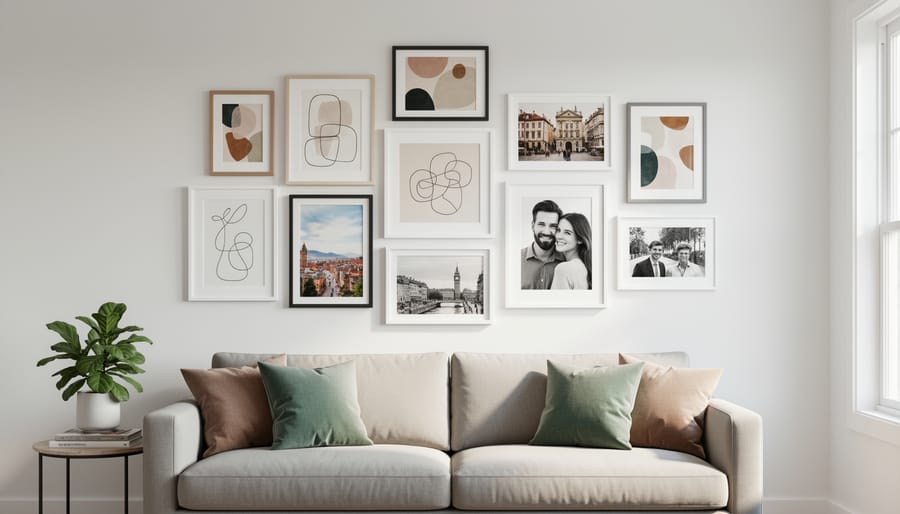
Art is what turns a nicely furnished room into your room. A framed print, a black-and-white photograph, a woven textile, or your kid’s proudest crayon masterpiece all say something about the people who live there, and that personal touch is hard to buy in one shot.
For hanging, aim to center the artwork at about 57 inches from the floor, which is roughly eye level for most people. If you’re hanging above a sofa or console, leave about 6 to 8 inches between the furniture and the bottom of the frame so the two read as a pair.
Gallery walls feel intimidating, but a paper template makes them easy. Trace each frame onto kraft paper, cut the shapes out, and arrange them on the floor first. Keep a consistent gap of about 2 to 3 inches between pieces and start from a center anchor piece, building outward.
Picture a Lisbon apartment tour with a collected, eclectic wall: a vintage travel poster beside a small oil painting, a framed scarf, a few ceramic plates, and a child’s drawing, all tied together by mismatched but warm wood and black frames. Nothing matched, yet it felt completely intentional because the colors echoed each other.
On a budget, download free or low-cost printable art, hunt for thrifted frames, and give tired ones a fresh coat of spray paint in matte black, brass, or white for a cohesive look.
6. Indoor Plants and Planters: Bring Life Into Every Corner
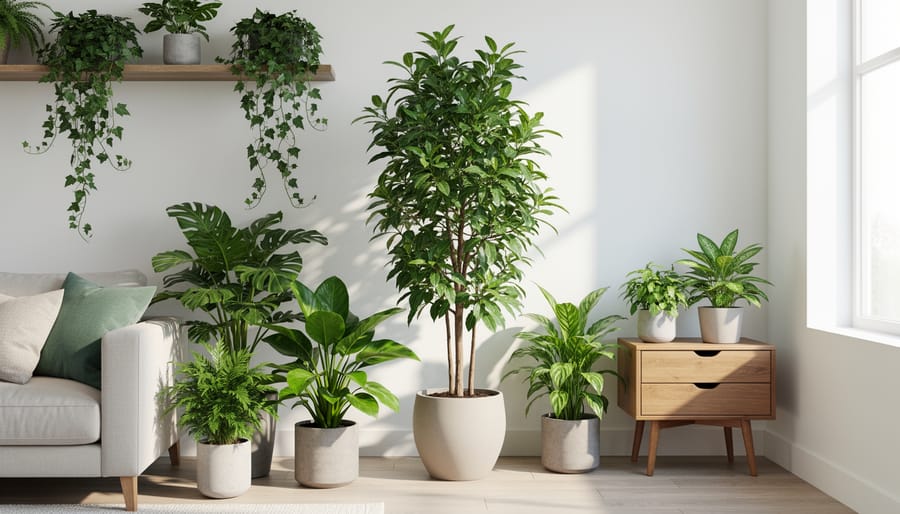
Greenery is the quickest way to add color, texture, and a little life to a room. A single leafy plant softens hard edges, fills an awkward corner, and makes everything around it feel more lived in.
If you’re just starting out, three plants are very forgiving. Pothos trails beautifully from a shelf, and a low-light tolerant pothos will keep going in a dim hallway. Snake plants stand tall and ask for very little water. ZZ plants shrug off neglect and brighten shady spots.
Planters are what tie the look together. Matching terracotta pots give a calm, cohesive feel, while mixed ceramics read more collected. Picture a sunny Mediterranean courtyard, with clay pots clustered by a doorway and herbs spilling over the rims. Bring that same warmth indoors with a few pots in varied heights.
Want a budget route? Upcycle a ceramic bowl or a clean tin can into a planter. Drill or hammer a few holes in the bottom for drainage, add a layer of small stones, then pot your plant inside. If you can’t drill, keep the plant in a plastic nursery pot and slip it into the bowl, emptying any excess water after each watering.
For rooms with no light at all, good faux plants are a perfectly fine choice. Dust them occasionally and they’ll look fresh for years. If you’re hunting for pots and planters, here’s where to shop for pieces that suit your style.
7. Decorative Trays and Stacked Books: Style Your Surfaces
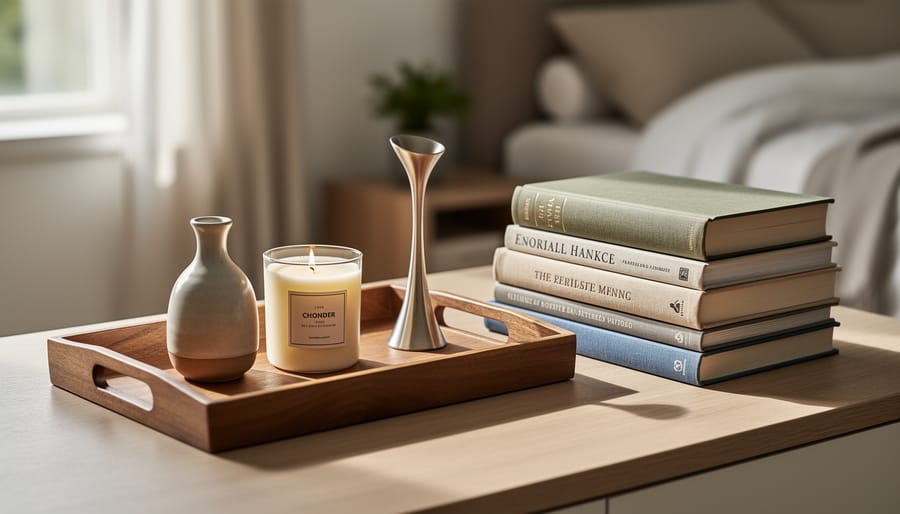
Ever notice how a coffee table full of remotes, mail, and half-finished mugs makes the whole room feel messy? A tray fixes that in seconds. It draws a clear border around your things, so a handful of objects reads as a deliberate arrangement instead of clutter. Use one on a coffee table for remotes and coasters, on a dresser for perfume and jewelry, or by the kitchen stove for oils and a salt cellar.
Stacked books do a different job: they add height. A flat surface with everything at the same level looks static, but a short stack gives you a base to set a small bowl or candle on. Choose two or three hardcovers, and turn the spines inward or outward depending on how much color you want to show.
Then lean on the rule of three. Groups of three feel balanced without looking stiff, especially when the items vary in height and shape. Think one tall piece, one medium, one low.
Here’s a quick formula to try:
– A tray as your anchor
– A candle for scent and glow
– A small plant or a pretty bowl for texture
Budget routes are easy. Thrift stores and flea markets are full of wood trays that need nothing more than a light sanding or a coat of paint. For books, secondhand hardcovers cost a dollar or two, and you can wrap them in plain kraft paper if the covers clash with your palette.
8. Vases and Sculptural Accents: Finish the Look With a Focal Piece
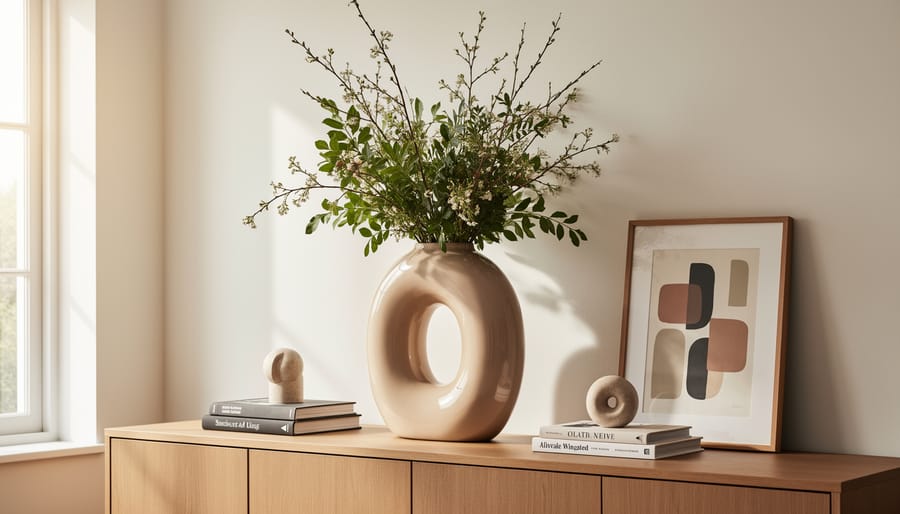
Every shelf or console needs one piece that makes people pause, and a vase or sculptural object is often it. Think of a hand-thrown ceramic bowl with a slightly uneven glaze, a mouth-blown glass bottle, or a woven basket in the style of Ghanaian bolga baskets. Handmade items carry small quirks that mass-produced pieces can’t fake, and those quirks are exactly what make a space feel collected rather than staged.
Scale matters more than price. A good rule is to choose a piece about one-third the height of the shelf or wall space behind it. Too small and it disappears, too big and it crowds everything around it. For color, pull one shade from your room, like the terracotta in a rug or the green of a plant, so the piece feels connected instead of random.
Fresh flowers aren’t always practical, and honestly, they don’t need to be. A few bare branches, dried pampas, or a bunch of eucalyptus can look striking for months with zero upkeep. Even an empty vase with a beautiful shape works as sculpture.
Quick DIY: turn a glass bottle or jar into a one-of-a-kind vase.
1. Wash the jar and remove any labels, then dry it completely.
2. Mix a little baking soda into matte acrylic paint for a chalky, ceramic-like texture.
3. Dab the paint on with a sponge, leaving small gaps for an organic look.
4. Let it dry for a few hours, then add a second coat if you want deeper color.
Seal it with a clear spray, and use it for dried stems only, since the paint isn’t waterproof inside.
Your Questions About Choosing and Styling Home Decor, Answered
Decorating gets easier once you’ve got a few answers in your pocket. Here are the questions readers ask us most.
How many decor items are too many?
If you can’t clear a surface in under a minute, or your eye has nowhere to rest, you’ve probably crossed the line. Aim for a mix of empty space and styled spots, and let each surface hold one small grouping instead of a crowd.
How do I decorate on a tight budget?
Start with thrifted frames, secondhand trays, and DIY pillow covers or planters. Every item on this list has a low-cost route, so you can add pieces slowly instead of buying everything at once.
How can I decorate as a renter?
Lean on things that don’t touch the walls: rugs, plug-in sconces, floor lamps, leaning mirrors, plants, and textiles. They make a rental feel like yours and pack up easily when you move.
Which item should I buy first?
Pick the one that fixes your biggest annoyance. A dim room wants layered lighting, a echoey one wants a rug, and a bare one wants wall art or a mirror.
If your space already has a style, borrow its colors and materials rather than copying every detail. Repeating one or two of them, say warm wood tones or a soft neutral palette, across your new pieces ties everything together without feeling matchy.
Start Small: Your Next Step Toward a Finished-Feeling Home
You don’t need a full makeover to make a room feel finished. A rug underfoot, a warm lamp in the corner, or one great vase on the shelf can change the whole mood, and that’s true whether you’re shopping secondhand or making it yourself.
So pick just one idea from this list and add it to your space this week. Then keep the inspiration going by browsing our house tours from around the world and our hands-on DIY projects. Your home is already on its way, and the next small step might be the one that makes it feel like yours.