
A home decked out for Diwali comes down to three spots: the entryway, the living room, and the dining space. Give each a few well-chosen touches, and the whole house feels festive without a big spend. This guide walks you through 15 numbered ideas across those three areas, from an eco-friendly rangoli at the threshold to a mini rangoli accent on the dinner table. Most take an afternoon or less, and plenty cost very little.
Why does this approach work? Guests notice the doorway first, linger in the living room, and gather around the table, so decorating in that order puts your effort where the celebration actually happens. You don’t need to redo everything. A garland of marigolds over the door, a cluster of scented candles on the coffee table, and a golden runner on the dining table can change the mood of a whole evening.
Along the way you’ll find a handmade paper lantern project for a weekend afternoon, budget and eco-friendly swaps using natural materials like rice powder and flower petals, safety guidance for candles and lights, and traditional motifs like the lotus, peacock, and elephant, long loved as symbols of prosperity and good luck. Pick the ideas that suit your space, mix in your own family traditions, and let the glow do the rest.
How We Chose These 15 Festive Ideas
This list is curated, not hands-on tested. I built it from common Diwali decorating guidance and picked ideas that hold up in real homes. One thread runs through nearly all of that guidance: affordable ideas built on candles, rangoli and florals can make a home feel luxurious without a big spend.
Each of the 15 ideas had to meet a few simple criteria:
- Budget-friendly, with several no-cost or DIY options.
- Easy to find or make with everyday materials.
- Culturally meaningful, rooted in traditional symbols and customs.
- Renter-friendly, with no drilling or permanent changes.
- Flexible enough to work in the entryway, living room and dining space, in homes big or small.
I leaned toward eco-friendly materials wherever I could. Rice powder, organic colors and flower petals make beautiful rangoli designs, and they’re gentler on your floors and the environment. Traditional motifs like lotus flowers, peacocks and elephants, which stand for prosperity and good luck, also earned extra weight.
You won’t see prices quoted here. Costs vary widely by store and region, so I’ve focused on materials and methods instead, and flagged where an idea costs little or nothing at all.
Welcome Guests at the Door: Entryway Ideas
1. Eco-Friendly Rangoli at the Threshold, a Colorful Welcome
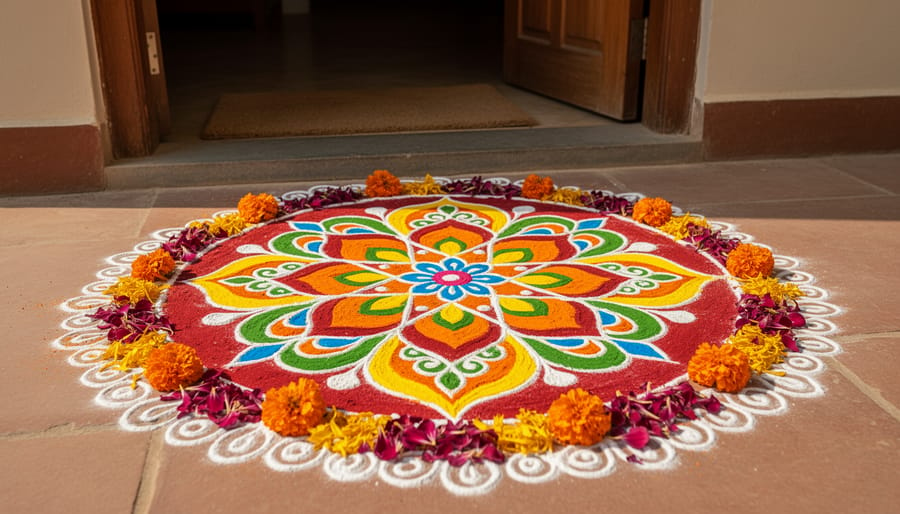
A rangoli at the threshold is the friendliest welcome you can give. Use rice powder, organic colors or flower petals, so the design is gentle on the environment and easy to sweep away after the festival.
If you’re a first-timer, start small:
1. Sketch a simple outline on the floor with chalk. A circle, a lotus or a basic star shape works well.
2. Fill the sections with rice powder or organic color, working from the center outward so you don’t smudge your work.
3. Finish with flower petals around the edges and in the middle for extra warmth.
Short on space or renting? A reusable rangoli frame gives you a crisp pattern with no marking on the floor, and you can store it for next year. For a no-mess version, skip the powder entirely and arrange marigold or rose petals in a ring by the door. If you enjoy this kind of craft, it’s a lovely entry point into other budget-friendly DIY projects around the home.
2. Marigold Garland Torans, Fresh and Festive Over the Doorway
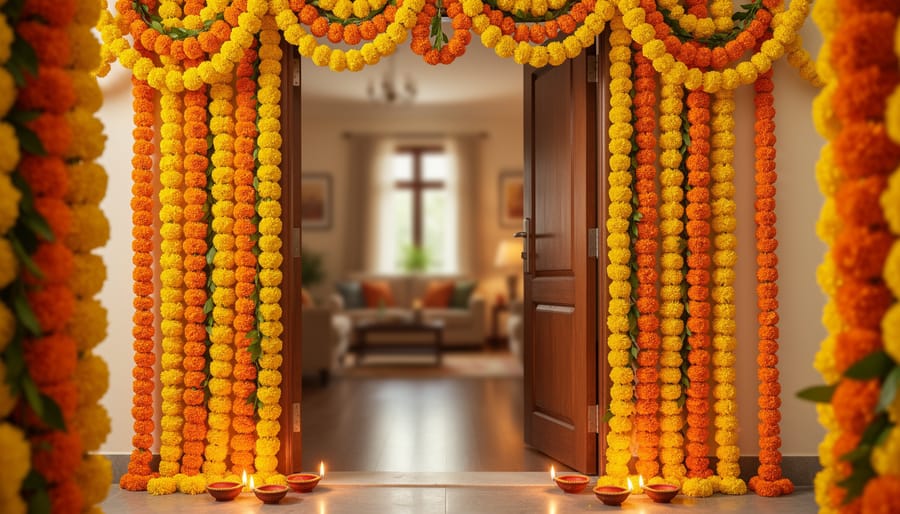
Hang a marigold toran across the top of your door and the whole entrance changes. The strands of orange and gold frame the doorway like a warm welcome, and they’ve been a Diwali tradition for generations. Even before guests step inside, they catch that earthy, slightly peppery scent and a burst of color that says the celebration has begun.
You’ve got two routes. Fresh garlands smell wonderful and look lush, but they wilt within a day or two, so hang them close to the main day. Reusable artificial ones keep their shape year after year, which suits renters and anyone short on time.
For a budget-friendly option, string your own. Buy loose marigold blooms from a local flower seller, thread a long needle with strong cotton thread, and pass it through the center of each flower. Alternate full blooms with a few green leaves, then tie the strands to a hook above the door. It takes about half an hour and costs far less than ready-made garlands.
3. Diya Pathway Lighting, a Glow That Leads Guests Inside
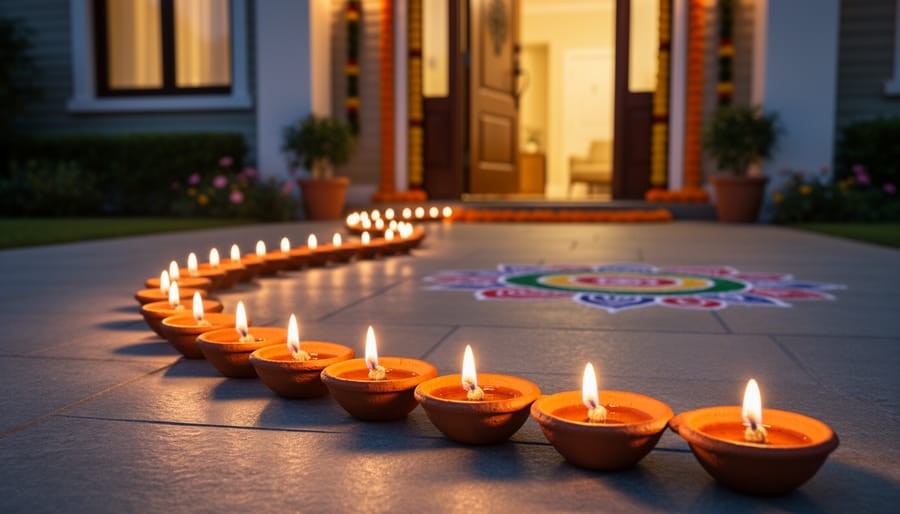
Few things feel as welcoming as a row of tiny flames flickering along the steps. Line the doorstep, the edge of each stair or a pair of planters with clay diyas, and guests follow the glow straight to your door. Space them a hand’s width apart so the line reads as a path rather than a cluster, and set them on a flat tray or tile so they stay steady.
Keep the flames well away from doormats, curtains, garlands and the doorway itself, since marigold torans and fabric hangings catch easily. Follow basic candle safety precautions never leave lit diyas unattended, and keep them out of reach of children and pets.
If you rent, share a hallway or have a curious cat or dog, flameless LED diyas are a lovely swap. They give the same warm, amber glow, they won’t tip or drip, and you can tuck them away to reuse next year. A mix works well too: a few real diyas in a safe spot and LEDs everywhere else.
4. Festive Door and Wall Ornaments, Quick Decor for Any Budget
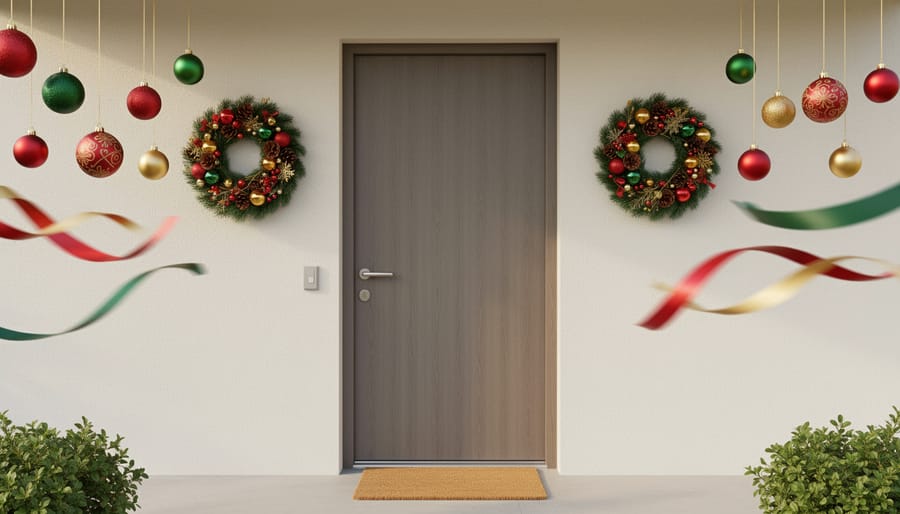
Hanging ornaments are the quickest way to refresh an entry. A few bells, paper lanterns or printed festive hangings on the door or the wall beside it can change the whole mood in minutes, and the cost stays low. You’ll find these pieces in the holiday decor sections of general retailers, so you can pick them up while you shop for other festive supplies.
Start with the door itself. Hang a string of brass-toned bells so they chime softly each time someone enters. Then add a paper lantern or a printed hanging beside the frame to carry the color outward. Choose two or three colors, such as saffron, deep red and gold, so the look feels cohesive rather than crowded.
If the wall beside your door is bare, a single hanging gives it a focal point. For more ideas on how to decorate a wall look at how texture and placement work together. Renters can use removable hooks to protect the paint.
5. Traditional Motif Welcome Sign, Lotus, Peacock or Elephant
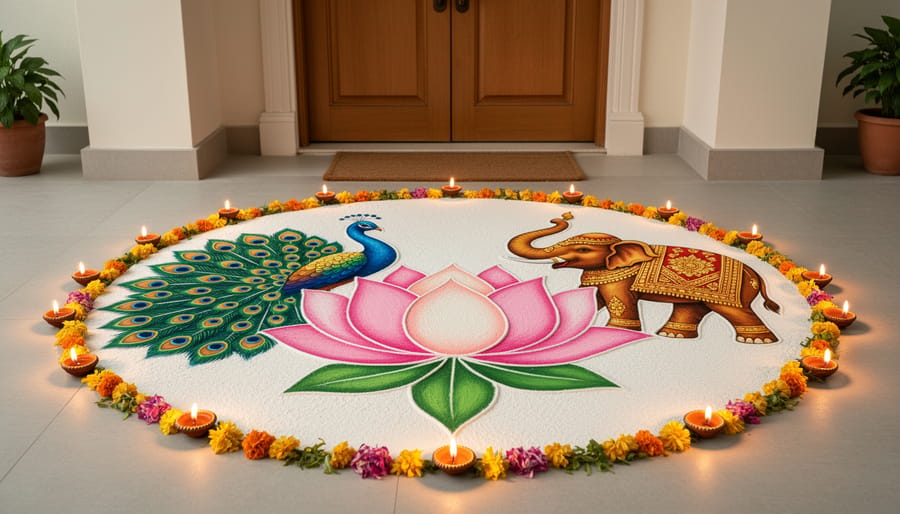
A welcome sign with a traditional motif gives your entry a focal point that guests notice right away. Lotus, peacock and elephant designs are all symbols of prosperity and good luck, which makes them a fitting way to greet people at Diwali. A lotus works well for a soft, elegant look, a peacock brings bold color, and an elephant adds a sense of strength and blessing.
You can pick up a motif door hanging or sign from the holiday decor section of a general retailer, or make your own in an afternoon. For a simple DIY version, cut a lotus, peacock feather or elephant shape from colored paper or leftover fabric scraps. Layer a few shades together for depth, glue them onto a sturdy piece of cardboard, and add a short “Happy Diwali” or “Shubh Diwali” message in gold or white. Punch two holes at the top, thread a ribbon through, and hang it on the door or just beside it.
Even a small, handmade piece like this sets a warm, welcoming tone before anyone steps inside.
Warm Up the Gathering Space: Living Room Ideas
6. Scented Candle Clusters, Instant Cozy Luxury
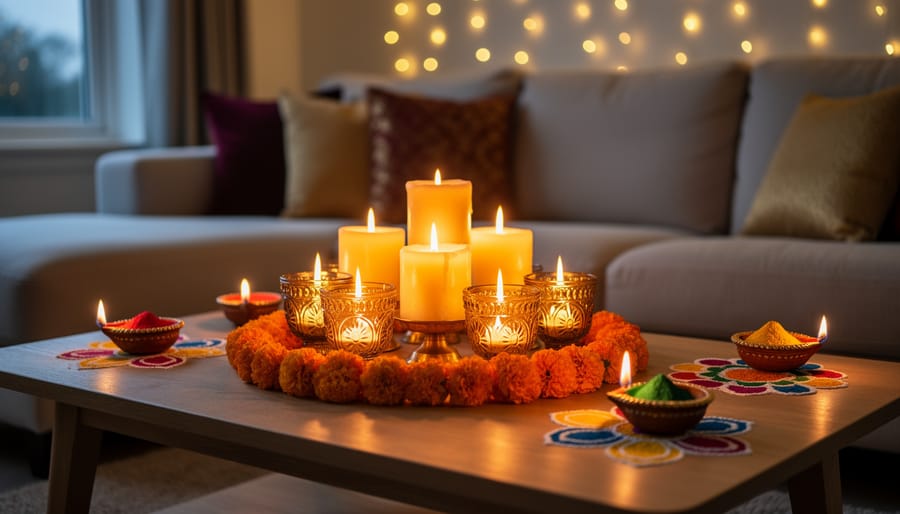
Grouping scented candles is one of the quickest ways to make a room feel upscale, and it takes almost no effort. Pick warm festive scents like sandalwood, vanilla, amber or rose, then cluster candles at different heights on your coffee table or console so the flames and glass catch the light at different levels.
Stick to odd numbers, three or five works best, because uneven groupings look more natural than pairs. Set them on a tray, a brass plate or a wooden board to anchor the cluster and protect the surface from wax. Add a few cozy decor pieces nearby, like a small bowl of petals, to soften the look.
On a budget, mix one or two scented candles with plain unscented pillars or tea lights in glass holders. Keep flames well away from curtains and cushions, and swap in LED candles if you have pets or little ones around.
7. Floral Arrangements in Brass and Glass, Fresh Color Without the Fuss
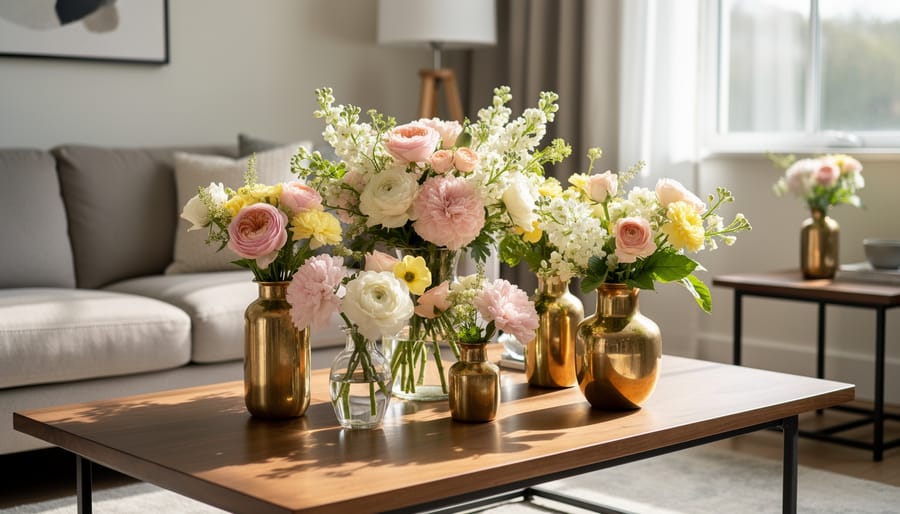
Fresh flowers are the quickest way to bring color and fragrance into your living space. Fill a wide brass bowl or an urli-style vessel with marigolds, roses or whatever seasonal blooms your local market has, and let the heads sit close together for a full, lush look. No florist skills needed. If you’d rather keep it casual, tuck a bunch of blooms into a few clean glass jars and cluster them on a console or windowsill. The warm glow of brass against orange and gold petals suits the festive mood beautifully.
For an easy centerpiece, try this: fill a shallow bowl with water, scatter in a handful of loose petals, and set a few floating candles among them. The flowers bloom in the candlelight, and the whole thing takes about five minutes. Place it on a coffee table where it can be admired but kept away from curtains and anything that could catch a flame. Swap in fresh petals the next day, and the display stays lively through the festival.
8. Fairy Light Draping, Sparkle on a Small Budget
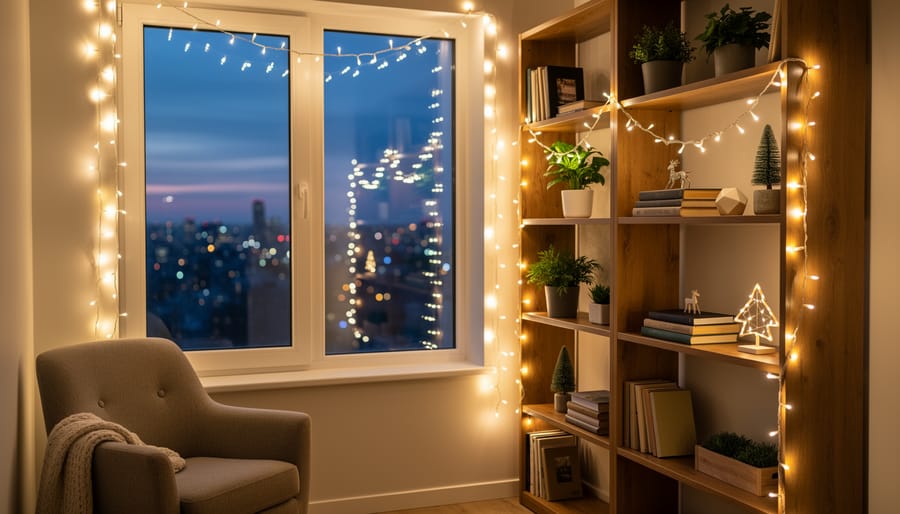
String lights are the quickest way to get that twinkling, ceiling-to-wall Diwali glow. Run a strand along the top of your curtains, weave it through a bookshelf, or frame a window so the whole room seems to shimmer after dark.
Renters can skip the nails. Small removable adhesive hooks or clips hold lightweight strands, and they peel off cleanly when the festival ends. Space them every foot or so and let the wire dip in soft curves rather than pulling it tight.
Color matters more than you’d think. Warm white or amber bulbs echo the flicker of real diyas and make a room feel cozy, while cool white can look harsh next to marigolds and brass. Battery-powered strands are handy where there’s no outlet nearby, and a few extra strands cost little for a big payoff.
9. Festive Cushion Covers and Throws, a Fast Fabric Refresh
Swapping your cushion covers and tossing a new throw over the sofa is one of the fastest ways to make a room feel festive. You skip the cost of new furniture entirely, and the whole space reads differently in about ten minutes.
Reach for jewel tones like deep maroon, emerald and royal blue, then add gold accents through zari borders, mirror work or embroidery. Even a plain cover with a metallic trim lifts the mood.
If your sofa is neutral, you have an easy canvas. Pick two or three colors and repeat them, rather than matching every cushion. Mix textures, such as silk, velvet and cotton, and vary the sizes for a layered look. On a bold or patterned sofa, go calmer with solid covers in one jewel shade. Store the covers flat after the festival and they’ll be ready for next year.
10. A Home Temple Corner with a Pujai Thali Setup
Every home has room for a small puja corner, even a compact apartment. A single shelf, a wall-mounted ledge or a side table is plenty. Start by cleaning the spot and laying down a cloth or a small mat in a rich color like red or gold.
Place your idol at the center, slightly raised if you can. In front of it, set a decorated thali holding a diya, a small bowl of kumkum, some rice and a few flower petals. Fresh marigolds or roses on either side add color and fragrance. Keep the arrangement simple, tidy and uncluttered, since the calm of the space matters more than the number of objects.
If space is tight, choose a smaller idol and a compact thali, and skip tall decor that crowds the shelf. Simple thali sets and idols are widely available at modest cost, so you can build the corner gradually.
Keep any flame well away from curtains and wall hangings. A flameless LED diya is a good swap for tight spots.
11. Handmade Paper Lanterns and Hanging Decor, a DIY Weekend Project
Paper lanterns are the easiest way to add a handmade touch, and they only take a weekend afternoon. If you enjoy handcrafted decor this is a great place to start.
You’ll need:
– 2 to 3 sheets of colored craft paper (deep red, orange or gold)
– Scissors and a glue stick
– A ruler and pencil
– String or ribbon for hanging
– Flameless LED tea lights (skip real flames inside paper)
Here’s how to make one:
1. Fold a sheet of paper in half lengthwise.
2. Draw a line about an inch from the open edge, then mark cutting lines every inch from the folded edge up to that line.
3. Cut along each marked line, stopping at the border.
4. Unfold the paper and curl it into a cylinder, gluing the short ends together.
5. Cut a thin strip of paper and glue it across the top as a handle.
6. Loop string through the handle and hang.
Cluster three or four lanterns at different heights near a window or doorway, then tuck an LED light inside each. Punch tiny holes or cut out lotus shapes for a pretty glow at night.
Set the Festive Table: Dining Space Ideas
12. A Festive Table Runner in Gold and Rich Colors
A table runner is one of the quickest ways to make the dining area feel like Diwali. Look for deep reds, rich maroons and warm golds, or fabrics with embroidery or metallic thread that catch the light of your diyas and candles. A runner down the center of the table, or a set of matching placemats, instantly signals that this is a festive meal.
You don’t need to buy anything new. A saree border or dupatta works beautifully as a no-cost runner. Fold it lengthwise, lay it down the middle of the table, and let the ends drape over the edges for a graceful, layered look. Anything with zari or heavy embroidery makes a lovely base for the other pieces on this list.
Keep the rest of the table simple so the fabric stands out. Plain white or cream plates let the gold and red do the talking, and your centerpiece will sit on the runner as if it was made for it.
13. A Floating Candle and Petal Centerpiece
Fill a wide glass bowl with water, then scatter flower petals across the surface and set a few floating candles among them. Marigold and rose petals look gorgeous in warm candlelight, and the water gently reflects the glow, so the whole table feels softly lit without any fuss.
For the best effect, pick a bowl that sits low enough for guests to see each other across the table. Keep the petals loose rather than packed, leaving open water where the candles can drift and shimmer. Group two or three candles together for a fuller look.
A quick safety note: place the centerpiece well away from serving dishes, napkins, paper decor and anything else that could catch a flame. Never leave it burning unattended, and blow out the candles before the table gets crowded. If you have little ones or pets around, flameless floating LED candles give you the same pretty look with no worries.
14. Decorative Serving Trays and Sweet Platters
Here’s a lovely truth about Diwali: the sweets are already decor. A tray of glossy barfi, golden laddoos and jewel-bright jalebi catches the eye before anyone takes a bite, so give your mithai a stage worth admiring.
Start with a decorative tray or a brass-style platter, which adds a warm metallic glow that echoes your diyas. Arrange the sweets in tidy rows or gentle circles, keeping colors varied so the display looks rich and abundant. Tuck a few marigold petals or small flowers between the pieces, and set one or two tiny diyas at the edges for a festive touch. If you’re using real flames, keep them well away from napkins and sleeves, or choose flameless LED versions.
For snacks, group them on a second, smaller tray at a different height to add depth. The best part is that a serving plate you already own can do the job beautifully.
15. A Mini Rangoli Table Accent, Tradition in Miniature
You don’t need a big floor design to bring rangoli indoors. A miniature version at the center of your dining table or along a sideboard gives the whole space a festive focal point. Start with a small reusable rangoli frame, which is an easy, low-cost option you can fill and clear without any mess. Sprinkle in colored rice powder or press in flower petals, then tuck a tiny diya or two near the edge.
Stick with natural materials like rice powder and petals, which are gentle on surfaces and easy to sweep away afterward.
For a cohesive look, repeat the colors and motifs from the rangoli at your front door. If marigold orange and a lotus shape greeted guests at the threshold, echo them here. That small, matching detail ties the entryway to the table and makes the whole home feel like one celebration.
Diwali Decor at a Glance: Materials, Style and Budget
Planning your Diwali look is easier when you can see how the main decor types stack up. Use the table below to match each idea to your budget, your materials and the style you want, then mix and match across the 15 ideas.
| Decor type | Budget-friendliness | Typical materials | Theme or style | Where to find it |
|—|—|—|—|—|
| Rangoli (ideas 1 and 15) | Very easy on the wallet | Rice powder, organic colors, flower petals | Traditional, colorful, eco-friendly | DIY, local markets |
| Marigold torans (idea 2) | Low cost, especially if you string them yourself | Fresh or artificial marigolds | Warm orange and gold welcome | Local markets, DIY |
| Diyas and candles (ideas 3, 6, 13) | Low to moderate | Clay, wax, LED options | Cozy, glowing, classic | General retailers, local markets |
| Lanterns and hangings (ideas 4, 11) | Low, or free if you make them | Paper, fabric, craft supplies | Playful, festive, handmade | DIY, holiday decor pages |
| Textiles (ideas 9, 12) | Moderate, but reusable | Embroidered fabric, jewel tones, gold accents | Rich, layered, luxe | General retailers, your own wardrobe |
A few details are worth keeping in mind as you plan. Rice powder, organic colors and flower petals are the go-to eco-friendly materials for designs near your entrance. Lotus, peacock and elephant motifs are traditional symbols of prosperity and good luck, so they suit signs, hangings and cushions alike (idea 5 shows how).
For shopping, many general retailers group Diwali decor under their holiday decor pages, and local markets are great for flowers and handmade pieces. Prices and stock vary, so browse before you commit. If you’re working with a tight budget, these affordable decor ideas can help stretch your spending even further.
Make Your Diwali Decor Last: Safety, Storage and Eco-Friendly Choices
A festive home looks best when it also feels safe, and a few habits make that easy. Start with flames: keep diyas and candles well away from curtains, throws, cushion covers and paper decor, and place them on a stable, heat-safe surface. Where space is tight or little hands and paws are about, flameless LED diyas and warm-white fairy lights give the same glow without the worry. They also suit rental homes, where open flames near fabric are best avoided.
Eco-friendly choices come just as naturally. Rice powder, organic colors and flower petals make beautiful rangoli at the entrance, and the petals can go straight into the compost bin once the festival ends. Fresh marigold garlands and petal centerpieces are compostable too, so there’s very little to throw away.
Then think about next year. Reusable pieces like torans, rangoli frames and paper lanterns are worth keeping, so a little care now saves money later. Let them dry fully, then fold or flatten them gently. Wrap delicate lanterns in tissue, and keep everything in a labeled box somewhere cool and dry. Next Diwali, you’ll open it and half your decorating is already done.
Diwali Decor Questions, Answered
How can I decorate my home for Diwali on a budget?
Start with the low-cost basics: diyas, a flower-petal rangoli and string lights. Reusing fabric you already own, like a saree border as a table runner, adds festive color for nothing.
What are easy rangoli ideas for beginners?
Sketch a simple chalk outline near the door, fill it with rice powder or organic colors, and finish with flower petals. A petal-only design is the least messy and needs no drawing skill.
Which materials are eco-friendly for Diwali decor?
Rice powder, organic colors and flower petals are all good choices, especially for rangoli near the entrance. Fresh petals can also be composted afterward.
Which motifs are considered lucky for Diwali?
Lotus flowers, peacocks and elephants are traditional motifs, and they are seen as symbols of prosperity and good luck. They work well on welcome signs, door hangings and rangoli designs.
If you live in a small apartment or rental, you don’t need to give up any of this. Flameless LED diyas, removable hooks for fairy lights and a reusable rangoli frame deliver the same festive look without a single hole in the wall or an open flame.
Final Takeaway: Light Up Your Home, Your Way
You don’t need to do all 15 ideas to make your home feel like Diwali. The ideas across the entryway, living room and dining space are meant to be mixed and matched to fit any budget, and even one or two changes can bring the festive spirit home. A rangoli at the door and a cluster of candles on the coffee table are often enough to change the mood the moment someone walks in.
So begin small. Pick the idea that makes you smile, gather what you already have, and make it yours. Diwali decor works best when it carries your family’s own touch, whether that’s a petal rangoli your kids help fill in or a saree border laid across the dining table. Light a diya, step back, and enjoy the glow you’ve made.