
Choosing outdoor furniture for your patio means balancing three priorities: weather resistance, comfort, and style that complements your home’s architecture. The best approach is to select materials suited to your local climate (all-weather wicker and aluminum for humid regions, teak or steel for dry climates), prioritize durable construction over trendy pieces, and time your purchase to coincide with Memorial Day sales for selection or late August for the steepest discounts. Most homeowners find success investing 60-70% of their budget in core seating that will last 7-10 years, then updating accents like cushions and side tables as trends shift.
The outdoor furniture market in 2026 reflects a shift toward larger-scale patio designs, with stone dining tables, warm frame finishes, and black metal accents dominating new collections. These aren’t just aesthetic choices. Stone tables withstand temperature swings without warping, while powder-coated black aluminum frames hide minor scratches better than lighter finishes. If you’re furnishing a covered porch in Portland, your needs differ dramatically from someone creating a poolside lounge in Phoenix, and understanding those distinctions prevents costly replacements within two seasons.
Most buying mistakes stem from underestimating how quickly sun, rain, and temperature cycles degrade materials. A gorgeous linen-look cushion loses its appeal after three months of afternoon sun unless the fabric carries a UV rating above 500 hours. Storage matters as much as initial quality. Even premium teak benefits from seasonal covers, and stackable dining chairs earn their higher price when you can reclaim 40 square feet of deck space each winter. The following sections break down exactly which materials deliver in specific conditions, when retailers slash prices deepest, and which features separate furniture that lasts a decade from pieces that look shabby by year three.
What to Consider When Buying Patio Furniture
Buying outdoor furniture isn’t just about picking pieces that look good in a showroom. Your patio faces rain, sun, temperature swings, and daily use, so the furniture you choose needs to work with your specific environment and lifestyle. Start by asking yourself how you’ll actually use the space. Will you host frequent dinner parties, or do you prefer quiet mornings with coffee? The answer shapes everything from the size of your dining table to whether you need extra seating that can be easily moved.
Climate is your first filter. If you live in a humid coastal area, metal furniture might rust quickly unless it’s powder-coated aluminum or stainless steel. Desert climates demand UV-resistant materials that won’t crack or fade under relentless sun. And if you experience harsh winters, you’ll want furniture that either weathers freezing temperatures or can be stored easily. Don’t assume all outdoor furniture handles all conditions equally.
- Weather resistance for your specific climate (humidity, sun exposure, temperature range)
- Material durability and expected lifespan under regular use
- Maintenance requirements and whether you’re willing to seal, clean, or cover furniture regularly
- Comfort level, including cushion depth and back support for extended sitting
- Space planning to ensure furniture fits your patio with room to move around
- Budget range that balances upfront cost with long-term value
- Style compatibility with your home’s architecture and existing outdoor elements
Material durability connects directly to how much maintenance you’re willing to handle. Teak weathers beautifully to a silver patina but costs more upfront. Synthetic wicker resists moisture and needs minimal care, though it lacks the warmth of natural materials. Steel frames provide strength but may require touch-up paint after a few seasons. Think honestly about your maintenance habits. If you won’t seal wood annually or wipe down cushions after rain, choose materials that forgive neglect.
Space planning matters more than most people realize. Measure your patio before you shop, and account for walkways between furniture pieces. You need at least 36 inches behind dining chairs so people can pull them out comfortably. Conversation areas work best when seating pieces are close enough for easy conversation but not cramped. The 2026 trend toward larger-scale patio designs makes this even more critical since oversized furniture can overwhelm a small space despite looking impressive online.
Budget and style are your final considerations, but they shouldn’t be afterthoughts. Quality outdoor furniture is an investment. A well-made set that lasts ten years costs less per year than cheap pieces you replace every two seasons. Check out patio budget tips before committing to a purchase. For style, look at your home’s exterior. Modern architecture pairs well with clean-lined metal or synthetic sets, while traditional homes suit classic wood or ornate wrought iron. Your outdoor furniture should feel like a natural extension of your interior design, creating visual flow when you look from inside to your patio.
Types of Outdoor Furniture Materials
Choosing the right material for your patio furniture determines how long it lasts, how much upkeep it requires, and how well it performs in your local climate. Each material brings distinct advantages and trade-offs in durability, appearance, and cost. Here’s what you need to know about the most popular options.
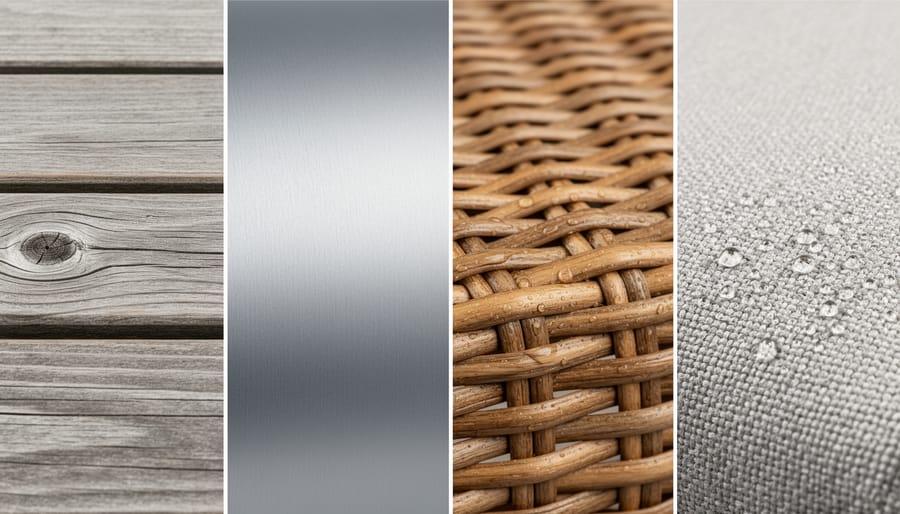
Wood furniture delivers natural beauty and warmth that many homeowners prefer for creating inviting outdoor spaces. Teak stands out as the gold standard, its natural oils repelling moisture and resisting rot without any treatment. You’ll pay premium prices for teak, but it can last decades with minimal care beyond occasional cleaning. Eucalyptus offers similar rich tones at a lower cost, though it needs annual sealing to maintain water resistance. Cedar provides aromatic, lightweight pieces that naturally resist insects and decay, making it ideal for humid climates. All woods weather to a silvery gray patina unless you treat them with oil or sealant to preserve their original color.
Metal furniture suits a range of aesthetics, from modern to traditional. Aluminum combines rust resistance with lightweight portability, perfect if you rearrange your patio frequently or need to store furniture seasonally. It handles wet climates better than any other metal and often features powder-coated finishes, including the warm frame finishes and black accents trending in 2026 outdoor designs. Wrought iron delivers classic elegance and impressive stability in windy conditions, but its weight makes moving it a workout, and it requires rust-preventive treatment in humid areas. Steel falls between aluminum and wrought iron in weight and durability, offering modern clean lines at moderate prices.
| Material | Durability | Maintenance | Best Climate |
|---|---|---|---|
| Teak Wood | Excellent (20+ years) | Low | All climates |
| Aluminum | Very Good (10-15 years) | Very Low | Humid, coastal |
| Synthetic Wicker | Good (7-10 years) | Low | Moderate, dry |
| Natural Wicker | Fair (3-5 years) | High | Covered, dry only |
| Resin Plastic | Good (5-8 years) | Very Low | All climates |
Wicker and rattan create textured, casual looks that work beautifully in covered patios and sunrooms. Natural wicker provides authentic texture but deteriorates quickly when exposed to rain or high humidity, cracking and unraveling within a few seasons outdoors. Synthetic wicker made from resin solves this problem, mimicking the woven appearance while withstanding moisture, UV rays, and temperature swings. Quality synthetic wicker feels surprisingly similar to natural materials and maintains its appearance for years with just soap-and-water cleaning.
Plastic and resin furniture delivers unbeatable affordability and weather resistance. High-density polyethylene resin, often branded as polywood or similar names, uses recycled plastic to create lumber-look pieces that never rot, splinter, or need painting. These materials handle extreme weather without fading or cracking, though cheaper versions can look obviously synthetic. They’re nearly maintenance-free and work in any climate.
Composite materials blend wood fibers with plastic polymers, producing furniture that looks like wood but resists moisture damage. These pieces offer middle-ground aesthetics between pure wood and pure plastic, requiring less maintenance than real wood while providing more natural appearance than standard resin. They suit homeowners who want wood’s warmth without committing to its upkeep, though they typically cost more than basic plastic options while not quite matching solid wood’s premium look.
Patio Furniture Styles and Configurations
Dining Sets vs. Seating Groups
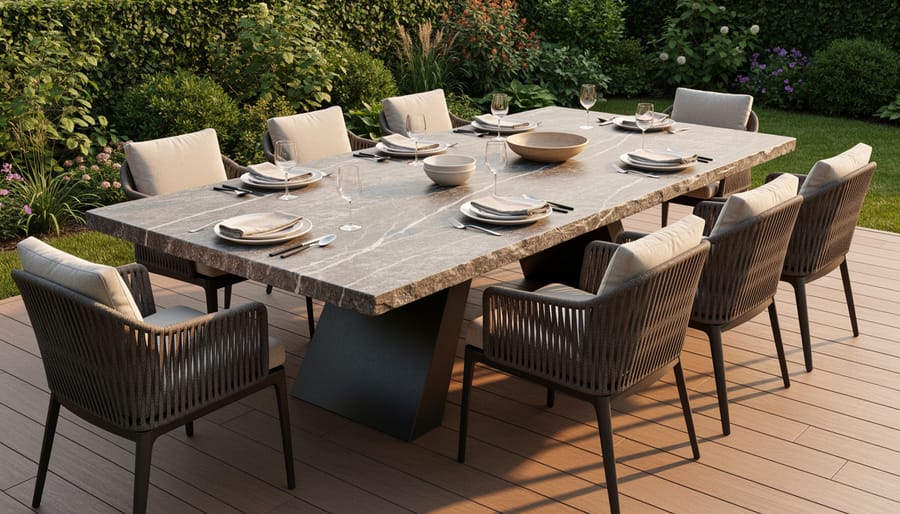
Your first decision shapes everything else about your patio. A dining set anchors the space around meals and entertaining, typically claiming 6 to 10 feet of room for table and chairs. If you host weekend barbecues or prefer al fresco dinners, a dining arrangement becomes the focal point. Stone dining tables, trending in 2026, pair especially well with a traditional outdoor look and offer durability against weather.
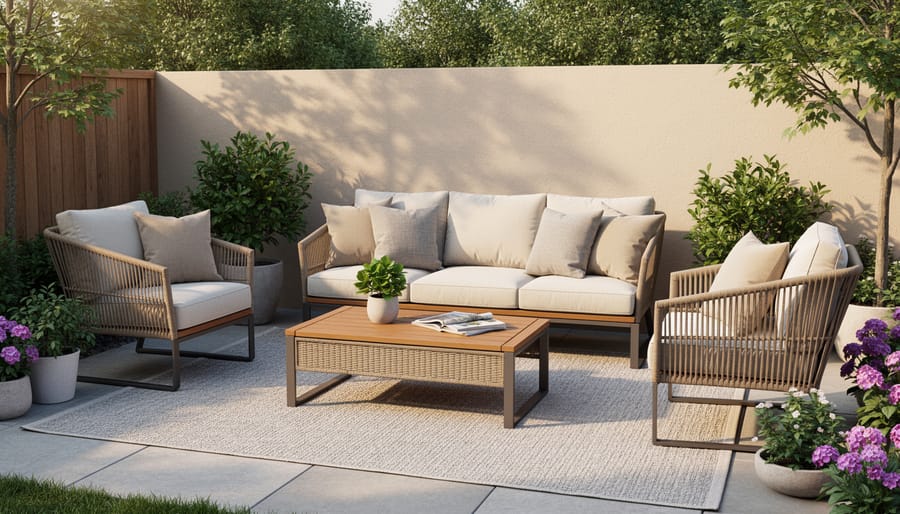
Seating groups, sectionals, loveseats, and conversation sets, prioritize lounging and casual gatherings. They suit patios where you’ll read, relax with coffee, or chat with friends without the formality of dining. These arrangements work beautifully in a minimalist patio style and require less square footage than dining sets, making them ideal for smaller spaces.
Many homeowners choose both, dedicating separate zones to dining and lounging. If you can only pick one, consider which activity happens more frequently on your patio. Track how you’ve used the space over the past month, that pattern reveals whether dining or relaxing should take priority.
Scale and Proportion for Your Space
Start by measuring your patio’s usable dimensions, not just its total square footage. Account for traffic flow by leaving at least 36 inches of clearance around dining tables and 18 to 24 inches between seating pieces and walls or railings. A common mistake is filling every inch, which creates a cramped feel even in generous spaces.
For dining areas, allow 24 inches of table space per person and ensure chairs can pull out fully without hitting obstacles. Sectionals and conversation sets need enough breathing room to feel inviting rather than maze-like. Test potential layouts by marking floor dimensions with painter’s tape before purchasing anything.
The 2026 trend toward larger-scale patio designs means furniture is getting bolder and more substantial. While this warm modern styling works beautifully on spacious patios, smaller areas benefit from streamlined profiles and multi-functional pieces. A compact bistro set or loveseat creates impact without overwhelming tight quarters.
Consider vertical proportion too. Low-profile furniture makes small patios feel more open, while taller backed seating and substantial stone tables anchor larger spaces with visual weight. Match the scale to your patio’s architecture rather than defaulting to showroom-sized pieces that may dominate your actual outdoor room.
Timing Your Purchase: When to Find the Best Deals
The sweet spot for buying outdoor furniture depends on what matters more to you: selection or savings. If you want the widest range of styles, colors, and configurations to choose from, shop between March and May when retailers stock their full seasonal inventory. You’ll see the latest designs, including this year’s trending warm frame finishes and stone dining tables, and you’ll have plenty of time to arrange delivery before summer gatherings start.
For the deepest discounts, wait until August through September when retailers clear out inventory to make room for fall merchandise. You can find substantial markdowns during this window, sometimes 40 to 60 percent off, though your choices will be more limited as popular items sell out.
Memorial Day weekend strikes the ideal balance for most buyers. Retailers run serious promotions to kick off the outdoor living season, but they’re still carrying most of their inventory, so you’re not scrambling through picked-over remnants. You’ll find competitive pricing without sacrificing choice, and you’ll still have the furniture in time to enjoy it all summer.
If you’re shopping off-season, look for floor model sales in late fall when stores need space for holiday displays. Quality pieces marked down for minor wear can be excellent values. When evaluating any sale, check the original price against other retailers to confirm you’re getting a genuine discount, not an inflated “was” price created for the promotion. Free shipping or white glove delivery can add significant value even if the percentage discount looks modest.
Common Mistakes to Avoid
Even seasoned shoppers make avoidable errors when selecting patio furniture. Here are the most common pitfalls and how to sidestep them:
- Ignoring your local climate’s impact on materials and finishes
- Choosing eye-catching designs without testing comfort or build quality
- Misjudging how much space furniture will actually occupy
- Underestimating the time and cost of ongoing maintenance
- Skipping precise measurements of your patio dimensions
- Forgetting where you’ll store pieces during winter months
The biggest mistake is selecting furniture based purely on aesthetics without considering your region’s weather patterns. Wrought iron looks stunning but rusts quickly in humid coastal areas, while untreated wood deteriorates fast in rainy climates. Check that materials match your specific conditions before buying.
Many shoppers also grab furniture during impulse purchases without measuring their space first. A sectional that looked perfect in the showroom can overwhelm a small patio, leaving no room to move around. Measure your area, map out traffic flow, and use painter’s tape to mark furniture footprints before committing.
Cushion and fabric quality deserves far more attention than most buyers give it. Cheap cushions flatten within a season, and low-grade fabrics fade or mildew rapidly. Invest in solution-dyed acrylic fabrics rated for outdoor use, which resist fading and repel moisture far better than budget alternatives.
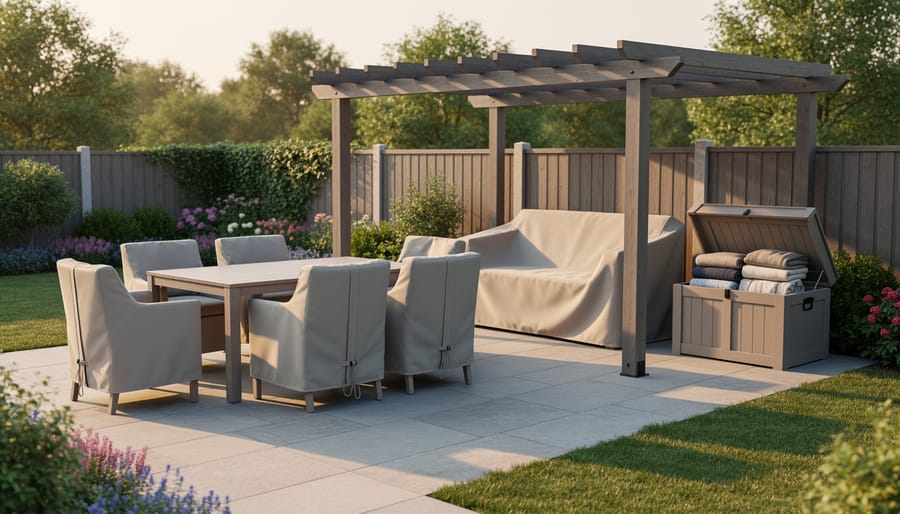
Storage planning is another oversight. If you live where winters are harsh, you need a plan for protecting furniture during off-seasons. Pieces left exposed deteriorate faster, voiding warranties and shortening lifespan. Measure your garage or shed space, or budget for weather-resistant covers that actually fit your furniture dimensions.
Finally, don’t let sale timing pressure you into hasty decisions. While Memorial Day offers strong promotions, buying the wrong pieces at a discount costs more long-term than waiting for the right furniture. If you’re working within tight budgets, explore affordable redesign ideas that let you phase in quality purchases gradually rather than settling for subpar pieces all at once.
Main Options Compared
When weighing your options, the primary choice comes down to material versus intended use. Wood furniture, particularly teak and eucalyptus, offers natural beauty and durability but demands regular sealing and higher upfront costs. Metal options like powder-coated aluminum deliver weather resistance and minimal maintenance at moderate prices, though they can heat up in direct sun. Synthetic wicker provides the best balance for most buyers, it mimics natural texture, resists fading and moisture, and requires only occasional cleaning.
Your space dictates the second major decision: dining setup or lounge area. Dining sets with stone tables (a growing 2026 trend) create formal outdoor entertaining zones, while deep seating groups prioritize relaxation. If you’re choosing one primary arrangement, consider how you’ll actually use the space most often. Many homeowners regret buying a full dining set when they rarely eat outside, or selecting loungers when they frequently host dinner parties.
For mixed-use patios, modular sectionals offer the most flexibility. You can reconfigure pieces for gatherings or intimate evenings, and many systems let you add sections as your needs evolve. This adaptability justifies the typically higher per-piece cost compared to fixed furniture sets.
Recommendations by Use Case
For small balconies or compact patios under 100 square feet, consider bistro sets or folding furniture that maximizes flexibility without overwhelming the space. These pieces provide functional seating while maintaining an open feel.
If you entertain frequently, prioritize modular sectionals and dining sets that seat six or more. The Frontgate Isola 3-Piece Loveseat Set works well for conversation-focused gatherings, while stone dining tables handle the wear of regular use and align with 2026 design preferences.
Budget-conscious buyers should explore aluminum frames with weather-resistant cushions, which offer durability without premium pricing. Shopping during August and September sales yields the deepest discounts on quality pieces. The Polywood Lakeside 4-Piece Deep Seating Set represents solid value for year-round use.
For harsh climates with significant temperature swings, choose all-weather wicker or powder-coated metal that resists fading and corrosion. Plan for proper winter patio care including storage or protective covers during off-seasons.
Renters benefit from lightweight, portable options like resin or aluminum furniture that moves easily between homes. Avoid permanent installations or extremely heavy pieces that complicate future relocations.
Frequently Asked Questions
How do I protect outdoor furniture in winter?
Store cushions indoors and either move furniture to a covered area or use waterproof covers rated for your climate. For pieces left outside, apply protective sealant to wood and clean all materials thoroughly before covering to prevent mold growth.
What’s the most durable material for rainy climates?
Synthetic wicker and powder-coated aluminum perform best in consistently wet conditions because they resist rust, won’t warp or crack, and require minimal maintenance. Teak is also excellent for rainy areas due to its natural oil content, though it needs occasional cleaning.
Can I mix different furniture materials on my patio?
Mixing materials adds visual interest and is a popular design choice for 2026, especially combining warm wood tones with black metal accents. The key is maintaining consistent cushion colors or patterns to create cohesion across different material finishes.
How much should I budget for a basic patio set?
A quality basic seating set for four people typically ranges from $800 to $2,000, while dining sets start around $600 for budget options and climb to $3,000 or more for premium materials. Shopping during late summer clearance sales or Memorial Day promotions can save 20-40%.
What cushion fabric works best outdoors?
Solution-dyed acrylic fabrics resist fading, mildew, and water damage better than any other outdoor material. Look for brands that specifically label cushions as UV-resistant and check that covers are removable for washing.
Beyond these common questions, remember that your specific circumstances matter more than general rules. If you live in a mild climate with covered patio space, you’ll have more material options than someone facing harsh winters or intense sun exposure. Similarly, if you entertain frequently, investing in commercial-grade fabrics and reinforced frames pays off quickly.
The best approach combines research with hands-on evaluation. Visit showrooms to test comfort levels, feel material quality, and see finishes in person rather than relying solely on online photos. Many retailers now offer sample fabric swatches you can take home to see how colors look in your actual outdoor lighting throughout the day.
Don’t hesitate to ask retailers specific questions about warranty coverage, replacement part availability, and whether floor models go on sale. These details often reveal which brands stand behind their products and which are designed for quick turnover rather than longevity.
Choosing the right outdoor furniture for your patio isn’t about finding the perfect piece, it’s about finding the perfect balance. You’re weighing aesthetics against durability, budget against longevity, and personal style against practical climate needs. The best patio setup reflects how you actually live, not just how you wish your outdoor space would look in a magazine spread.
Take your measurements seriously, shop during those optimal windows when selection meets savings, and resist the urge to compromise on quality for pieces you’ll use regularly. Your patio furniture is an extension of your home’s design story, creating spaces where morning coffee tastes better and summer evenings stretch longer. Whether you’re drawn to the warm frame finishes trending in 2026 or prefer timeless teak that weathers gracefully, invest in pieces that match both your climate and your lifestyle.
The furniture you choose today will shape countless outdoor moments for years to come. Make those choices count.