
Picture floor-to-ceiling windows framing endless ocean views, natural breezes flowing through open spaces, and interiors that blur the line between sand and home. Coastal home design plans aren’t just about decorating with seashells and nautical stripes. They’re strategic blueprints that address real architectural challenges like salt air corrosion, hurricane-force winds, and moisture infiltration while creating spaces that capture the relaxed elegance of seaside living.
Whether you’re building a beachfront property or bringing coastal vibes to a landlocked subdivision, the right design plan makes all the difference. You’ll need to think beyond paint colors and consider foundation types that prevent flooding, window placements that maximize natural light without excessive heat gain, and material selections that can withstand harsh coastal elements for decades.
In 2026, coastal design has evolved far beyond the tired beach cottage stereotypes. Today’s plans incorporate resilient building techniques learned from global coastal communities, from Australian surf shacks to Mediterranean villas. They balance practical concerns like storm protection with aesthetic goals like creating that effortless, breezy atmosphere you experience in the best waterfront homes.
This guide walks you through everything from choosing the right foundation for your site to planning room layouts that capture views and ventilation. You’ll discover material options at every price point, explore diverse coastal styles from around the world, and learn how professional architects approach spatial planning for properties near water. Even if you’re miles from the nearest beach, these principles will help you design a home that feels like a permanent vacation.
What Makes a Coastal Home Design Plan Different
Coastal home design plans start with a fundamentally different premise than traditional residential architecture. Rather than creating rooms that turn inward, focusing on walls and interior furnishings as focal points, coastal plans are built around the environment itself. Every decision, from the home’s orientation on the lot to window placement, ceiling heights, and door locations, serves the goal of connecting inhabitants to water, sky, and shifting natural light.
The most obvious distinction lies in how these plans treat boundaries. Where conventional homes create clear separations between inside and outside, coastal designs intentionally blur that line. You’ll find oversized sliding glass doors that pocket completely into walls, covered verandas that function as additional living rooms, and floor plans that guide movement naturally from kitchen to deck to beach access. This isn’t just aesthetic preference. It reflects how people actually live in coastal settings, moving fluidly between spaces as they cook, entertain, and relax throughout the day.
Material selection in coastal plans goes far beyond style considerations. Salt air corrodes standard metals, humidity warps certain woods, and intense sun exposure fades finishes that would last decades inland. Coastal design plans specify materials that can handle these challenges: marine-grade stainless steel hardware, naturally rot-resistant woods like teak or ipe, concrete or fiber-cement siding, and impact-resistant windows in storm-prone regions. These aren’t upgrades or optional features. They’re fundamental to creating a home that remains beautiful and structurally sound through years of exposure.
The core architectural features that distinguish coastal plans include:
- Expansive window walls positioned to capture specific views and light angles
- Open floor plans that allow breezes to flow through the entire home
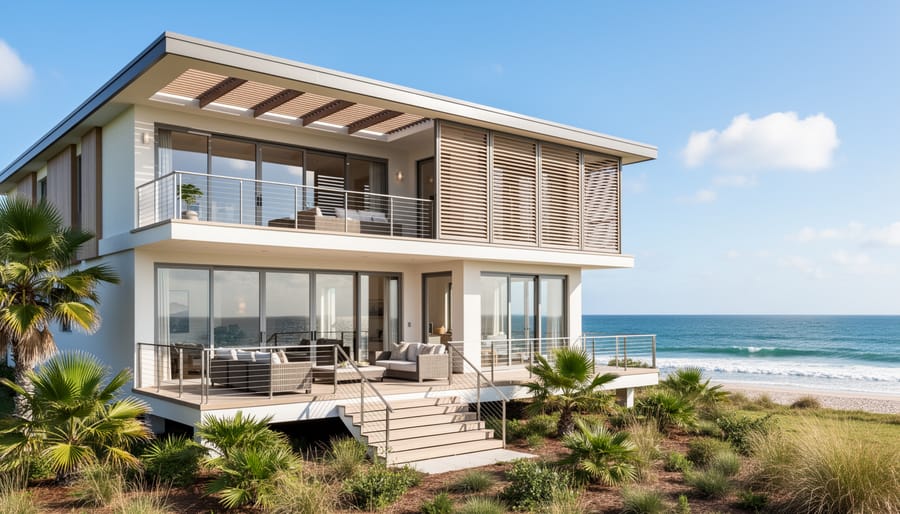
- Elevated foundations or pilotis that protect against flooding and storm surge
- Deep overhangs and covered porches that shade interiors while creating outdoor living space
- Strategic ceiling heights that draw hot air upward and enhance the sense of openness
- Durable, low-maintenance exterior materials built to withstand coastal elements
Room orientation follows the path of sunlight and prevailing breezes rather than street frontage or lot lines. Master bedrooms often face east to catch sunrise over water, while living spaces might angle toward afternoon light and sunset views. Bathrooms and utility areas occupy interior or less desirable orientations, freeing prime real estate for spaces where you’ll actually spend time. This reversal of typical residential priorities creates homes where the best views belong to daily life, not just special occasions.
Layout Essentials: Designing for the Coastal Lifestyle
Prioritizing Natural Light and Views
The sun’s path across your property is the single most important planning decision you’ll make. Before you position a single room, spend a week tracking how light moves through the space at different times of day. Morning light from the east is gentler and cooler, perfect for bedrooms and breakfast nooks. Western exposure brings dramatic afternoon and sunset light but can overheat rooms without proper shading or UV-filtering glass.
Orient your main living areas to capture the best views, then design your window strategy around that axis. Floor-to-ceiling windows work beautifully on walls facing the water, but many architects recommend breaking up solid glass expanses with strategically placed mullions or transoms to add architectural interest while maintaining the view. Corner windows, where two glass walls meet at 90 degrees, eliminate visual barriers and make you feel like you’re standing directly on the shoreline.
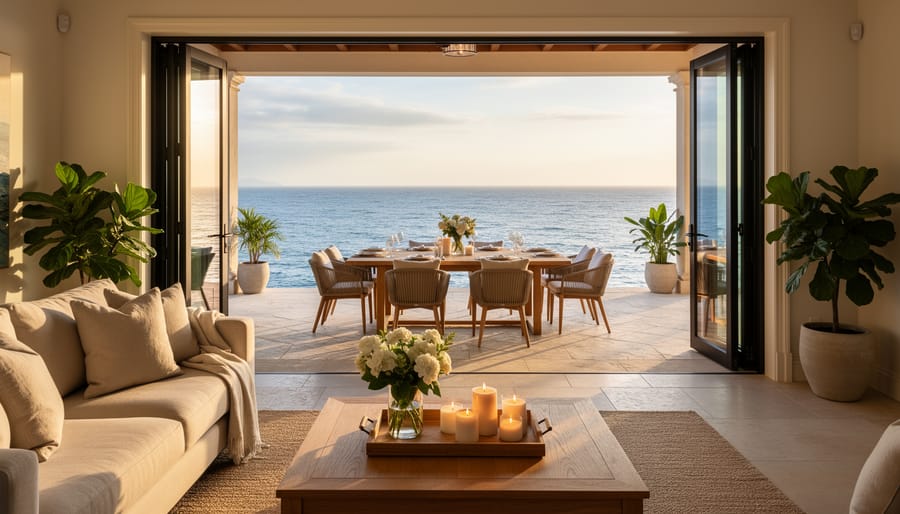
Glass doors should do more than provide access. Position sliding or accordion doors where they’ll frame specific views like a living painting: a lone palm tree, a rock formation, or the point where water meets sky. The hardware matters too. Recessed track systems and minimal frames reduce visual interruption when doors are closed and disappear entirely when open.
Don’t forget vertical opportunities. Clerestory windows high on walls flood interiors with light without sacrificing privacy or wall space for furniture. Skylights over stairwells and hallways turn typically dark transition spaces into light-filled galleries that connect you to the sky above.
Creating Seamless Indoor-Outdoor Transitions
The line between indoors and outdoors should feel like a suggestion rather than a boundary in coastal homes. Start by positioning large-scale glass elements where they’ll frame your best views and connect to outdoor living areas. Sliding glass walls that pocket completely, accordion-style doors that span entire room widths, and floor-to-ceiling windows create the kind of openness that defines successful indoor-outdoor living spaces. When these elements retract fully, they transform separate zones into one continuous area perfect for coastal gatherings.
Transitional spaces make this connection work in daily life. A covered porch with ceiling fans and weatherproof furniture becomes a genuine outdoor room, not just a pass-through. Wide thresholds without raised doorsills let you move between kitchen and deck without tripping over gear or wrestling with sliders while carrying platters. Design these thresholds at least five feet wide so traffic flows naturally in both directions during parties.
Continuity in materials strengthens the indoor-outdoor blur. Carry interior flooring onto covered porches, or use complementary materials that share a color palette. Install the same overhead lighting style inside and on covered exterior spaces. When you’re furnishing outdoor areas, timing matters, watch for patio furniture sales to outfit these transitional zones with pieces durable enough for coastal conditions but stylish enough to feel like extensions of your interior rooms.
Material and Structural Considerations
Coastal environments demand materials that can handle what nature throws at them while still looking beautiful years down the line. Salt spray corrodes metal, humidity warps wood, and UV rays fade finishes faster than in most inland locations. Your material choices will determine whether your home develops that weathered patina that works with coastal style or simply looks beaten down.
Start with the bones of the structure. Concrete and steel framing resist termites and rot better than traditional wood framing in humid climates, though engineered lumber treated for moisture exposure offers a middle ground. For exterior cladding, fiber cement siding outperforms wood in salt air, requiring minimal maintenance while delivering the classic coastal look. Stucco works well in Mediterranean and tropical settings but needs proper drainage systems to prevent moisture infiltration behind walls.
| Material Application | Best Coastal Options | Durability Rating | Maintenance Level |
|---|---|---|---|
| Flooring | Porcelain tile, luxury vinyl plank, sealed concrete | High | Low (occasional sealing) |
| Exterior Siding | Fiber cement, marine-grade plywood, stucco | High | Low to Medium |
| Roofing | Metal standing seam, concrete tile, slate | Very High | Low |
| Decking | IPE, composite, aluminum | High | Medium (annual cleaning) |
Window and door selection matters enormously in coastal settings. Impact-resistant glass protects against storms while vinyl or fiberglass frames resist salt corrosion better than aluminum. Some traditional layout rules to break actually serve you well here, oversized openings that maximize views need reinforced headers and proper flashing to prevent water intrusion.
For interior finishes, porcelain tile floors handle sand and moisture without complaint, while luxury vinyl plank offers warmth underfoot with similar durability. Skip carpet in main living areas. Marine-grade stainless steel hardware resists corrosion, and solid surface countertops like quartz need less sealing than natural stone in humid conditions.
Don’t overlook systems that protect your materials. Whole-house dehumidification prevents mold and wood damage, and proper ventilation keeps moisture from building up in enclosed spaces. If you have well water near the coast, systems that maintain water filtration protect plumbing fixtures from mineral buildup and corrosion. Exterior paint needs UV inhibitors and mildew resistance; expect to repaint every five to seven years rather than the ten you might get inland. These practical considerations shape your design just as much as aesthetic preferences, ensuring your coastal home ages gracefully rather than requiring constant repairs.
Room-by-Room Planning for Coastal Homes
Living Spaces That Embrace the View
In coastal living rooms, the window isn’t just a feature, it’s the centerpiece. Arrange seating to face the view rather than defaulting to a TV-centered layout. Position sofas and chairs perpendicular or angled toward windows, creating conversation zones that let everyone enjoy the scenery without craning their necks. A pair of armchairs flanking a window becomes an instant focal point, while a low-profile sofa keeps sightlines open across the room.
Avoid tall bookcases or bulky entertainment centers that block natural light or compete with the horizon line. Instead, choose furniture with slender frames and open bases that maintain visual flow. Float seating arrangements in the center of the room when possible, leaving perimeter walls free for unobstructed views and easy access to sliding doors or balconies.
Layer the space with lightweight, movable pieces, ottomans, side tables, poufs, that adapt when you’re hosting a crowd or shifting the setup for sunset watching. The goal is flexibility that respects the view as your living room’s most valuable asset.
Coastal Kitchens Built for Gathering
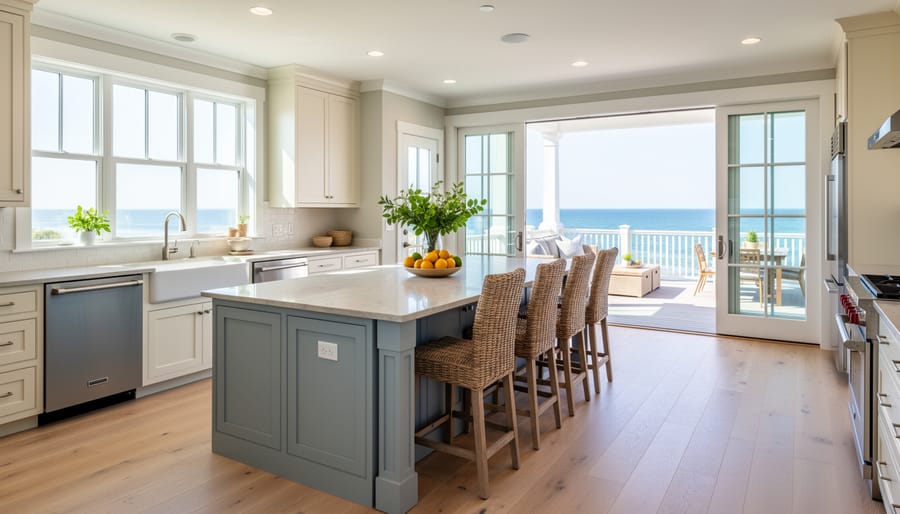
Coastal kitchens serve as command centers for a lifestyle that blurs the line between beach time and meal prep. An oversized island anchors the space, offering prep stations that double as casual dining spots where guests can linger with drinks while you cook. Position the island to face water views rather than the wall, transforming everyday tasks into moments of connection with the landscape outside.
Storage planning requires thinking beyond standard cabinets. Deep drawers accommodate platters and serving pieces for impromptu gatherings, while dedicated zones for coolers, beach bags, and outdoor dining gear keep entertaining essentials organized. A mudroom-style entry adjacent to the kitchen solves the sandy-feet problem, complete with a utility sink for rinsing produce, beach finds, or salt-crusted hands.
The connection to outdoor spaces makes or breaks coastal kitchen functionality. Wide pass-throughs or accordion doors eliminate barriers between indoor cooking and deck dining, while a service window or bar-height counter creates seamless flow for outdoor entertaining. Position the refrigerator and sink near these openings so you’re not constantly trekking across the kitchen when hosting. Durable materials like quartz counters and marine-grade hardware handle the humidity and salt air that inevitably drift inside when you’re living the coastal life fully.
Bedrooms and Bathrooms as Retreats
Private quarters in coastal homes deserve the same attention to view, light, and air as public spaces. Position the primary bedroom to capture morning sun and prevailing breezes, often the best corner of the house, where two walls of windows create cross-ventilation and frame water views from bed. French doors opening to a private balcony or terrace extend the sleeping space outdoors, perfect for morning coffee or watching storms roll in.
Bathrooms become true retreats when they incorporate coastal elements like freestanding soaking tubs positioned at windows overlooking the water. Skip the tub-shower combo in favor of separate walk-in showers with frameless glass and multiple showerheads, or better yet, add an outdoor shower accessible from the primary bath, a coastal essential that keeps sand outside while offering an invigorating experience under open sky.
Guest bedrooms benefit from similar orientation strategies, though you might reserve the prime views for where you’ll spend the most time. Built-in window seats, sleeping porches with operable screens, and ensuite bathrooms with natural light keep guests comfortable and independent. The goal is creating rooms that feel like personal sanctuaries, where the coastal setting becomes part of the daily rhythm of waking and unwinding.
Coastal Design Plans for Different Property Types
Coastal design principles work beautifully across surprisingly diverse settings, and the smartest plans recognize that location and property type shape how you implement those principles rather than whether you can achieve the aesthetic at all.
Beachfront properties offer the most straightforward application, you’re designing around actual ocean views, salt air, and sandy foot traffic. Here, your plan prioritizes hurricane-resistant construction, corrosion-proof materials, and maximizing those water views from every possible angle. Elevated first floors, extensive covered outdoor spaces, and separate entries for beach access become essential elements rather than nice-to-haves. The main challenge isn’t achieving coastal style but managing the practical demands of true waterfront living while maintaining livable interiors that don’t feel like sealed bunkers.
Inland coastal-inspired homes require a different approach. Without actual water views, your design plan creates the feeling through light, color, and spatial planning. Large windows that capture sky views replace oceanfront glass walls. Courtyards with water features or pools provide the reflective, breezy quality of waterside living. These homes often embrace coastal aesthetics more freely since they’re not competing with dramatic natural views, you can layer in more decorative coastal elements without overwhelming actual seascapes.
Condos and townhouses present unique planning opportunities. Vertical living means maximizing smaller footprints, often with spectacular views from upper floors. Design plans for these spaces focus on sight lines from the entry through to windows, keeping furniture low-profile to preserve views, and using balconies or terraces as essential outdoor rooms rather than afterthoughts. Storage becomes critical, beach gear, water sports equipment, and seasonal items need designated spots that don’t clutter limited square footage.
Lake and riverside properties adapt coastal principles to freshwater settings. The design language shifts slightly, often incorporating more wood tones, warmer palettes, and regional architectural vernacular, but the core planning elements remain: orienting rooms toward water, creating indoor-outdoor flow, and selecting materials that handle moisture and temperature swings. These homes often include boathouses, docks, and waterside fire pits as integral parts of the overall design plan rather than separate features.
Real Coastal Homes: Design Plans in Action
Nothing teaches coastal design planning better than seeing how real homes interpret these principles across different settings. From grand oceanfront estates to humble beach cottages, successful coastal homes share thoughtful design decisions that prioritize light, views, and the unique demands of waterside living.
Palm Beach represents coastal design’s most refined expression. Homes here balance hurricane resistance with sophisticated aesthetics, incorporating impact-resistant glass walls that don’t sacrifice views, elevated foundations that feel graceful rather than utilitarian, and outdoor spaces designed for year-round use despite intense sun and occasional storms. The floor plans typically feature generous loggias that function as outdoor rooms, connecting formal living spaces to pools and gardens while providing shade and cross-ventilation.
Mediterranean coastal homes demonstrate a different approach entirely. Along the Italian Riviera and Greek islands, centuries-old design wisdom shows in thick stucco walls that regulate temperature, small strategically-placed windows that frame specific views while blocking harsh afternoon sun, and terraced layouts that follow hillside topography. Interior courtyards create protected outdoor spaces even in homes with minimal lot depth, while outdoor stairs and multiple entry points allow residents to move between levels without tracking beach sand through main living areas.
Australian beach houses excel at casual, open planning that maximizes limited lots. Many incorporate ground-level garages and storage that double as storm barriers, with main living spaces elevated to capture breezes and views. Sliding glass panels, sometimes spanning entire walls, pocket completely away, transforming living rooms into covered verandas. The kitchens flow seamlessly into outdoor cooking and dining zones, recognizing that coastal living happens primarily outside.
New England coastal homes reveal how climate shapes design choices. Here, successful plans feature mudrooms substantial enough to handle wet sailing gear and beach equipment, enclosed porches that extend the season, and living spaces oriented to capture southern light during shorter winter days. Window placement balances view access with heat retention, often concentrating glass on water-facing walls while keeping street-side elevations more enclosed for privacy and efficiency.
Each setting teaches something different, but all successful coastal homes share layouts that respond honestly to their environment rather than imposing a generic template.
Budget-Friendly Coastal Design Planning
Coastal design doesn’t require waterfront property prices. Focus first on maximizing natural light, paint in whites and soft blues costs the same as any other color, yet instantly transforms a space. Large mirrors strategically placed opposite windows double the light and create that airy, expansive feel characteristic of seaside homes without adding square footage.
Prioritize your spending on elements that define the coastal experience. Quality windows that flood rooms with light deliver more impact than expensive furniture. A single set of French doors opening to a patio creates that indoor-outdoor connection far more effectively than numerous decorative accessories. These structural improvements also add resale value while capturing the essence of coastal living.
For materials, consider durability alongside aesthetics. Marine-grade stainless steel hardware costs more upfront but outlasts cheaper alternatives in humid environments. However, you can save money on upgrades by using fiber cement siding instead of traditional wood shakes, it mimics the look while resisting moisture damage at half the cost.
DIY modifications enhance coastal character affordably. Remove upper kitchen cabinets yourself and replace them with open shelving using reclaimed wood or simple brackets. This creates the relaxed, accessible feel of coastal kitchens while reducing material costs. Refinish existing floors in a whitewash or bleached finish rather than replacing them entirely.
When working with contractors, keep renovations on budget by being selective about custom work. Standard window sizes cost significantly less than custom, and many stock options work beautifully in coastal designs. Save custom millwork for one signature element, perhaps a built-in window seat with storage, rather than throughout the entire home.
Shop salvage yards for architectural elements like vintage shutters, weathered beams, or antique nautical lighting. These pieces add authentic coastal character and often cost less than new mass-produced alternatives while bringing genuine history into your design.
Working with Architects and Designers
Finding the right professional to bring your coastal design vision to life starts with being clear about how you actually live. Before your first consultation, document your daily routines, entertaining habits, and non-negotiables. Do you cook elaborate meals for twelve or reheat takeout for two? Will you really use that rooftop deck in January, or should those square feet go elsewhere? The more specific you are about lifestyle over aesthetics, the better your architect can translate abstract Pinterest boards into functional floor plans.
When evaluating portfolios, look beyond pretty photos to identify genuine coastal expertise. Professionals experienced with waterfront properties understand permit complexities, flood zone regulations, and how salt air destroys certain materials within months. Ask to see projects with similar coastal conditions to yours, whether that’s hurricane-prone Gulf Coast or breezy Mediterranean climate. Notice how they handle transitions between indoor and outdoor spaces, window placement for view capture, and whether storage solutions account for beach gear reality.
During initial meetings, ask about their process for balancing your wish list with budget and site constraints. How do they approach value engineering without compromising the coastal character? Request references from clients whose homes are at least three years old so you can learn about long-term material performance and whether those sliding glass walls still operate smoothly after seasonal use.
How much does it cost to hire an architect for a coastal home?
Architectural fees typically range from 8-15% of construction costs, with coastal projects often toward the higher end due to specialized knowledge requirements. Expect to budget more for waterfront properties requiring engineered solutions for challenging sites.
When should I start working with a designer for a coastal build?
Engage professionals during site selection or immediately after purchase, before finalizing any plans. Early involvement helps identify opportunities and constraints that dramatically affect design possibilities and costs.
What should I bring to my first meeting with a coastal home architect?
Bring photos of homes you love, notes about how you live daily, your realistic budget, and questions about their coastal-specific experience. Examples of what you dislike are equally valuable for establishing boundaries.
Communication continues beyond the planning phase. Schedule regular check-ins to review progress and make decisions promptly when your architect needs direction on trade-offs. Coastal projects often involve weather-related delays and permit adjustments, so building flexibility into your timeline and maintaining open dialogue prevents frustration when the unexpected inevitably happens.
The best coastal home design plans don’t chase a look, they shape spaces around the way you actually live. Whether you’re building on a windswept bluff or bringing coastal calm to a suburban street, start with honest questions: Where will you watch the sunrise? How do you want to move between cooking and the deck? What will make coming home feel like a deep breath?
Great coastal design happens when function and beauty reinforce each other. The window seat that frames the harbor view also becomes your favorite reading spot. The mudroom that handles sandy feet keeps the rest of your home serene. The deck that extends your living room turns weeknight dinners into small celebrations.
You’ve seen how layout, materials, and room-by-room planning work together to create homes that honor their coastal setting without sacrificing comfort or practicality. Now it’s your turn to translate these principles into a plan that fits your site, your budget, and your daily rhythms.
Ready to bring more coastal inspiration into your space? Explore our collection of coastal home decor ideas to see how these design principles come to life in real rooms, from quick weekend updates to complete transformations.