
Canadian home decor is defined by a sophisticated blend of rustic warmth, minimalist Scandinavian influences, and raw natural materials that reflect the country’s vast landscapes and changing seasons. This aesthetic celebrates reclaimed wood, organic textiles like linen and wool, a neutral color palette punctuated by deep forest greens and charcoals, and the functional simplicity born from long winters spent indoors. With the Canadian home decor market valued at USD 16,298.62 million in 2025 and projected to reach USD 22,764.82 million by 2034, this once regional style has evolved into a global trend that prioritizes cozy, livable spaces over Instagram-perfect showrooms.
What sets Canadian design apart is its refusal to choose between beauty and practicality. You’ll find furniture built to last generations, layered textiles that invite you to curl up during snowstorms, and architectural details like exposed beams and stone fireplaces that nod to cottage country heritage. The style draws heavily from Indigenous craft traditions, French-Canadian folk art, and the clean lines of mid-century modern pieces that populated suburban homes across Ontario and British Columbia in the 1960s.
Creating this look in your own space doesn’t require a complete renovation or expensive imports. Start with foundational elements like a chunky knit throw, a salvaged pine dining table, or simple ceramic pieces in matte finishes. The upcoming Canada Light Expo in Toronto this November offers inspiration for incorporating the ambient, layered lighting essential to Canadian interiors, where long winter evenings demand thoughtful illumination beyond overhead fixtures.
What Makes Canadian Home Decor Different
Canadian home decor isn’t just another design trend, it’s a philosophy shaped by one of the world’s most diverse landscapes and challenging climates. While Scandinavian design gets most of the attention for minimalist northern aesthetics, Canadian style carves out its own distinct identity by embracing contradiction: it’s both rugged and refined, minimalist yet warm, modern while honoring tradition.
The defining feature of Canadian design is its deep connection to the natural world. Unlike styles that merely reference nature, Canadian homes often blur the line between indoors and out. Floor-to-ceiling windows frame forest views like living art. Stone from local quarries becomes fireplace surrounds. Driftwood collected from Atlantic or Pacific shores transforms into sculptural lighting. This isn’t decoration for decoration’s sake, it’s about acknowledging that nature isn’t something Canadians visit on weekends; it’s the backdrop of daily life.
Geography and climate don’t just influence Canadian design, they dictate it. With winters stretching six months in many regions, homes must function as sanctuaries against brutal cold while maximizing precious daylight. This necessity has created sophisticated approaches to cold-weather decor that prioritize both warmth and light. Layered textiles, strategic lighting, and reflective surfaces combat the darkness, while the summer months see these same spaces opened up and pared back to celebrate abundance.
- Abundant natural wood in furniture, flooring, and architectural details
- Textured natural materials like wool, linen, and leather
- Flexible spaces that adapt from cozy winter retreats to airy summer living
- Indigenous art and craft traditions woven into contemporary design
- Clean lines balanced with organic, imperfect elements
The multicultural aspect sets Canadian design apart from its northern European cousins. A Toronto home might blend Scandinavian simplicity with Asian minimalism and French-Canadian heritage pieces. Vancouver interiors often marry Pacific Northwest natural wood with Japanese-inspired tranquility. This cultural layering creates spaces that feel collected rather than curated, personal rather than prescribed.
What really distinguishes Canadian style is its rejection of extremes. It’s neither the stark minimalism of Nordic design nor the cluttered maximalism of English cottages. Instead, Canadian homes strike a balance, clean enough to feel calm, warm enough to feel inviting, modern enough to feel current, traditional enough to feel rooted. This is design that works for real life in a real climate, not just for Instagram.
The Canadian Color Palette: Beyond the Expected
When you picture Canadian color palettes, your mind likely jumps to forest greens and charcoal grays. While these earthy foundations certainly anchor the aesthetic, Canadian homes tell a richer chromatic story that shifts with the country’s dramatic seasons and vast geography.
The base palette draws directly from the boreal landscape: deep mossy greens, slate blues, warm taupes, and weathered wood tones create a grounding canvas. These shades dominate walls and larger furniture pieces, providing the comfort essential during months of snow and short daylight hours. But Canadian designers know that monotone spaces feel more hibernation den than inviting home.
The magic happens in the accent layers. Think of the unexpected jewel tones that punctuate Canadian interiors: Aurora-inspired teals and purples that mirror the Northern Lights dancing across winter skies, burnt oranges and deep burgundies pulled from autumn’s maple leaves, and icy blues reflecting coastal waters from Newfoundland to British Columbia. These saturated pops appear in textiles, artwork, and carefully chosen decorative objects.
Summer’s abundance gets its due through seasonal rotation. Lighter linens in sage green and butter yellow emerge when days stretch long, replacing heavier winter layers. Terracotta pots of herbs, lake-inspired aquas in kitchen textiles, and golden wheat tones celebrate the brief but glorious warm months.
This palette approach creates homes that feel alive rather than static. The layering technique means you’re never locked into one seasonal mood. Swap out a few throw pillows and a blanket, and your space shifts from cozy winter retreat to bright summer cottage without requiring a complete redesign.
Materials That Tell a Story
The materials you choose tell the story of where you live and what you value. Canadian design anchors itself in resources drawn straight from the landscape, dense forest woods, rugged stone pulled from the Canadian Shield, thick wool woven to survive prairie winters. These aren’t decorative afterthoughts. They’re fundamental building blocks that ground a space in authenticity.
Reclaimed wood carries particular weight in Canadian homes. Barn boards salvaged from century-old Ontario farmsteads, weathered cedar from coastal fishing shacks, or pine rescued from demolished warehouses arrive with visible history, nail holes, saw marks, layers of faded paint. You’ll see these planks repurposed as dining tables, accent walls, or in fireplace styling where the grain and patina become focal points. This practice reflects both environmental consciousness and respect for what came before.
Stone appears everywhere, from countertops cut from Quebec quarries to river rock fireplaces that anchor living rooms. The textures vary wildly, smooth granite, rough limestone, slate with natural splits, but the intent stays constant: bringing the solidity of the outdoors inside.
Wool textiles layer warmth throughout Canadian spaces. Hudson’s Bay point blankets, Cowichan sweaters turned into pillow covers, thick throws in natural grays and creams. These pieces do real work during months when temperatures drop below freezing, combining function with tactile comfort.
Indigenous crafts represent a growing appreciation for handcrafted decor rooted in specific traditions, birch bark baskets, soapstone carvings, woven sweetgrass. Sourcing these ethically from indigenous artists supports cultural preservation while adding pieces with genuine provenance.
The sustainability aspect runs deeper than trend. Choosing local materials reduces shipping emissions, supports regional economies, and ensures pieces withstand Canadian climate extremes. A maple credenza built in Nova Scotia performs differently than imported particleboard when humidity swings forty percent between January and July. These materials last, which means less waste and fewer replacements over decades.
Room-by-Room Canadian Design Inspiration
Creating a Cozy Living Room
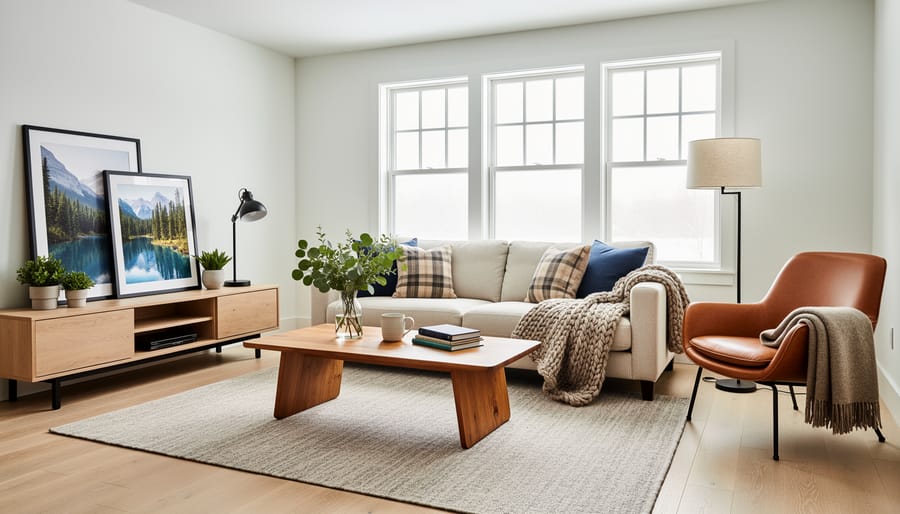
A Canadian living room starts at ground level, literally. Thick wool area rugs anchor the space while providing insulation against cold floors, a practical consideration that doubles as a design statement. Layer these with sheepskin throws or chunky knit poufs to create textural depth that invites bare feet and long conversations.
The furniture arrangement centers around gathering rather than screens. A substantial sectional or deep sofa in neutral linen or leather faces a wood-burning fireplace or its modern equivalent, a clean-lined gas insert framed in natural stone or blackened steel. Canadian living rooms treat the fireplace as architecture, not decoration. If you’re working without one, a wood stove or even a carefully curated mantel with candles and birch logs creates the same focal warmth.
Choose coffee and side tables in live-edge wood or reclaimed timber. The grain tells a story, knots, splits, and weathering speak to the material’s origins in a way polished furniture never can. Balance these rustic elements with modern upholstery and lighting to avoid veering into theme-park territory.
Textiles do the heavy lifting in Canadian comfort. Drape heavy linen curtains that puddle slightly at the floor for insulation and softness. Stack the sofa with wool blankets in plaid or Nordic patterns, pieces meant for use, not show. This hygge-inspired layering makes the room feel embraced rather than decorated, transforming simple budget-friendly DIY textile swaps into a cohesive, lived-in aesthetic that welcomes guests to stay awhile.
The Kitchen as Heart of the Home
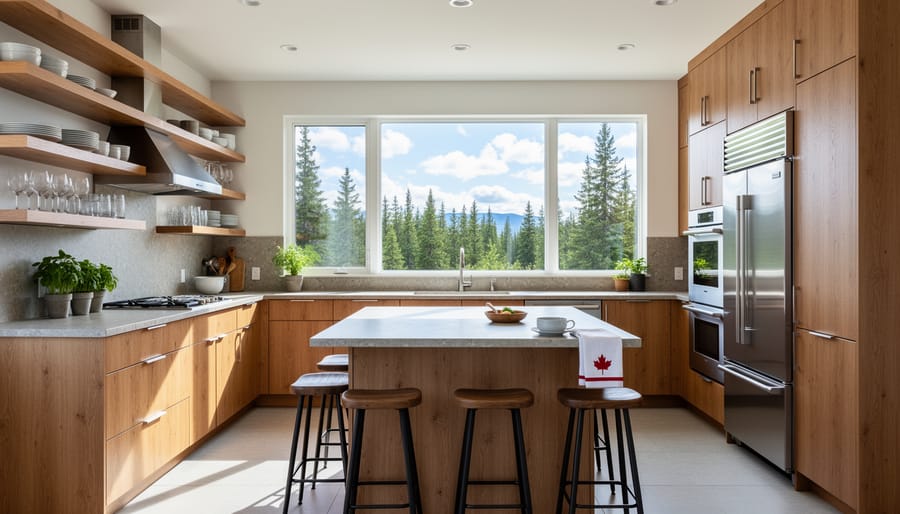
Canadian kitchens reject the closed-off approach of traditional North American design. The goal is a gathering space where cooking, conversation, and casual meals happen simultaneously, not sequgated behind walls. This philosophy shapes every design choice, from layouts that flow into living areas to finishes that feel warm rather than sterile.
Open shelving in natural wood creates both function and visual warmth. Instead of upper cabinets on every wall, many Canadian kitchens feature floating maple or walnut shelves displaying everyday dishes, vintage glassware, and small potted herbs. This isn’t just aesthetic, it forces you to keep only what you use and love, a very Canadian approach to avoiding excess. The key is balance: pair open shelves with closed storage below to hide the less photogenic necessities.
The materials blend rustic authenticity with modern practicality. Think butcher block countertops or islands topped with thick wood slabs alongside clean white subway tile. Matte black fixtures and simple shaker-style cabinetry painted in soft gray or forest green ground the space without feeling trendy. One signature move: leaving upper walls in natural brick or installing shiplap painted white, adding texture without clutter.
For entertaining, the layout matters as much as the finishes. A large island with seating on at least two sides becomes the social anchor, guests perch with wine while you prep, or kids do homework while dinner simmers. It’s casual hospitality without formality, perfectly suited to long winter evenings when everyone naturally gravitates toward the warmth of the kitchen.
Bedrooms Built for Winter
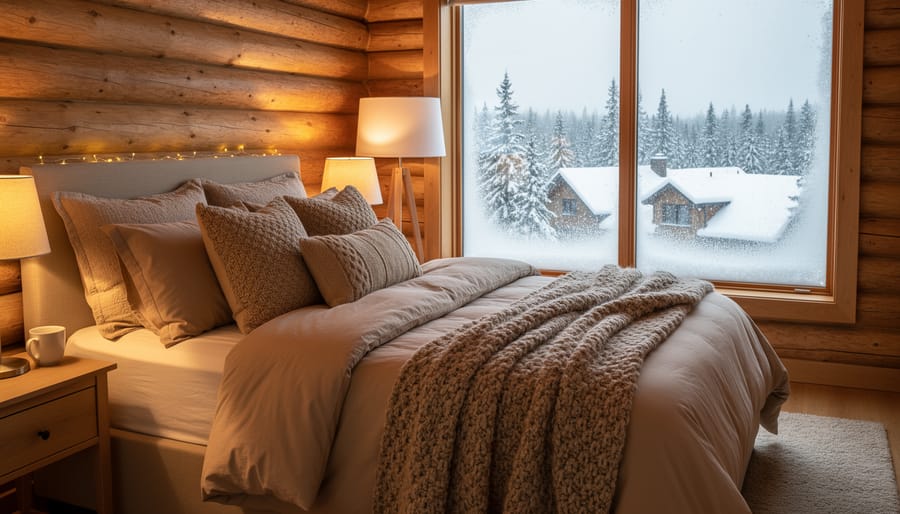
A Canadian bedroom in winter becomes your personal sanctuary, a cocoon against the cold that you never want to leave. Start with your bed as the centerpiece: think three or four layers minimum. A thick duvet in natural linen or cotton forms the base, topped with a chunky knit wool blanket and finished with a plush throw at the foot of the bed. Choose warm neutrals like cream, oatmeal, and soft gray, then add depth with a charcoal or deep navy accent.
Natural light becomes precious during short winter days, so resist heavy curtains. Instead, opt for sheer linen panels that filter daylight while maintaining privacy, or choose light-filtering cellular shades that insulate without blocking what little sun you get. Position a reading chair near the window to capture those golden afternoon hours.
Wood plays a crucial role here too. A reclaimed wood headboard adds warmth and texture, while a simple wooden bench at the foot of the bed provides both function and visual weight. Nightstands in natural oak or walnut ground the space.
The floor deserves attention in a winter bedroom. Layering a sheepskin rug beside the bed over a larger jute or wool area rug creates that essential barrier between bare feet and cold mornings. Add ambient lighting through warm-toned table lamps with linen shades, and consider dimmable options to adjust as natural light fades early in the evening.
DIY Projects to Capture Canadian Style
You don’t need a big budget or professional contractor to bring Canadian design into your home. These three projects use readily available materials and basic tools to create pieces that capture the essence of northern style.
Start with a reclaimed wood accent wall, the most dramatic of these projects but surprisingly manageable over a weekend. Source weathered barn wood, old fence boards, or pallet wood from salvage yards, online marketplaces, or renovation sites. Clean each board thoroughly and remove any protruding nails. Cut planks to varying lengths, then attach them horizontally to your wall using construction adhesive and finishing nails, starting from the bottom and working up. Stagger the seams for a natural, collected-over-time look. The beauty lies in embracing imperfections, knots, nail holes, and color variations add character. For renters, consider creating a smaller freestanding panel behind a bed or sofa instead of covering an entire wall.
Wool throw pillows with Canadian-inspired patterns bring warmth and texture to any room without requiring advanced sewing skills. Purchase wool fabric in colors drawn from the Canadian landscape, deep forest green, stone gray, warm rust, or midnight blue. Cut two 18-by-18-inch squares for each pillow. Hand-stitch simple geometric patterns using embroidery floss in contrasting colors, drawing inspiration from indigenous beadwork, plaid flannel shirts, or abstract representations of pine trees and mountain silhouettes. Sew three sides together with the patterned sides facing in, turn right-side out, insert a pillow form, and hand-stitch the opening closed. These take just an evening each and instantly add that layered, cozy feel central to Canadian interiors.
For a natural branch wall hanging, head outdoors with pruning shears. Collect fallen branches of varying thicknesses and lengths, looking for interesting curves and Y-shaped forks. Let them dry completely, then arrange them on the floor until you find a balanced composition. Use jute twine or thin copper wire to bind branches together at intersection points, creating an organic sculptural piece. Hang it above a console table, bed, or fireplace using picture wire attached to the strongest branch. This project costs almost nothing but brings the forest inside, a cornerstone of Canadian design philosophy.
Where to Find Authentic Canadian Home Decor
The Canada home decor market, valued at USD 16,298.62 Million in 2025 and projected to reach USD 22,764.82 Million by 2034, offers abundant opportunities to source authentic Canadian pieces. Whether you’re drawn to handcrafted artisan goods or curated retail finds, knowing where to look makes all the difference.
Start with local makers and artisans in your region. Farmers’ markets, craft fairs, and studio tours connect you directly with creators who work with indigenous materials and traditional techniques. Many Canadian artisans sell through Etsy, Instagram, or their own websites, making it easy to support small businesses while finding one-of-a-kind pieces. Look for makers who share their process and source materials locally, these details signal authenticity and craftsmanship.
Design events provide concentrated access to Canadian furniture makers, textile artists, and home goods producers. Attending shows lets you see quality firsthand and speak with creators about their work.
| Event | Dates | Location |
|---|---|---|
| Canada Light Expo | November 18-19, 2026 | Toronto, ON |
| The Interior Design Show – IDS | January 21-24, 2027 | Toronto, ON |
Boutique shops in Canadian cities often curate collections from regional makers. These stores typically vet quality and authenticity, though they carry higher price tags than buying directly from artisans. Online marketplaces dedicated to Canadian design, such as national retail platforms highlighting domestic brands, filter out imports and make searching by region straightforward.
For those pursuing affordable home redesign thrift stores and consignment shops in Canadian neighborhoods frequently stock vintage pieces with that sought-after warmth and character. Estate sales can unearth solid wood furniture and handwoven textiles at fraction-of-retail prices. The key is patience and a willingness to refinish or reupholster finds that have good bones but need refreshing.
Budget-Friendly Ways to Embrace the Trend
You don’t need a designer budget to capture authentic Canadian style. Start by bringing the outdoors in, completely free. Collect fallen birch branches, pinecones, and river stones during weekend walks, then arrange them in glass jars or wooden bowls. Press autumn leaves between book pages and frame them in thrifted frames for instant wall art that celebrates Canada’s seasonal beauty.
Thrift stores and estate sales are goldmines for Canadian design staples. Look for wool Hudson Bay blankets, vintage wooden furniture that can be stripped and refinished, and ceramic pieces in earthy tones. A $15 thrift store wooden chair becomes a statement piece with light sanding and natural oil. One Toronto renter transformed her apartment for under $300 by sourcing reclaimed barn wood from salvage yards at $2 per square foot and mixing it with IKEA basics painted in deep forest green.
Smart splurges make lasting impact. Invest in one quality wool throw from a Canadian maker rather than multiple synthetic options. A handcrafted ceramic piece from a local artisan, typically $40 to $80, becomes a focal point that tells a story and supports small businesses. These pieces gain character with time rather than looking worn.
Mix price points strategically. Pair a $12 cotton canvas throw from a discount store with foraged evergreen branches and a single splurge candle in a stone holder. Layer affordable linen curtains with a vintage wool blanket as a throw. The key is balancing natural textures and honest materials, not matching price tags. Canadian style celebrates authenticity over luxury, making it accessible whether you invest $50 or $5,000.
Canadian home decor’s moment isn’t just about following a trend, it’s part of a larger shift toward homes that feel grounded, genuine, and connected to the natural world. As the Canadian home decor market grows from USD 16,298.62 million in 2025 toward a projected USD 22,764.82 million by 2034, it’s clear that people are craving spaces that offer refuge from our increasingly digital lives.
You don’t need to transform your entire home overnight. Start with one corner that calls to you, maybe a reclaimed wood shelf in your entryway or a wool throw draped over your reading chair. Layer in elements as you discover what resonates: a palette inspired by autumn forests, textures that invite touch, pieces that tell stories of craft and place.
The beauty of Canadian design lies in its accessibility. It doesn’t demand perfection or a hefty budget. It asks you to look around, notice what grounds you, and build from there. Whether you begin with a single DIY project or gradually collect pieces from local artisans, you’re creating more than decorated rooms, you’re crafting spaces that breathe, adapt with the seasons, and welcome you home.