
Contemporary home decor accessories bridge the gap between minimalist restraint and personal expression. They’re the sculptural vase on your console table, the geometric throw pillows anchoring your sofa, the brushed brass lamp that catches afternoon light just right. Unlike traditional decor that relies on ornate details or rustic styles that embrace weathered textures, contemporary pieces speak through clean lines, mixed materials, and a focus on form meeting function.
The beauty of contemporary accessories lies in their versatility. A single statement mirror can transform a cramped entryway into an expansive welcome, while carefully chosen textiles add warmth without visual clutter. These aren’t pieces that demand attention through embellishment. They earn it through proportion, texture, and thoughtful placement.
What makes an accessory truly contemporary? Think neutral color palettes punctuated by bold accents, natural materials like marble and wood paired with metals and glass, and designs that feel current without chasing fleeting trends. Contemporary style evolves, absorbing influences from Scandinavian simplicity, Japanese minimalism, and mid-century modern sensibilities while maintaining its own distinct identity.
The challenge isn’t finding contemporary accessories. Walk into any home goods store in 2026 and you’ll find dozens of options. The real question is choosing pieces that reflect your personal style while maintaining that cohesive, uncluttered aesthetic contemporary design is known for. Budget matters too, because creating a curated look shouldn’t require emptying your savings account.
This guide breaks down the essential categories, shows you how to mix high and low price points, and helps you avoid the styling mistakes that make spaces feel staged rather than lived-in.
What Makes an Accessory ‘Contemporary’ in 2026
Contemporary style gets confused with modern and minimalist all the time, but here’s what sets it apart: contemporary design is about right now. It borrows from multiple styles while staying rooted in the present moment, which means it shifts and evolves as we do. Unlike modern design, which refers to a specific mid-century movement with fixed rules, contemporary is fluid and reactive to current culture.
In 2026, contemporary accessories reflect where we are collectively: craving both simplicity and warmth, sustainability and beauty. The mood at January’s Maison & Objet in Paris confirmed this direction, showcasing pieces that balance restraint with tactile richness. Think of a hand-thrown ceramic bowl in matte terracotta, its organic shape holding your keys by the door. Or a brass candle holder with clean geometry that catches afternoon light. These accessories feel current without screaming for attention.
- Clean Lines with Personality
- Accessories feature unfussy shapes and simple silhouettes, but with enough visual interest through texture, material, or subtle asymmetry to avoid feeling sterile. A smooth concrete vase with an off-center opening exemplifies this balance.
- Functional Beauty
- Every piece serves a purpose beyond looking good, whether it’s a sculptural tray that corrals remotes or a woven basket that stores blankets while adding texture to a corner.
- Natural Materials in Unexpected Forms
- Wood, stone, clay, linen, and metal appear in contemporary accessories, but often treated or shaped in ways that feel fresh rather than rustic. Whitewashed wood, brushed brass, or speckled stoneware fit this category.
- Neutral Foundation with Intentional Color
- The base palette stays calm (whites, grays, beiges, blacks), allowing one or two accessories in terracotta, sage, or dusty blue to create impact without chaos.
What really defines contemporary accessories is how they blend into a space while still making a statement. A single sculptural object on a shelf does more work than three generic ones. The style rejects clutter and embraces breathing room, letting each piece earn its place through both form and function. This intentionality is what makes contemporary feel sophisticated rather than sparse.
Essential Contemporary Accessories Every Room Needs
Sculptural Objects and Art Pieces
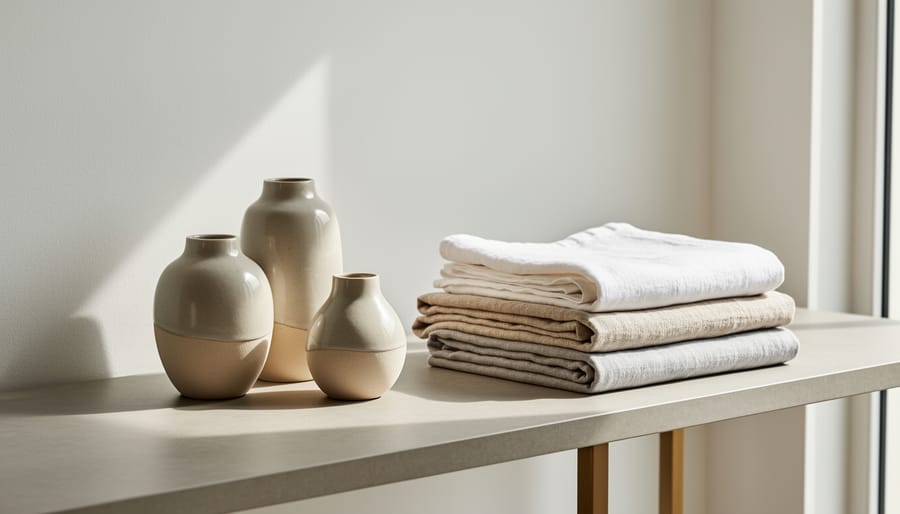
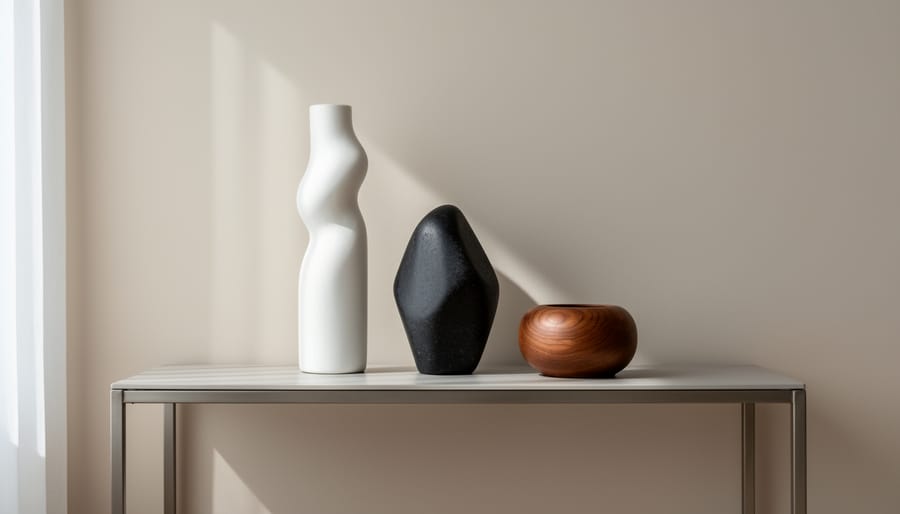
Sculptural objects and art pieces anchor a contemporary room by giving the eye somewhere intentional to land. An abstract ceramic vase on a console table, a geometric wire sculpture on a side table, or a single oversized art print above a sofa creates instant visual interest without clutter. These pieces work because they’re unapologetically three-dimensional and textural, contrasting with the clean lines that define contemporary spaces.
Global design cultures offer rich inspiration here. Japanese ikebana-inspired vessels bring minimalist elegance, while West African clay sculptures in earthy tones add organic warmth. Scandinavian ceramics in matte white or soft gray work beautifully to style on shelves alongside books and plants. Mexican terra-cotta pieces or Moroccan geometric metal works introduce handcrafted authenticity that contemporary design craves.
For wall art, think beyond framed prints. A single large-scale abstract canvas, a trio of black-and-white photography, or even sculptural wall hangings in natural fiber can decorate a brick wall or anchor an empty hallway. These pieces also shine as fireplace decor ideas when you want to fill non-functional hearths with something striking year-round.
Textiles That Add Warmth Without Clutter
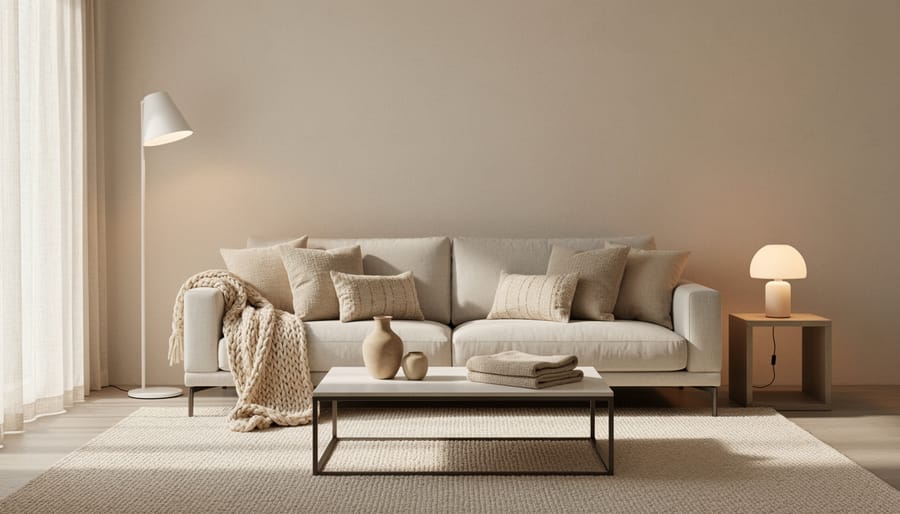
Textiles anchor contemporary spaces without weighing them down. The trick is choosing pieces with clean geometry and natural fibers that add tactile interest while maintaining visual breathing room.
Start with throw pillows in linen, cotton, or wool blends. Instead of piling on five different patterns, select two or three in a tonal palette with one geometric accent. A cream linen pillow beside a charcoal wool one with subtle grid stitching creates depth without chaos. Avoid overstuffing, tassels, or busy prints that fight for attention.
Contemporary blankets work best when they feel intentional rather than decorative. A chunky knit throw in undyed merino or a flat-weave cotton blanket in terracotta or charcoal serves double duty as warmth and sculpture. Drape one over a sofa arm or fold it at the foot of your bed rather than arranging it in magazine-perfect ripples.
Area rugs ground a room while defining zones. Look for low-pile options in natural fibers like jute, sisal, or flatweave wool. Geometric patterns work, but keep them simple: stripes, grid lines, or abstract blocks in two or three colors. A 5×7 jute rug costs $80 to $150 and instantly warms hardwood or tile.
Budget-conscious shoppers can find handwoven textiles from artisans on platforms like Etsy or Fair Trade shops. A handmade Moroccan wool blanket or Indian block-printed cotton pillow cover brings global craftsmanship into your space for $30 to $60. The texture and story matter more than the price tag.
Lighting as Statement Accessories
Contemporary lighting does double duty. It illuminates your space while acting as a three-dimensional art piece that draws the eye even when switched off. The best fixtures balance sculptural presence with restrained design, avoiding the ornate chandeliers and fussy shades that define traditional styles.
Table lamps in contemporary spaces favor geometric bases made from concrete, brass, marble, or matte ceramics paired with simple drum or cylinder shades. A chunky ceramic lamp in terracotta or charcoal becomes a focal point on a console table, while a slender brass arc lamp adds vertical interest without visual weight. Look for clean silhouettes where the base itself is interesting enough to stand alone.
Floor lamps offer even more dramatic impact. Tripod designs in black metal or natural wood bring height to corners that would otherwise fade into the background. Adjustable arm lamps in brushed nickel or powder-coated steel serve reading nooks while doubling as kinetic sculptures. The key is choosing pieces where the structure itself is compelling, not relying on elaborate shades or embellishments to create interest.
Pendant alternatives like sculptural task lamps or plug-in wall sconces work when overhead lighting isn’t an option. These free up floor and table space while maintaining the contemporary principle that every element should justify its presence both functionally and aesthetically.
Skip anything overly decorative or busy. Contemporary lighting accessories succeed when they look intentional rather than accidental, selected for their form as carefully as their function.
Functional Organizers That Look Intentional
Contemporary storage solutions prove that organization doesn’t require sacrificing aesthetics. The pieces gaining traction in 2026 blur the line between utility and decor, sitting comfortably on open shelves and countertops rather than hiding behind closed doors.
Natural fiber baskets lead this category. Woven seagrass, rattan, and jute organizers bring warmth and texture while corralling everything from throw blankets to children’s toys. Look for tight, uniform weaves in geometric shapes, cylinders, rectangles, low-profile rounds, that maintain clean silhouettes. A trio of graduated baskets in varying heights creates visual interest on a bookshelf while keeping clutter contained.
Wooden trays and bowls anchor surfaces with intention. A shallow walnut tray on your coffee table transforms scattered remotes and coasters into a curated vignette. Turned wooden bowls in light ash or oak hold keys by the entryway or fruit on the kitchen counter, their simple forms elevating everyday objects into thoughtful displays.
Ceramic and stoneware organizers bridge the gap between sculpture and function. Matte-glazed catch-all dishes, elongated pen holders, and divided trays in neutral tones double as small-scale art pieces. The handmade quality, slight variations in glaze, visible throwing marks, adds character that mass-produced plastic bins can’t match.
Metal wire organizers offer airy structure without visual weight. Black or brass-finished baskets, magazine racks, and desktop file holders maintain transparency, keeping spaces feeling open. This material works particularly well in smaller rooms where solid storage might feel heavy.
The rule: if you wouldn’t display it empty, it’s not contemporary enough.
Mixing High and Low: Building Your Collection on Any Budget
You don’t need a massive budget to nail contemporary style. The secret is knowing which pieces deserve your investment and where you can confidently save. Think of your accessories as a curated collection you build over time, not everything at once.
Start by investing in one or two anchor pieces that truly elevate a room. A sculptural ceramic vase from an established artist or a distinctive table lamp with clean architectural lines becomes the foundation that makes everything else look more expensive. These pieces typically last decades and stay relevant as trends shift. Save your budget on accessories that work in multiples or change seasonally: throw pillow covers, smaller organizers, and decorative trays. You can swap these out as your style evolves without guilt.
| Category | Investment Piece | Budget Find | Where to Look |
|---|---|---|---|
| Sculptural Objects | Artisan ceramic vase ($80-200) | Concrete or wood vessels ($15-40) | Etsy, local artisan markets, Target |
| Lighting | Statement table lamp ($120-300) | Simple floor lamp ($50-90) | West Elm, IKEA, Wayfair |
| Textiles | Handwoven area rug ($200-500) | Throw pillows, blankets ($20-60) | H&M Home, Zara Home, thrift stores |
| Art | Original abstract piece ($150-400) | Framed prints, photography ($30-80) | Society6, local galleries, estate sales |
Thrift stores remain goldmines for contemporary accessories if you train your eye. Look for simple geometric shapes, natural materials like wood and ceramic, and pieces in neutral tones. That chunky ceramic bowl from the 1970s fits perfectly into contemporary spaces. Estate sales often yield mid-century lamps and sculptural objects at a fraction of retail prices.
Online marketplaces like Facebook Marketplace and Craigslist work brilliantly for larger budget pieces. Search terms like “modern ceramic vase” or “geometric wall art” turn up surprisingly good finds from people redecorating. For new items, platforms like Etsy connect you directly with artisans worldwide, often at better prices than boutique retail.
During a recent house tour in Copenhagen, the homeowner revealed her stunning living room featured a mix of a $300 handmade pottery collection alongside $15 linen pillow covers from a local chain store. Nobody could tell which was which. That’s the beauty of contemporary style, it rewards thoughtful curation over price tags. The key to an affordable redesign lies in choosing pieces that share a common aesthetic thread: similar color palettes, consistent materials, or complementary shapes.
Start with one room and one investment piece. Build around it gradually with budget finds that support your vision. Your collection will feel more authentic than anything bought all at once, regardless of what you spent.
DIY Contemporary Accessories You Can Make This Weekend
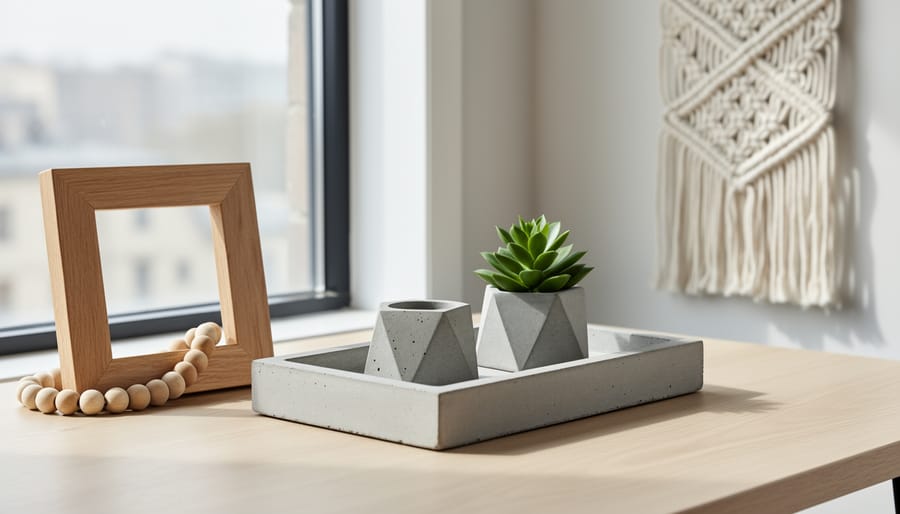
Creating your own contemporary accessories costs less than you think and takes just a few hours. These three projects deliver that clean-lined, intentional look without requiring advanced craft skills, and each costs under $25 in materials.
**Concrete Planters with Geometric Lines**
Mix one part Portland cement with three parts sand, add water until you reach thick pancake batter consistency. Pour into a cardboard milk carton (your outer mold), then press a smaller container into the center, weighted with rocks. Let cure for 48 hours, peel away the carton, and sand any rough edges. The industrial texture pairs perfectly with succulents or air plants. Total cost runs about $15 for enough concrete to make three vessels. You can experiment with different mold shapes using plastic containers or silicone bakeware for curved forms.
**Minimalist Macramé Wall Hanging**
Cut twelve 8-foot lengths of 4mm cotton cord. Fold each in half and attach to a 24-inch wooden dowel using a lark’s head knot. Work in groups of four strands, tying square knots at 3-inch intervals down about 18 inches, then let the remaining cord hang loose and uneven for contemporary asymmetry. Trim the bottom at varying lengths rather than making it uniform. This approach to easy DIY styling takes about two hours and costs roughly $12 for cord and dowel. The key is restraint: contemporary macramé uses fewer knots and more negative space than bohemian versions.
**Stained Wooden Catchall Tray**
Purchase an unfinished wooden tray from a craft store (around $8). Sand it smooth, then apply water-based wood stain in walnut or ebony using long, even strokes. Wipe excess after two minutes. Once dry, add four small furniture bumpers to the bottom corners. The natural wood grain shows through while the dark stain gives it sophistication. Use it on your coffee table for remotes, on your dresser for jewelry, or near your entryway for keys. The entire process takes 30 minutes of active work plus drying time.
Each project embraces contemporary principles: honest materials, simple forms, and pieces that look intentional rather than over-crafted.
What’s Trending in Contemporary Accessories Right Now
The contemporary accessories landscape in 2026 leans heavily into what designers are calling warm minimalism, a softening of the stark minimalist aesthetic that dominated the past decade. If you walked the floors at Maison & Objet in Paris this past January, you saw this shift everywhere: clean-lined pieces rendered in honey-toned woods, terracotta, and warm grays rather than cool whites and blacks.
Organic, sculptural shapes are having a major moment. Think ceramics with irregular, hand-formed edges rather than perfect geometric forms. Vases that look like they were shaped by hand, bowls with asymmetric rims, and sculptural objects that celebrate the maker’s touch. This connects directly to the second big trend: artisan-made pieces. Buyers are moving away from mass-produced accessories toward items with visible craft, even if they come with slight imperfections. The Home Decor Expo in Mumbai this past weekend (June 13-15 at Jio World Convention Centre) showcased stunning examples of this, particularly in handwoven textiles and hand-thrown pottery.
Sustainability continues to influence material choices, but in a more sophisticated way than earlier greenwashing. Contemporary accessories now favor reclaimed wood, recycled glass, natural stone, and plant-based fibers, integrated seamlessly into high-design pieces rather than looking obviously eco-conscious. The aesthetic matters as much as the ethics.
Color-wise, we are seeing more warmth: rust, terracotta, sage, and warm beige alongside the expected neutrals. These earthy tones work within the contemporary palette without feeling bohemian or rustic. The overall effect is spaces that feel considered and calm but not cold, accessible but not cluttered.
Common Mistakes When Styling Contemporary Accessories
The biggest mistake people make with contemporary accessories is treating their space like a design showroom, cramming in every beautiful piece they find. Contemporary style thrives on restraint, and each accessory should have room to breathe and make its own statement. If every surface holds something decorative, you’ve lost the clean aesthetic that defines this look.
Scale issues trip up even experienced decorators. That oversized ceramic vase might look stunning in the store’s vaulted-ceiling display, but it overwhelms your bookshelf at home. Contemporary design relies on deliberate proportion, where accessories relate to both the furniture they sit on and the surrounding space. A good rule: your accessory should take up no more than one-third of the surface it occupies, leaving generous negative space around it.
Pick a temperature lane and commit to it. If your room features warm oak furniture and creamy walls, choose accessories in terracotta, natural linen, and warm metallics like brass. Cool-toned spaces with gray walls and chrome fixtures call for concrete planters, cool white ceramics, and silver or black accents.
Chasing every trending accessory leads to a dated look faster than sticking with timeless pieces. Those neon geometric vases might feel fresh now, but classic contemporary accessories in natural materials and simple forms age gracefully. Invest in quality basics like a sculptural ceramic piece or handwoven basket, then add just one or two trend-forward accents you can easily swap out when your taste evolves.
You don’t need to overhaul your entire home to embrace contemporary style. Start with a single sculptural vase, a set of linen throw pillows, or a handmade ceramic bowl. These small, intentional additions create immediate visual impact without overwhelming your space or draining your wallet. Contemporary design rewards thoughtful curation over abundance, which means every piece you choose carries weight.
The beauty of accessories is their flexibility. Swap them seasonally, move them between rooms, layer textures until something clicks. There’s no right answer, just what feels authentic to your home. Whether you’re shopping artisan markets, building a DIY concrete planter this weekend, or investing in one statement lighting piece, you’re already transforming your space.
What contemporary accessories have made the biggest difference in your home? Share your finds, your DIY wins, or even your styling mistakes in the comments. We’d love to see how you’re making contemporary decor work for your budget and your life. Sometimes the best inspiration comes from real homes, not showrooms.