
Transforming your living space with succulents is one of the quickest, most affordable ways to add life and personality to any room. These hardy plants offer endless decorating possibilities, from minimalist terrariums on your coffee table to vertical wall gardens that serve as living art. The beauty of succulent decor lies in their forgiving nature and versatility, making them perfect for both seasoned plant parents and complete beginners working on a budget-friendly DIY refresh.
Unlike high-maintenance houseplants that demand daily attention, succulents thrive with minimal watering and adapt to various light conditions. You can arrange them in vintage teacups, geometric planters, or even repurposed containers from around your home. The secret to successful succulent styling isn’t expensive equipment or green-thumb expertise. It’s understanding a few simple principles about drainage, light placement, and creative arrangement that turn these small plants into striking focal points. Whether you’re brightening a dim apartment corner or creating a statement piece for your entryway, this guide walks you through everything you need to design and maintain beautiful succulent displays that last.
What You’ll Need to Get Started
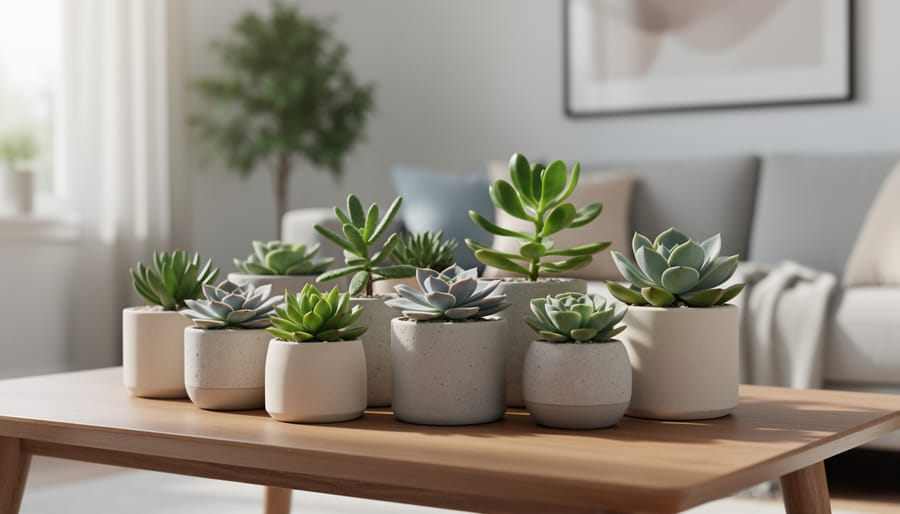
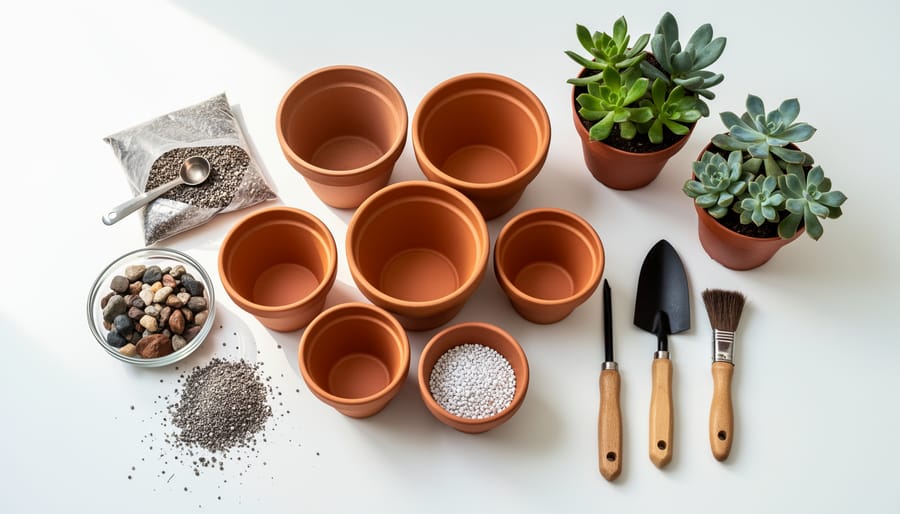
Before you dive into creating your succulent arrangements, gather everything you’ll need in one place. The good news? Most items are inexpensive and readily available at garden centers, home improvement stores, or even around your house.
Essential Materials:
- Containers with drainage holes (or drilling capability), terracotta pots, ceramic planters, glass vessels, or repurposed tins and wooden boxes work beautifully
- Well-draining succulent or cactus soil mix, specialized blends cost $8-15 per bag, or make your own by mixing regular potting soil with coarse sand and perlite
- Drainage materials, small pebbles, gravel, or broken pottery pieces for the bottom layer
- Assorted succulents, start with 3-5 small plants from your local nursery ($3-8 each) or ask friends for cuttings
- Decorative top dressing, river rocks, colored sand, moss, or crushed stone to finish the surface
- Small trowel or spoon for planting
- Spray bottle or watering can with narrow spout for precise watering
- Gloves (optional but helpful for varieties with spines or irritating sap)
For budget-conscious decorators, thrift stores and dollar stores often carry containers you can repurpose, and many succulents propagate easily from leaves, meaning your initial investment multiplies over time. Hardware stores typically sell soil components in bulk for less than pre-mixed bags. Online marketplaces and local plant swaps are excellent sources for variety packs of succulents at lower prices than nurseries.
You don’t need specialized tools or expensive materials to create stunning succulent decor. A simple arrangement in a $5 pot with three plants and basic materials can transform a space just as effectively as elaborate displays. Start with what you have, and expand your collection as your confidence grows.
Important Care and Safety Considerations
Before you start arranging succulents around your home, you’ll need to know a few critical safety and care basics that can mean the difference between thriving plants and disappointment.
Pet safety deserves your first consideration. If you have curious cats or dogs, research each variety before bringing it home. Euphorbia species can cause severe mouth irritation and vomiting, while jade plants may lead to lethargy and coordination problems in pets. Place toxic varieties on high shelves completely out of reach, or stick with pet-safe options like haworthia and most echeveria.
Handling precautions matter too. Some succulents produce sap that irritates skin, euphorbias are notorious for this. Wear gloves when repotting or pruning these varieties, and wash your hands thoroughly afterward. If you have young children who might touch plants, avoid anything with sharp spines or irritating latex.
Drainage isn’t optional, it’s essential. Succulents evolved in arid climates and their roots rot quickly in standing water. Every container needs at least one drainage hole, no exceptions. Those trendy glass terrariums and sealed vessels? They’re a recipe for mushy, dead plants within weeks.
The most common mistake is overwatering. Succulents store water in their leaves, so they need far less than traditional houseplants. A good rule: water only when the soil is completely dry and the leaves start looking slightly wrinkled. When in doubt, wait another few days.
Step-by-Step: Creating Your Succulent Decor
Step 1: Choose Your Containers and Style
Your container choice sets the foundation for your entire succulent display, so take time to match it with your home’s existing style. Terracotta pots work beautifully in bohemian or rustic spaces and naturally wick moisture away from roots, making them forgiving for beginners. Sleek ceramic or concrete vessels suit modern minimalist interiors, while vintage teacups, wooden boxes, or metal tins add charm to eclectic or farmhouse settings.
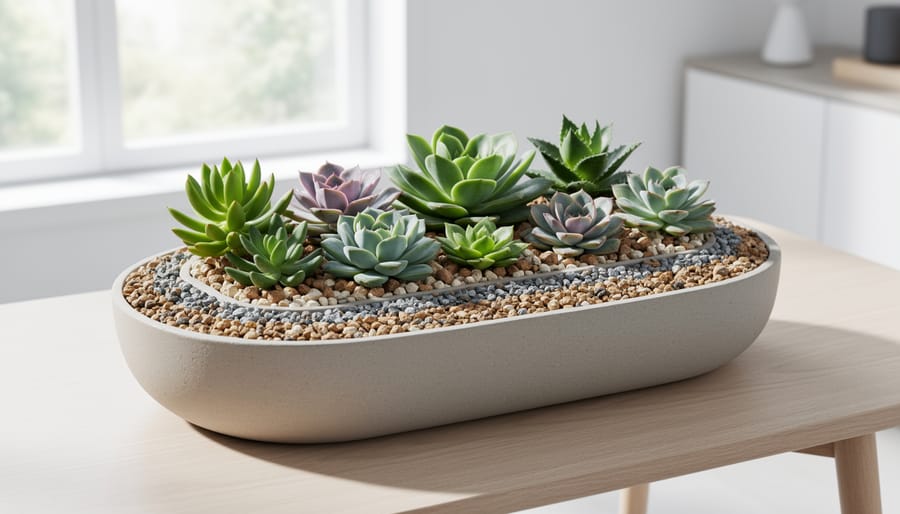
Size matters more than you might think. Small containers limit root growth and dry out quickly, requiring frequent attention. Aim for vessels at least 3-4 inches deep and wide enough to accommodate your succulents with room for growth. Shallow, wide bowls showcase multiple varieties in dramatic arrangements, while tall planters create vertical interest on side tables or floors.
Before committing, verify your container either has drainage holes or can accommodate a false bottom with rocks. Non-draining vessels can work but demand extra care with watering, which we’ll address in the next step.
Step 2: Prepare Proper Drainage
Proper drainage is the single most critical factor in keeping your succulents alive. Start by checking your container, if it doesn’t have a drainage hole, drill one or plan to use it as an outer decorative sleeve for a planted inner pot.
For containers with holes, add a one-inch layer of small rocks, pebbles, or broken pottery pieces at the bottom. This creates space for excess water to drain away from roots. Skip coffee filters or landscape fabric, which can trap moisture.
Next comes soil selection. Regular potting mix retains too much water and causes rot. Use a specialized cactus and succulent mix, or make your own by combining two parts standard potting soil with one part coarse sand or perlite. The soil should feel gritty and dry quickly after watering.
This drainage foundation prevents the waterlogged conditions that kill more succulents than any other cause.
Step 3: Select and Arrange Your Succulents
Start by selecting three to five succulents that look great together but won’t compete for attention. Mix textures, pair the smooth, rosette-shaped Echeveria with spiky Haworthia or trailing String of Pearls. Contrast colors too: dusty blue-green against deep purple or bright lime creates natural visual interest without looking forced.
Think about mature size, not just how they look at the nursery. That tiny Sedum spreads quickly, while Aloe grows tall and vertical. Place taller varieties toward the back or center, depending on whether your arrangement will be viewed from one side or all angles. Leave spacing between plants, they need room to breathe and grow.
Before you commit anything to soil, arrange the succulents (still in their nursery pots) inside your container. Walk away, come back, adjust. This is when you catch awkward gaps or realize you need one more trailing plant to soften an edge. Take a quick photo from different angles, it reveals balance issues your eye might miss up close. Once it looks right from every viewing angle, you’re ready to plant.
Step 4: Plant with Proper Technique
Gently squeeze the nursery pot and tip it sideways to coax the succulent out, avoid pulling by the leaves, which can damage the plant. If roots are tightly wound, use your fingers to carefully loosen the outer layer. This helps them spread into their new home rather than continuing to grow in circles.
Place each succulent at the same depth it was growing in its original pot. Going too deep can trap moisture against the stem and cause rot, while planting too shallow leaves roots exposed. Position your largest or focal plant first, then arrange smaller varieties around it.
Fill gaps with your soil mix, working it gently around the roots with your fingers. Tap the container on your work surface a few times to settle the soil naturally, don’t pack it down hard, as succulents need some air circulation around their roots. Leave about half an inch of space below the container rim for watering and decorative top layers.
Step 5: Add Decorative Top Layers
Once your succulents are planted and settled, a decorative top layer transforms the arrangement from basic to beautiful while serving practical purposes.
Top dressing options include smooth river stones, crushed gravel, colored aquarium sand, preserved moss, or even small shells for coastal vibes. Choose materials that complement your container and home’s style, minimalist spaces work well with simple white pebbles, while bohemian rooms can handle colorful combinations.
Spread your chosen material evenly across the soil surface, leaving about a quarter-inch space around each plant’s base for air circulation. The layer should be thick enough to fully cover the soil (roughly half an inch) but not pile against the stems, which can trap moisture and cause rot.
Beyond aesthetics, top dressing reduces soil splash during watering, discourages fungus gnats, and helps the soil retain just enough moisture between waterings without staying soggy. It also gives your arrangement that polished, intentional look that elevates it from plant to decor piece.
Step 6: Position in Your Space
Place your succulents where they’ll receive bright, indirect light for at least 4-6 hours daily. South-facing windows work beautifully, though you can pull arrangements back 2-3 feet from the glass to prevent scorching. East or west windows offer gentler morning or afternoon sun that most varieties love.
For mantels and high shelves, choose trailing succulents like string of pearls that cascade downward, creating vertical interest while keeping the plants in adequate light. Coffee tables and side tables become instant focal points with low, wide arrangements that won’t obstruct conversation or views across the room.
Window sills are succulent paradise, but rotate containers weekly so all sides receive equal exposure and plants grow evenly rather than leaning toward the light. Group three or five arrangements of varying heights on console tables or credenzas for sophisticated, layered displays.
In darker corners or north-facing rooms, pick hardier varieties like snake plants or move your succulents to these spots temporarily for a week, then rotate them back to brighter locations. This rotation strategy lets you decorate any room while maintaining plant health.
Step 7: Establish a Care Routine
Your succulents need remarkably little attention, but consistency matters. Water only when the soil is completely dry, typically every two to three weeks in most homes. Stick your finger an inch into the soil; if it feels damp, wait. When you do water, drench thoroughly until water runs from drainage holes, then let it drain completely before returning plants to their display spots.
Rotate your arrangements a quarter turn each time you water so all sides receive equal light. This prevents lopsided growth and keeps plants compact. Watch for stretching stems or fading colors, which signal insufficient light, move the container closer to a window or add a small grow light.
As seasons change, adjust your routine. Succulents enter dormancy in winter and need even less water. During spring and summer growth periods, they’ll drink slightly more often. Mark watering dates on your calendar or set phone reminders until the rhythm becomes automatic. Most succulent failures come from overwatering, so when in doubt, skip a session.
How to Tell Your Succulents Are Thriving
Healthy succulents have a firm, plump feel when you gently squeeze their leaves, this indicates they’re storing water properly. The color should be vibrant and consistent with the variety, whether that’s deep green, silvery blue, or purple-tinged. New growth emerging from the center or along stems shows your plants are actively thriving in their new home.
Watch for warning signs that need quick fixes. Leaves turning soft, translucent, or mushy mean you’re watering too often, let the soil dry completely and reduce frequency. If your succulents start stretching toward the light with elongated stems and spaces between leaves, they need a brighter spot or supplemental grow light. Wrinkled, thin leaves that feel papery indicate underwatering, easily fixed by giving them a thorough drink.
Brown, crispy leaf tips usually signal too much direct sun or heat stress. Move the arrangement slightly away from windows or intense afternoon light. Yellowing lower leaves that fall off naturally are normal as plants mature, but widespread yellowing throughout means either overwatering or poor drainage. Check that your container isn’t sitting in water and that drainage holes are clear.
Your succulent decor should maintain its shape and fullness over months. If plants suddenly lose leaves, develop dark spots, or stop growing entirely, reassess your care routine immediately. Most issues reverse within two weeks once you adjust watering, light, or placement. Thriving succulents reward you with steady, compact growth that keeps your arrangement looking designed rather than disheveled.
Creative Styling Ideas for Every Room
Succulents adapt beautifully to every room when you match varieties to conditions and style them intentionally. In living rooms, cluster three to five small succulents in varying heights on a coffee table or side console, creating visual interest that complements minimalist decor without overwhelming the space. A single statement piece like a large Aeonium in a ceramic planter works equally well beside a reading chair.
Bathrooms suit humidity-loving varieties such as Haworthia and Gasteria, which thrive near showers where steam provides extra moisture. Mount small wall planters at eye level or line the tub edge with matching containers for a spa-like feel.
Bedrooms benefit from air-purifying succulents like Aloe vera on nightstands or dressers, positioned where morning light reaches them. Keep arrangements simple with one or two plants rather than crowded collections that compete for attention during rest.
Kitchens offer creative possibilities for pairing culinary herbs with compact succulents. Place Echeveria or Sedum alongside basil and rosemary in a wooden window box, combining functional and decorative elements. The succulents require less water than herbs, so position them at opposite ends of the container.
Entryways make powerful first impressions with symmetrical succulent arrangements flanking doorways or a dramatic vertical garden mounted on the wall. Pair succulents with other decor accessories like mirrors or artwork to create a cohesive welcome display.
For budget-friendly DIY projects, repurpose vintage teacups, wooden crates, or concrete blocks into unexpected planters. A Moroccan-inspired home tour featured dozens of small succulents in blue-glazed ceramic pots lining stair risers, transforming an ordinary passageway into a living gallery wall.
Common Questions About Succulent Plant Decor
How often do succulent arrangements need watering?
Most indoor succulent decor needs water every 2-3 weeks, though this varies by season and humidity. The soil should dry completely between waterings, stick your finger an inch deep to check before adding more water.
Which succulents are easiest for beginners?
Echeveria, jade plants, and aloe vera are nearly indestructible choices that forgive occasional neglect. These varieties tolerate varying light conditions and bounce back quickly from minor care mistakes.
How much does it cost to create a succulent arrangement?
A basic arrangement costs $15-30 for small plants, soil, and a simple container. Shopping at local nurseries or propagating from existing plants cuts costs significantly, making succulent decor one of the most budget-friendly modern decor ideas available.
How long will my succulent decor last?
With proper care, succulent arrangements thrive for years and actually become more interesting as plants grow and fill their containers. Many varieties can be repotted or propagated to create new arrangements when they outgrow their original homes.
Can I mix different succulent types in one container?
Yes, but choose varieties with similar water and light needs. Pairing a drought-tolerant echeveria with a moisture-loving sedum creates care conflicts, while grouping cacti with other desert succulents ensures everyone thrives together.
Do succulents need direct sunlight indoors?
Bright, indirect light works best for most indoor succulent decor. A spot near a south or west-facing window provides ideal conditions without the leaf-scorching intensity of direct afternoon sun through glass.
Decorating with succulents doesn’t require a green thumb or a big budget. You’ve got everything you need to start transforming your space today. Pick up a few small plants, find a container you love, and spend an afternoon creating something beautiful. The best part? Your arrangement will only get better with time as your succulents grow and mature.
Start small if you’re feeling uncertain. A single succulent in a pretty pot on your desk makes an impact. Once you see how easy they are to care for, you’ll find yourself adding more throughout your home. These resilient plants forgive the occasional missed watering and reward minimal effort with maximum style. Your living decor awaits.