
There’s something about walking into a home filled with worn wooden beams, handmade quilts draped over ladder-back chairs, and the warm glow of candlelight against rough-hewn walls that instantly soothes the soul. Primitive home decor, a style rooted in early American and colonial simplicity, celebrates handcrafted imperfection, natural materials, and the beauty of objects that look like they’ve been passed down through generations. Think weathered wood, rustic metals, muted earth tones, and textiles that tell a story.
This aesthetic has surged back into the spotlight in 2026, as more people crave spaces that feel grounded and authentic in contrast to our increasingly digital lives. Unlike sleek minimalism or overly styled interiors, primitive decor doesn’t demand perfection. A chipped paint finish or uneven pottery adds character rather than detracting from it.
The beauty of primitive style lies in its accessibility. You don’t need a farmhouse in the countryside to pull it off. A simple wooden bowl filled with dried herbs, a handwoven basket tucked beside your sofa, or a collection of antique crocks on open shelving can transform any space. Many pieces can be crafted yourself or discovered at flea markets and estate sales for a fraction of what you’d spend on mass-produced furniture.
Whether you’re drawn to the cozy nostalgia of colonial Americana or simply want a home that feels more intentional and less manufactured, primitive decor offers a timeless approach that welcomes you in and invites you to slow down.
What Exactly Is Primitive Home Decor?
Primitive home decor draws its DNA from Early American colonial design evoking the handmade, functional aesthetic of 17th and 18th-century settlers. Think weathered wood tables that might have once sat in a Pennsylvania farmhouse, hand-forged iron hooks that held tools in a blacksmith’s workshop, and muted paint colors mixed from natural pigments because that’s what was available. This style celebrates imperfection and utility over polish, pieces that show their age, their wear, and the hands that made them.
At its heart, primitive decor favors handcrafted items over factory-made goods. You’ll see reclaimed wood with visible saw marks, hand-stitched quilts in simple geometric patterns, and finishes that look authentically aged rather than artificially distressed. The color palette leans heavily on earthy, subdued tones: barn red, mustard yellow, colonial blue, cream, and black. Natural materials dominate, pine, maple, linen, wool, wrought iron, and tin, all chosen for their durability and honest character.
- Treenware
- Wooden kitchenware and utensils hand-carved from a single piece of wood, common in early American homes before mass production.
- Milk Paint
- A traditional paint made from milk protein, lime, and natural pigments that produces the flat, chalky finish characteristic of primitive furniture.
- Saltbox
- A colonial house design with a long, sloping rear roofline, often referenced in primitive decorative motifs and architectural elements.
- Americana
- Decorative items featuring patriotic symbols like stars, stripes, eagles, and flags, commonly incorporated into primitive displays.
Where primitive decor differs from farmhouse or rustic styles is in its devotion to historical authenticity and simplicity. Farmhouse style tends toward lighter, airier spaces with shiplap and vintage finds mixed with new pieces. Rustic leans on natural textures and lodge-inspired elements like antler chandeliers. Primitive stays grounded in the colonial era, favoring darker woods, older techniques, and a deliberately unfussy approach. There’s no staging here, just the quiet dignity of objects made to last generations.
The Appeal of Going Primitive in 2026
The shift toward primitive home decor in 2026 isn’t happening in a vacuum. After years of sleek, neutral minimalism dominating design trends, homeowners are craving spaces that feel lived-in and personal. Primitive décor offers exactly that: warmth, texture, and a sense of history that stark white walls and industrial finishes can’t replicate. It’s a quiet rebellion against the impersonal, a conscious choice to surround yourself with objects that carry stories rather than just price tags.
Sustainability plays a significant role in this resurgence. Primitive style celebrates repurposing and longevity, values that align perfectly with growing environmental awareness. Unlike fast furniture designed to be replaced in a few years, primitive pieces are meant to last generations. The weathered patina on a reclaimed wood cupboard or the hand-stitched imperfections in a vintage quilt represent resources used well, not wasted. This mindset resonates with people tired of throwaway culture and looking for ways to decorate responsibly without sacrificing character.
The renewed interest in heritage and craftsmanship has breathed new life into artisan communities. Small shops and independent makers are seeing increased demand for authentic primitive goods. CountryDecorByKelly, an Etsy shop based in Eden, Maryland, specializes in country primitive home décor and gifts, connecting buyers with handcrafted pieces that capture the aesthetic’s essence. At local craft fairs and markets, vendors now offer handmade primitive items starting at just $5, making the style accessible to budget-conscious decorators. Specialty stores like Rokn’ Art have built their identity around offering Primitive Americana year-round, not as a seasonal novelty but as an established design choice.
There’s also a growing hands-on movement. DIY workshops focused on primitive crafts are appearing on schedules at barns and community spaces, teaching skills like distressing wood or creating period-appropriate décor. This isn’t just about buying a look off a shelf; it’s about learning techniques, slowing down, and making something with your own hands.
Primitive home decor taps into something deeper than aesthetics. It offers connection, both to the past and to the physical materials that shape our homes. In a digital, fast-paced world, that tangible rootedness feels increasingly rare and valuable.
Essential Elements to Capture the Primitive Look
Materials and Textures That Matter
Primitive home decor lives and breathes through its materials, each one carrying the wear and warmth of age. Wood forms the foundation: think reclaimed barn boards with decades of weathering, hand-hewn beams showing axe marks from early craftsmen, or distressed pine with paint rubbed back to reveal bare grain beneath. The imperfections matter here. A perfectly smooth surface reads modern; a tabletop worn smooth by use or a cupboard with chipped milk paint tells a story.
Metal accents add weight and authenticity. Wrought iron pulls, hinges, and curtain rods bring a hand-forged quality, while tin pieces like punched lanterns, candle molds, or even vintage advertising signs introduce subtle shine without polish. These metals should look worked, not factory-perfect.
Natural textiles ground the look in everyday life. Linen curtains soften windows without fuss. Wool blankets draped over benches or layered on beds add warmth. Homespun fabric, with its irregular weave and undyed threads, works beautifully for pillow covers or table runners. The key is avoiding anything too refined or synthetic.
Layering these textures creates depth that makes rooms feel lived-in rather than staged. Pair rough wood against smooth linen, set wrought iron against soft wool, let a tin lantern catch light on a weathered shelf. When materials contrast but share that handmade, honest quality, spaces develop the soul that defines primitive style.
The Primitive Color Palette
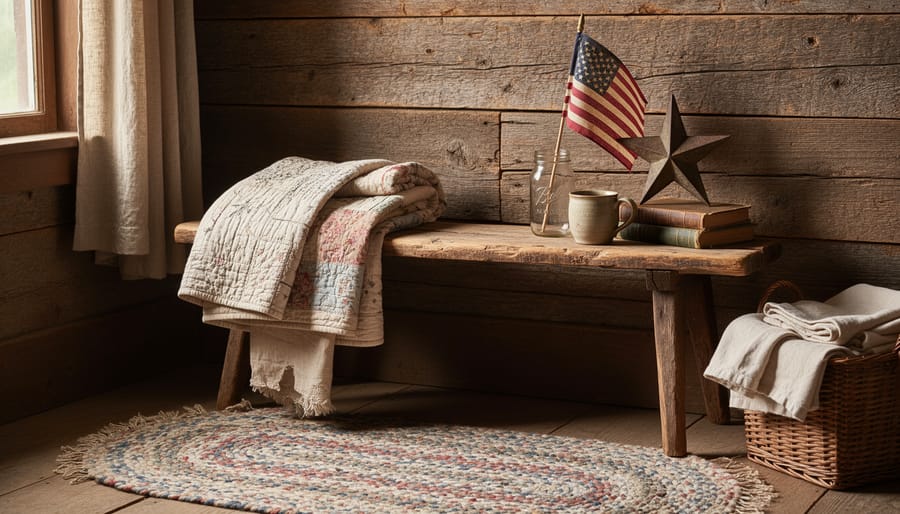
The primitive palette draws from nature and age, think of paint worn by decades of sun, vegetables dyes faded on old quilts, and the patina of hand-forged metal. Barn red anchors the look, a deep rusty tone that recalls colonial-era milk paint rather than bright fire-engine shades. Mustard yellow adds warmth without shouting, while colonial blue (somewhere between slate and denim) grounds spaces with quiet authority. Cream and warm whites lighten the mix, and black appears in accents like wrought iron or painted furniture details.
The trick to keeping these earthy tones from feeling heavy is balance and intention. Use the darker shades, barn red, deep blue, on single accent walls or furniture pieces, not entire rooms. Let cream or natural wood dominate your base, then layer in color through textiles, crocks, or painted boxes. Natural light matters enormously; if a room gets limited sun, lean toward the lighter end of the spectrum and save the saturated hues for accessories you can rotate seasonally.
Avoid matching too precisely. Primitive spaces work because colors feel collected over time, not coordinated from a single paint chip. A mustard cupboard, blue-painted bench, and red-checked cushions can coexist beautifully when anchored by plenty of wood grain and neutral linen.
Furniture and Functional Pieces
Primitive furniture anchors the entire aesthetic, so choosing the right pieces matters. Look for sturdy pine tables with honest wear from decades of use, water rings, knife marks, and uneven patina tell the story that fresh reproductions can’t. Windsor chairs, with their spindle backs and solid construction, bring colonial charm to dining areas, while wooden benches work beautifully as entryway seating or extra table space. Dry sinks, originally used for washing before indoor plumbing, now serve as striking statement pieces for displaying crocks and baskets.
Cupboards with original milk paint in faded barn red or mustard yellow are treasures worth hunting for, though quality reproductions can fill gaps in your collection without breaking the bank. The key is balance: pair one authentic antique as your focal point with well-made new pieces that share similar construction and finish. A reproduction pine hutch alongside a genuine 19th-century bench creates depth without requiring you to furnish exclusively from estate sales. Choose furniture that serves your daily life, primitive style celebrates function as much as form, so every piece should earn its place.
Decorative Accents That Tell a Story
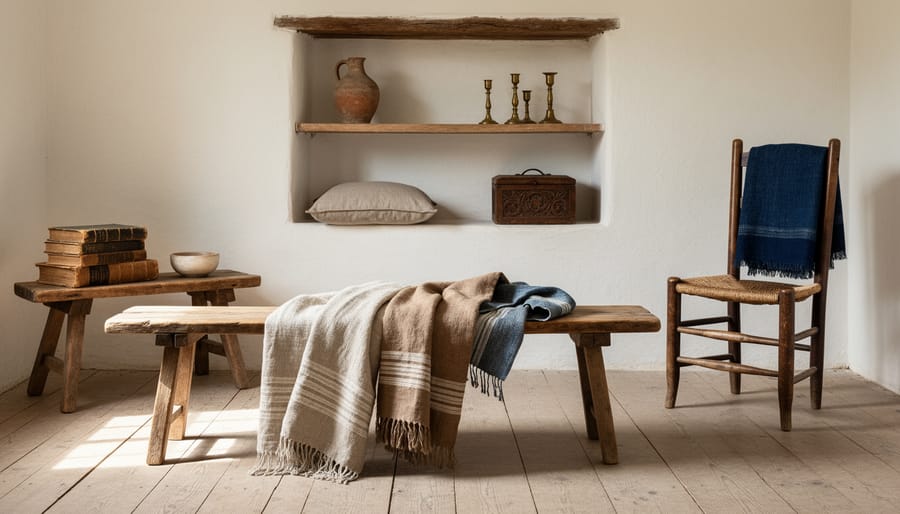
The smaller touches bring primitive rooms to life. Quilts, particularly those with simple pieced patterns in faded indigos and reds, work beautifully draped over benches or folded on cupboard shelves. Handwoven baskets add texture and utility, while wooden dough bowls and salt-glazed crocks anchor surfaces with honest, functional beauty. Wrought iron or tin candlesticks create warm focal points, especially as fireplace decor ideas or mantel displays.
Look for primitive signs with hand-painted lettering, Americana motifs like eagles and flags, and seasonal pieces that rotate through the year. Primitive Christmas decor, think weathered stars, homespun Santas, and rustic garlands, has become particularly popular, with shops like CountryDecorByKelly in Eden, Maryland offering handmade items starting around $5. Each accent should feel discovered rather than purchased, chosen for the story it suggests rather than matching a color scheme.
Where to Find Authentic Primitive Décor
Finding authentic primitive décor takes a bit more detective work than browsing a big-box store, but that’s part of the charm. The hunt connects you to artisans, small businesses, and communities that keep this craft alive.
Start online if you want variety without leaving home. Etsy hosts dedicated shops like CountryDecorByKelly in Eden, Maryland, where handmade primitive pieces range from weathered signs to seasonal accents. You’ll find similar specialists across the platform, many offering custom work that lets you choose colors, sayings, or distressing levels to match your vision. Facebook Marketplace and Instagram also surface small makers, search “primitive home decor” plus your region to discover local crafters whose work you can see in person before buying.
For the thrill of the in-person find, craft fairs and barn sales remain gold mines. Vendors at these events often sell handmade primitive items starting around $5, making it easy to build a collection without breaking the budget. Estate sales and antique cooperatives turn up genuine vintage pieces, dry sinks, painted cupboards, crocks, that carry real history. Arriving early gives you first pick, but going near closing time can yield price cuts.
Specialty stores offering Primitive Americana year-round, like Rokn’ Art, provide curated selections when you need something specific. These shops understand the aesthetic and can guide you toward pieces that work together, whether you’re decorating for everyday or hunting for primitive Christmas home decor during the holidays.
Don’t overlook seasonal barn openings and DIY classes popping up at primitive-focused venues. These events not only sell finished goods but teach you distressing techniques and connect you with fellow enthusiasts who share sourcing tips. The primitive community thrives on word-of-mouth, so once you find one good source, it tends to lead to several more.
DIY Primitive Projects to Try at Home
Creating your own primitive pieces brings authenticity to your home and connects you to the hands-on craft tradition at the heart of this aesthetic. You don’t need advanced woodworking skills to achieve the worn, storied look that defines primitive decor, just a willingness to embrace imperfection and experiment with simple techniques.
Distressed Wood Signs with Character
Start with new pine boards from any hardware store and age them using a solution of steel wool soaked in white vinegar. Here’s how to achieve that centuries-old patina:
- Place a pad of steel wool in a glass jar and cover it completely with white vinegar, then let it sit for 24 hours until the solution turns dark gray.
- Sand your pine board lightly to open the grain, then brush the vinegar solution generously across the surface.
- Wait 10 to 20 minutes as the wood reacts and develops a silvered, weathered appearance with natural variation.
- Once dry, lightly sand again to smooth any raised grain, then add your primitive motif with black paint or wood-burning tools.
This technique gives you instant aged wood perfect for hand-lettered signs, barn stars, or simple shaker-style pegs. The chemical reaction creates authentic-looking weathering that varies beautifully across the grain.
Primitive Candle Holders from Reclaimed Materials
Transform old wooden spindles, fence pickets, or barn beams into candle holders by cutting them to varying heights and drilling shallow depressions for taper candles. Leave the original paint, nail holes, and weather marks intact, these imperfections tell the story. Cluster three or five holders of different heights on a mantel or table for impact.
Simple Rag Rugs in Traditional Patterns
Cut worn flannel shirts, wool blankets, or linen scraps into strips and braid them tightly, coiling the braids into oval or round rugs. Stitch the coils together with heavy thread as you go. The muted, mismatched colors of salvaged fabrics create the exact palette primitive homes would have used.
The primitive craft movement is growing, with local shops and makers now offering hands-on classes. Some artisan studios host Saturday afternoon workshops teaching traditional techniques like this, making it easier than ever to learn time-honored skills. These easy DIY upgrades let you build a collection of meaningful pieces gradually, each one carrying the marks of your own hands.
Making Primitive Work in Modern Homes
The secret to living comfortably with primitive décor isn’t choosing between old and new, it’s creating a conversation between them. A handwoven basket holding laptops and chargers, or a distressed wooden bench doubling as entryway seating with storage bins underneath, shows how functional modern life can coexist with vintage soul. The goal is a home that feels collected over time, not staged for a history exhibit.
Start by anchoring each room with one or two genuine primitive pieces, a pine farm table, a weathered cupboard, then layer in contemporary comfort. Pair that early American settle with linen cushions in soft neutrals. Set a sleek laptop on a rustic desk. This layering prevents the space from feeling frozen in time while letting the primitive elements shine without apology.
Small spaces and apartments pose a unique challenge, but primitive décor adapts surprisingly well when you’re selective. Choose pieces that earn their keep: a narrow wall-mounted shelf with pegs for coats, a compact dry sink repurposed as a bathroom vanity, or stackable wooden crates for vertical storage. In a Tokyo apartment I once toured, the owner balanced a tiny footprint with warmth by limiting primitive touches to textiles, a single antique quilt as wall art, homespun linen curtains, while keeping furniture streamlined.
Don’t be afraid of breaking layout rules to make primitive work. That grain-painted cupboard doesn’t have to live in the kitchen; it can hold linens in a bedroom or books in a living room. Swapping out decor accessories in minutes switching a modern vase for a stoneware crock, or replacing sleek candlesticks with wrought iron, lets you test the balance before committing.
The key is intentionality. Each primitive piece should feel purposeful, not piled on. When you edit ruthlessly and give your favorite items room to breathe, you create spaces that honor the past without living in it.
Primitive home decor isn’t just another trend chasing novelty. It offers something deeper: a connection to craftsmanship, history, and the beauty of imperfection that so many modern spaces lack. In a world where design trends cycle through every few months, choosing pieces with soul and story feels like an act of intention.
You don’t need to overhaul your entire home or spend a fortune to embrace this aesthetic. Start with one handmade basket, a weathered wooden sign, or a vintage crock that speaks to you. Shop local craft fairs where items start around $5, browse artisan shops like CountryDecorByKelly in Eden, Maryland, or try your hand at a simple DIY project that distresses new wood into something with character.
The beauty of primitive design lies in its accessibility and authenticity. Each piece carries a narrative, whether it’s genuinely antique or lovingly crafted yesterday. Let your space tell your story, celebrate the handmade, and create a home that feels lived-in and loved from the start. That’s a kind of richness no passing trend can replicate.