
Minimalist home decor strips away the excess to reveal what truly matters: clean lines, intentional spaces, and a sense of calm that settles over you the moment you walk through the door. This design philosophy isn’t about deprivation or sterile white rooms. It’s about curating your environment so every piece serves a purpose and brings you joy, whether that’s a hand-thrown ceramic vase on your dining table or a single piece of artwork that anchors your living room.
The beauty of minimalism lies in its flexibility. A Tokyo apartment might embrace the Japanese concept of ma, the thoughtful use of negative space, while a Scandinavian home layers warmth through natural wood and cozy textiles. What unites these approaches is the commitment to less clutter, more breathing room, and design choices that feel deliberate rather than accidental.
You don’t need a complete renovation or an unlimited budget to bring minimalist principles into your home. Start with one room. Clear surfaces, pare down decorative objects to your favorites, and let natural light do the heavy lifting. The transformation happens faster than you’d expect, and the mental clarity that follows often surprises people most.
This guide walks you through the core principles that define minimalist decor, room-by-room strategies you can implement this week, and budget-friendly projects that prove less really can be more. We’ll also explore how different cultures interpret minimalism and highlight the mistakes that trip up beginners, so you can create a space that feels authentically yours.
What’s Driving the Minimalist Movement Right Now
The shift toward minimalist home decor isn’t happening in a vacuum. It’s reflecting deeper changes in how we’re living, working, and thinking about our spaces in 2026.
For many people, homes have become multi-purpose environments that need to function as offices, gyms, social hubs, and sanctuaries all at once. This evolution has sparked a desire for spaces that feel organized and calming rather than cluttered and overwhelming. When your living room doubles as your workspace, visual chaos isn’t just unappealing, it’s genuinely stressful. Minimalism offers a practical solution by creating breathing room, both physically and mentally.
The environmental angle matters too. More people are questioning consumption patterns and looking for alternatives to the constant cycle of buying, discarding, and replacing. Minimalist principles align naturally with sustainability because they emphasize buying less but choosing better. When you’re investing in a well-made sofa that’ll last fifteen years instead of cycling through cheaper options every few years, you’re making both a design choice and an environmental one.
Global design philosophies have also become far more accessible through social media and digital platforms. Japanese concepts like ma (negative space) and wabi-sabi (finding beauty in imperfection) aren’t exotic ideas anymore, they’re influencing everyday design decisions. Scandinavian hygge continues to shape how North American homes balance minimalism with warmth and comfort. These influences have helped minimalism evolve beyond cold, stark spaces into something more nuanced and livable.
There’s a growing recognition that mindfulness at home starts with the physical environment. Creating intentional spaces isn’t about deprivation or following rigid rules. It’s about making room for what actually matters to you, whether that’s family gatherings, creative projects, or simply unwinding after a long day.
Core Principles of Minimalist Home Decor
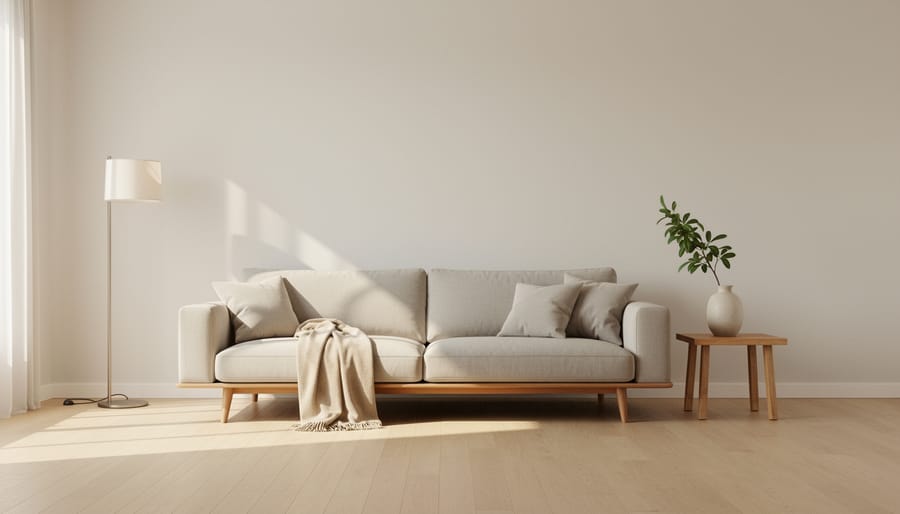
Intentional Space and Purpose
At the heart of minimalist decor lies a simple question: does this item deserve the space it occupies? Every piece of furniture, every decorative object, should either serve a practical function or bring you genuine pleasure when you look at it. That coffee table isn’t just filling a spot, it anchors your seating area and provides a surface for your morning routine. That single ceramic vase you love? It earns its place by making you smile.
This intentionality extends to what you choose to leave empty. Negative space, the breathing room around and between objects, isn’t wasted space. It’s what allows your eye to rest and your mind to settle when you walk into a room. Instead of lining every shelf or covering every wall, try leaving some areas deliberately bare. A mantel with three carefully chosen items has more impact than one crowded with trinkets.
The result is a home where everything matters and nothing competes for your attention.
Quality Over Quantity
The shift toward fewer, better pieces transforms how your home looks and how long your investments last. A solid wood dining table with dovetail joints will serve you for decades, developing character over time, while a particleboard alternative might wobble and chip within a few years. The initial price difference disappears when you measure cost per year of use.
Look for natural materials that age gracefully: linen that softens with washing, leather that develops a patina, hardwoods that can be refinished. These materials telegraph quality at a glance and feel different under your hands compared to synthetic alternatives. When you’re choosing a sofa or bed frame, examine the joinery, test the weight, and ask about the construction. Proper mortise-and-tenon joints, eight-way hand-tied springs, and kiln-dried frames aren’t just technical details; they’re the difference between furniture that lasts and furniture you replace.
This approach also supports sustainability. Manufacturing one well-made piece creates less waste than producing and discarding three cheap replacements. You’ll spend less time shopping, moving furniture, and dealing with broken items, which frees your attention for actually living in your space.
Neutral Palettes with Purposeful Accents
Minimalist color schemes lean on soft whites, warm grays, beiges, and earth tones to create a restful backdrop that won’t compete for attention. These hues reflect light well and make rooms feel more spacious, which is part of their appeal. The key is choosing shades with subtle warmth rather than stark, clinical whites that can feel sterile.
Texture becomes essential when your palette is restrained. A chunky linen throw, a nubby wool rug, or matte ceramic vases add visual interest without introducing color chaos. Layering different materials in similar tones creates depth and prevents spaces from reading as flat or boring.
Purposeful accents bring personality without clutter. A single terracotta pot with trailing greenery, a piece of abstract art in muted ochre, or throw pillows in soft sage can anchor a room and give the eye somewhere to rest. The trick is selecting one or two accent elements that genuinely resonate with you, then letting them stand out against the calm background rather than competing with a dozen other colors.
Room-by-Room Minimalist Transformations
Living Spaces That Breathe
Start with your biggest pieces: a sofa and maybe one chair that fits the room’s scale without crowding it. Stick to clean lines and neutral upholstery, then let one item, a striking artwork, an architectural floor lamp, or even a single beautiful plant, anchor the space as your focal point.
Getting there means editing ruthlessly. Pull out side tables you never use, decorative objects that don’t mean anything to you, and furniture fighting for attention. What remains should feel intentional, not sparse.
Here are quick wins for transforming a minimalist living room:
- Remove half the throw pillows and blankets cluttering your sofa
- Clear coffee table surfaces except for one tray or book
- Replace multiple small art pieces with one larger statement piece
- Hide cables and chargers in cable boxes or behind furniture
- Store magazines and remotes in a single basket or drawer
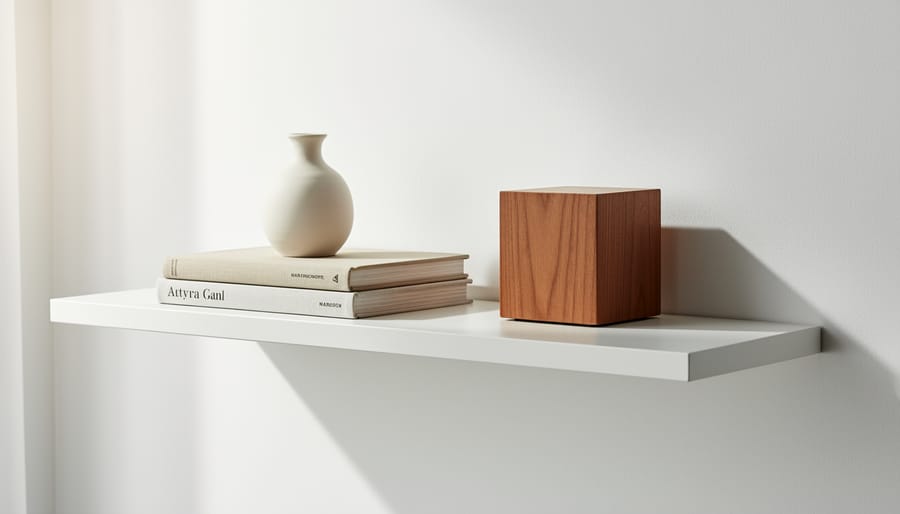
Storage matters, but it shouldn’t dominate. Built-ins work well if you have them; otherwise, one low credenza or bookshelf can hold what you need without breaking up sightlines. Apply thoughtful shelf styling tips to keep displays curated rather than cluttered, three objects arranged with breathing room beat twenty crammed together.
The goal is a room where you can think clearly and relax deeply, not one that feels cold or empty. Layer in texture through a wool rug, linen curtains, or wood furniture to keep warmth alive while maintaining the visual calm that makes minimalist spaces so restful.
Serene Bedrooms for Better Rest
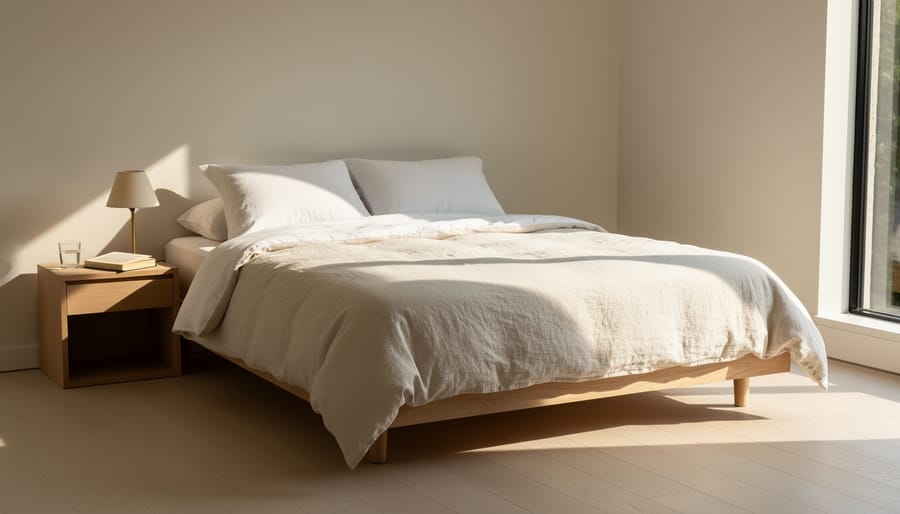
Your bedroom should work like a reset button, somewhere you can close the door and feel the day’s noise drop away. Start by clearing nightstands down to a lamp, a book, and maybe a small plant. Everything else, chargers, lotions, random receipts, finds a home in a drawer or leaves the room entirely.
Choose bedding in natural fibers like linen or cotton percale, and stick to whites, soft grays, or muted earth tones. The texture does more than pattern here: a chunky knit throw or nubby duvet cover adds warmth without the visual clutter of busy prints. Under-bed storage boxes or a simple platform frame with built-in drawers keep seasonal clothes and extra linens out of sight.
Lighting matters more than you’d think. Swap harsh overhead bulbs for dimmable bedside lamps or wall-mounted sconces that free up surface space. If your closet spills into view, consider a tension rod with a linen curtain to hide the chaos, it’s a $15 fix that makes a real difference. The goal isn’t sterile; it’s intentional calm that actually helps you sleep.
Functional, Beautiful Kitchens
Kitchens present a unique challenge because they must work hard every day. Start by clearing countertops of everything except daily essentials, maybe a coffee maker and a knife block. Store small appliances in cabinets until you need them. This single change creates surprising calm.
Choose cabinetry with clean lines and consider handleless designs or simple pulls. Open shelving can work beautifully if you’re disciplined about what you display: matching dishware, a few glass jars of staples, or a small collection of cookbooks. Mix it with closed storage to hide the visual noise of mismatched packaging.
A neutral color scheme with natural materials, wood cutting boards, ceramic canisters, linen tea towels, adds warmth without clutter. If your kitchen feels cold, introduce texture through a woven basket for produce or a small plant on the windowsill. The goal isn’t a showroom that doesn’t get used, but a space where cooking feels easier because everything has a clear home and surfaces stay mostly clear.
Simplified Bathrooms
Your bathroom can become a daily retreat with just a few strategic changes. Start by clearing countertops completely, store toiletries in drawers or a single matching set of containers tucked in a cabinet. Keep only what you use daily visible, and choose refillable dispensers in matte black or white to replace plastic bottles.
Install floating shelves or a recessed niche for the essentials you need at hand: a folded towel, soap, perhaps one small plant. A cohesive color scheme, white subway tiles with warm wood accents, or all-grey concrete-look surfaces, creates visual calm without feeling clinical.
Replace a cluttered shower caddy with wall-mounted holders, and swap multiple bath mats for one high-quality option in a neutral shade. A frameless glass shower door or simple curtain in linen keeps sightlines clean. The goal is a space that feels open and spa-like, where you can actually relax rather than face visual noise every morning.
Budget-Friendly Minimalist Makeovers
You don’t need a complete room renovation to embrace minimalist design. The most powerful budget-friendly transformation starts with what you already own. Spend a weekend honestly assessing each item in a room: does it serve a clear purpose or bring you joy? Everything else can be donated, sold, or stored elsewhere. This costs nothing but creates the clean slate minimalism requires.
Once you’ve decluttered, focus on easy DIY upgrades that enhance what remains. Paint is your cheapest ally. A fresh coat of white, soft gray, or warm beige on walls instantly creates that signature minimalist backdrop, and a single gallon covers roughly 400 square feet for under $40. If your furniture feels dated or mismatched, consider painting wood pieces in unified neutral tones rather than replacing them.
Smart shopping means choosing versatile pieces that work across multiple rooms. A simple jute rug, white cotton throw pillows, or glass storage jars from discount stores provide texture and function without clutter. Shop secondhand for quality basics like solid-wood side tables or ceramic lamps, then give them new life with minor repairs or updated hardware.
Try this decluttering and display project for immediate impact:
- Clear one surface completely (kitchen counter, bedroom dresser, or living room shelf)
- Clean and, if needed, paint the surface white or light gray
- Select only three items to return: one functional piece, one natural element like a plant or stone, and one personal item
- Arrange with intentional spacing between objects
- Step back and notice how the negative space makes each item more meaningful
Repurposing beats buying new every time. Turn mismatched drinking glasses into minimalist planters. Use wooden crates as open shelving. Frame pages from old books as simple wall art. These affordable home redesign approaches prove that minimalism rewards creativity more than cash. The goal isn’t perfection but a home that feels lighter, calmer, and genuinely yours.
Global Minimalist Inspirations
Minimalist design looks remarkably different across cultures, yet each interpretation shares the same commitment to intentionality and calm. Exploring these global approaches can spark fresh ideas for your own space.
Scandinavian minimalism balances clean lines with warmth. Think natural wood furniture, textured wool throws, and candles clustered on simple surfaces. The Danish concept of hygge infuses minimalist spaces with coziness through layered lighting and tactile materials. A living room might feature a single, substantial wood dining table, white walls, and strategically placed textiles that invite you to curl up rather than just admire from afar.
Japanese wabi-sabi embraces imperfection and natural materials. Low furniture, sliding shoji screens, and carefully chosen pottery create serene spaces where each object has breathing room. A bedroom following this approach might include a futon-style bed, bamboo blinds, and a single ceramic vase holding one branch. The beauty lies in simplicity and the honest character of materials that age gracefully.
Mediterranean minimalism brings warmth through earthy tones and organic textures. Whitewashed walls, terracotta accents, and linen fabrics create spaces that feel both spare and inviting. Picture a kitchen with open shelving displaying a modest collection of handmade pottery, sunlight streaming through sheer curtains, and surfaces kept deliberately clear.
Brazilian minimalism often incorporates bold architectural elements and tropical woods, proving that minimalist doesn’t mean colorless. Concrete floors, statement indoor plants, and furniture with striking silhouettes demonstrate how minimalism adapts to different climates and lifestyles.
The thread connecting these approaches is restraint paired with intention. Each culture eliminates excess while highlighting what matters most in their environment, whether that’s warmth, tranquility, texture, or light.
Where to See Minimalist Design in Action
If you’re ready to move beyond inspiration and see minimalist design in three dimensions, the Interior Design Show in Vancouver (September 24-27, 2026) offers a chance to walk through curated spaces and explore how designers translate the principles of minimalism into real rooms. This international exhibition brings together interior items, furniture, and decor from multiple design philosophies, including the clean lines and intentional spaces that define minimalist aesthetics.
Beyond large exhibitions, local showrooms and design studios often showcase minimalist setups you can touch, sit on, and measure against your own home’s scale. These in-person experiences help you understand how materials feel, how lighting changes a room’s mood, and whether a piece truly fits your vision before you commit. Visit furniture stores that emphasize quality craftsmanship, browse architectural salvage yards for unique minimalist finds, or attend open houses in neighborhoods known for contemporary design. Seeing minimalism executed well, and sometimes poorly, sharpens your eye and builds confidence in your own decorating decisions.
Common Minimalist Mistakes (And How to Avoid Them)
The biggest trap people fall into is stripping away so much that their home feels sterile and unwelcoming. When you remove everything “extra,” you risk creating a space that looks more like a showroom than somewhere you actually want to spend time. The difference between thoughtful minimalism and cold emptiness comes down to intention and warmth.
One common mistake is eliminating all texture and layering. A room with nothing but smooth white walls, a single piece of furniture, and zero textiles will feel harsh, not serene. Real minimalist spaces work because they incorporate soft throws, natural wood grains, woven baskets, and varied fabric textures that add depth without clutter. These elements make the space feel lived in and inviting.
Another pitfall is sacrificing function for aesthetics. Hiding away every single item might look clean, but if you can’t find your keys or need to dig through closets constantly, you’ve made your life harder instead of simpler. Minimalism should reduce daily friction, not create it. Keep the things you use regularly accessible, just in designated spots that look intentional.
Pros
- Creates genuinely calming spaces that reduce visual stress and mental clutter.
- Makes cleaning and maintenance significantly easier with fewer items to manage.
- Highlights quality pieces you love rather than burying them in clutter.
- Often saves money by curbing impulse purchases and focusing on what matters.
Cons
- Can feel cold or impersonal if you strip away too much warmth and character.
- Risks looking stark and unwelcoming without proper attention to texture and comfort.
- May not suit households with kids or hobbies that require visible supplies.
- Can swing too far toward the traditional comeback when overcompensating for emptiness.
Many people also forget that minimalism doesn’t mean zero personality. Your space should still reflect who you are. Display a few meaningful items, artwork you genuinely love, or treasured books on an open shelf. The goal is editing, not erasure. Each item you keep should earn its place, whether through function, beauty, or emotional significance, but that doesn’t mean your walls must be bare.
The beauty of minimalist home decor isn’t about perfection. It’s about creating spaces that work for you, that calm your mind at the end of a long day, and that reflect what you genuinely value. You don’t need to strip your home bare or spend thousands on designer pieces. Start small: clear one surface, invest in a single quality item you’ll use daily, or simply remove things that don’t serve you anymore.
Your minimalist journey is personal. What feels peaceful to you might look different from what you see in magazines or on social media, and that’s exactly as it should be. The goal isn’t a showroom; it’s a home that breathes, that welcomes you, and that makes daily life easier rather than harder.
Ready for more inspiration? Home and Decor Magazine offers practical tips, global design tours, and budget-friendly projects to help you create the home you’ve been imagining. Your intentional, beautiful space is waiting.