
Burnt orange home decor transforms any room into a warm, sophisticated sanctuary by introducing a rich terracotta hue that sits perfectly between red and brown. This versatile shade brings depth without overwhelming your space, works beautifully across modern and traditional styles, and pairs surprisingly well with neutrals, navy, forest green, and even blush pink. Whether you’re drawn to the traditional decor comeback or prefer contemporary minimalism, burnt orange serves as both a grounding neutral and a statement color depending on how boldly you use it.
The beauty of burnt orange lies in its adaptability. You can test the waters with a single velvet throw pillow for under twenty dollars or commit to the shade with a painted accent wall that completely reshapes your room’s energy. Unlike trendy colors that feel dated within months, burnt orange has roots in mid-century design and global textile traditions, giving it a timeless quality that’s equally at home in a Brooklyn loft or a farmhouse kitchen.
Starting small is the smartest approach. Swap out everyday items like candles, ceramic vases, or kitchen towels first. Once you see how the color interacts with your existing palette and lighting, you can scale up to curtains, upholstered furniture, or area rugs. The key is understanding which rooms benefit most from burnt orange’s cozy warmth and which complementary colors will make it sing rather than clash.
What Makes Burnt Orange Different from Other Orange Shades
Burnt orange sits at the intersection of warmth and restraint, a muted shade that carries the energy of orange without shouting for attention. Think of it as orange that’s been grounded by brown undertones, the result is an earthy, terracotta-like hue that feels both vibrant and sophisticated. Unlike the bright, almost electric quality of tangerine or the playful pop of coral, burnt orange has a maturity to it. It doesn’t demand to be the loudest color in the room; instead, it draws you in with a quiet confidence that works across design styles, from bohemian to modern minimalist.
The distinction becomes clearer when you compare it to its orange cousins. Tangerine leans bright and cheerful, almost citrusy, making it ideal for energetic spaces but harder to live with long-term. Coral brings in pink undertones, creating a softer, more tropical feel that skews feminine. Rust, while similar to burnt orange, tips further toward brown and can read almost reddish in certain lights. Burnt orange strikes the balance, earthy enough to feel grounding, warm enough to create intimacy, and complex enough to pair beautifully with both neutrals and bolder accent colors.
This complexity is exactly why burnt orange has gained traction in 2026. It offers the warmth and optimism people crave without the visual fatigue that comes with brighter shades. It’s a color that feels collected rather than trendy, making it a smart choice for anyone looking to add character to their home.
Where to Use Burnt Orange in Your Home
Living Rooms and Social Spaces
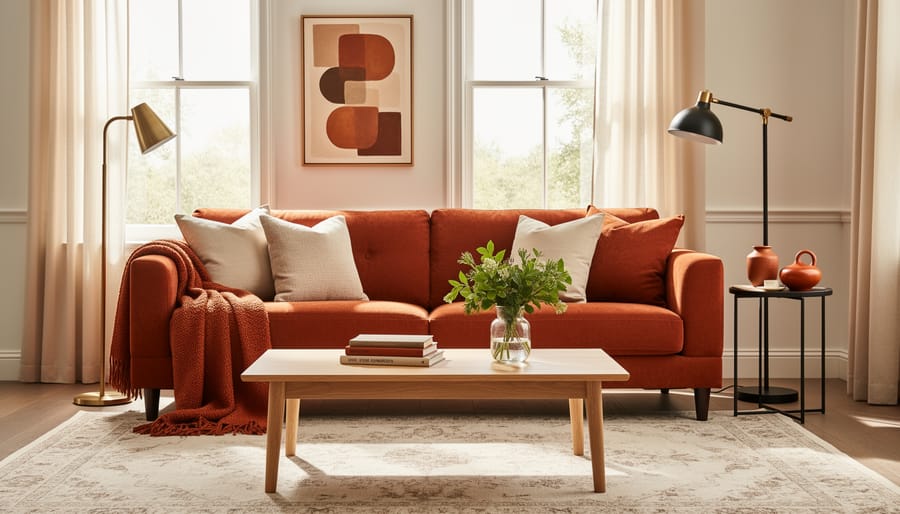
Living rooms thrive on burnt orange because it triggers immediate warmth without the aggressive energy of brighter oranges. A burnt orange accent wall behind your sofa anchors the room and makes conversation areas feel naturally inviting, especially when paired with soft lighting that plays up its earthy undertones.
Start with throw pillows if you’re testing the waters. Three or four burnt orange cushions scattered across a neutral sofa create focal points that draw people in and make the space feel curated rather than staged. The color works year-round but shines particularly during cooler months as part of cozy winter decor schemes.
For bolder statements, consider a burnt orange velvet armchair or ottoman. The texture amplifies the color’s richness and gives guests a natural gathering point. Position it near a window where natural light shifts throughout the day and you’ll notice how burnt orange adapts, looking terracotta-like in morning sun and deeper, almost rust-toned by evening. This chameleon quality makes it surprisingly versatile for spaces that serve multiple moods.
Bedrooms and Private Retreats
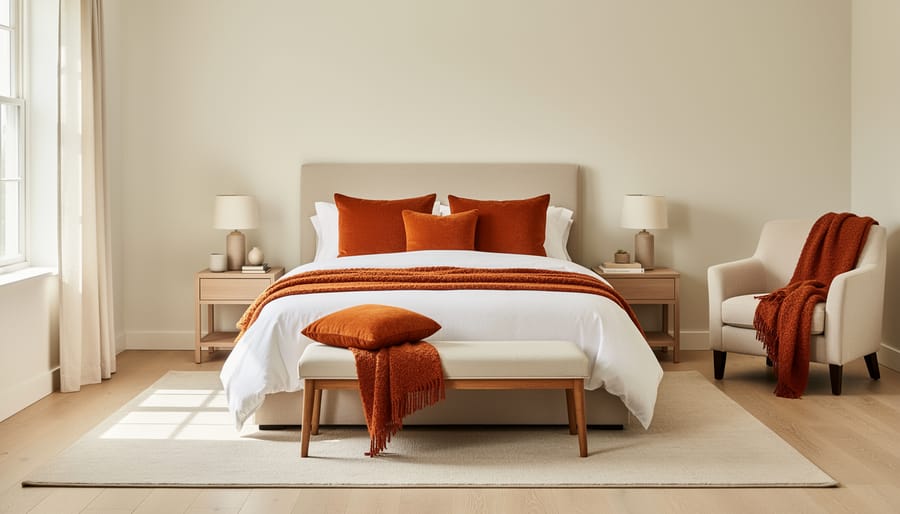
Bedrooms thrive on burnt orange’s inherent coziness, it wraps the space in warmth without the energy of brighter shades. Start with bedding: a burnt orange duvet cover or throw blanket layered over neutral sheets creates an instant cocoon effect. If an entire burnt orange bed feels bold, try accent pillows in varying textures, linen, velvet, chunky knit, to build depth while keeping the palette contained.
Curtains offer another high-impact option. Burnt orange drapes filter natural light beautifully, casting a soft glow that enhances the room’s restful quality. Research supports warm tones in sleep spaces, with studies noting the benefits of orange light for sleep environments. Pair curtains with cream walls and dark wood furniture for a grounded, spa-like feel.
Accessories complete the look without commitment. A burnt orange reading chair in the corner, a textured area rug beside the bed, or terracotta ceramic lamps on nightstands add warmth in doses. The key is balance, burnt orange should feel like a comforting presence, not a focal point demanding attention. Layer it gradually, and the bedroom becomes a retreat that invites lingering.
Kitchens and Dining Areas
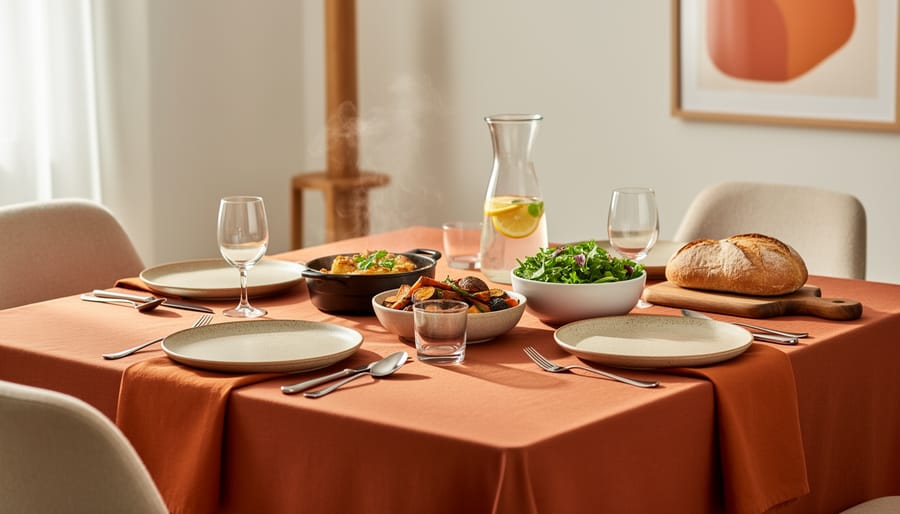
Kitchens and dining areas thrive with burnt orange accents because the color naturally stimulates appetite and creates that gather-round atmosphere every host wants. Start with the easiest swap: kitchen towels, oven mitts, and table runners in burnt orange instantly warm up the space without any commitment. They’re functional pieces you already need, so why not make them beautiful too?
Dishware offers another approachable entry point. A set of burnt orange dinner plates or salad bowls adds visual interest to your table setting, and you can mix them with existing white or cream pieces rather than replacing everything at once. Ceramic serving bowls in this shade look particularly striking against wooden cutting boards or marble countertops.
For renters or anyone hesitant about permanent changes, consider burnt orange bar stools, chair cushions, or even a small appliance like a kettle or stand mixer. These items inject personality while remaining easy to move or replace. If you’re ready for something bolder, a burnt orange pendant light above the dining table becomes an instant focal point that bathes the room in warm, flattering light during evening meals.
The key is balancing burnt orange with plenty of neutral surfaces. Too much can feel overwhelming in a food-preparation space, but strategic touches create energy without chaos.
Pairing Burnt Orange with Other Colors
Burnt orange plays well with a surprising range of colors, shifting in mood and intensity depending on what you pair it with. The key is understanding how each combination changes the room’s energy, and choosing based on the feeling you want to create.
Pairing burnt orange with warm cream, beige, or soft ivory creates an earthy, grounded palette that feels instantly comfortable. This combination lets the orange breathe without competing for attention, making it ideal when you want warmth without drama. Think terracotta pots on cream shelving or a burnt orange throw draped over a linen sofa. The effect is organic and approachable, reminiscent of sun-baked clay and natural fibers.
For a bolder, more contemporary look, combine burnt orange with deep teal or forest green. These jewel tones create rich contrast while maintaining warmth, the coolness of blue-greens balances the heat of orange without canceling it out. A burnt orange velvet chair against teal walls, or forest green curtains framing burnt orange accent pillows, feels sophisticated and layered. This pairing works especially well in spaces where you want to make a statement without tipping into flashy.
| Complementary Color | Style Achieved | Best Room Types |
|---|---|---|
| Cream, Beige, Ivory | Earthy, relaxed, organic | Living rooms, bedrooms |
| Teal, Forest Green | Bold, sophisticated, jewel-toned | Dining rooms, home offices |
| Charcoal, Navy | Modern, dramatic, masculine | Living rooms, studies |
| Blush Pink, Coral | Warm, layered, sunset-inspired | Bedrooms, entryways |
Burnt orange also thrives alongside darker neutrals like charcoal gray or navy blue. These combinations feel modern and grounded, with the orange providing warmth against cooler, more serious tones. A navy accent wall with burnt orange artwork, or charcoal bedding with orange decorative pillows, creates visual tension that keeps a room interesting.
For those who love color layering, burnt orange harmonizes beautifully with adjacent warm hues like blush pink, rust, or coral. This approach builds a sunset-inspired gradient that feels cohesive and enveloping. The trick is varying the saturation, use burnt orange as your anchor and lighter or deeper tones as supports. This works particularly well in bedrooms and cozy nooks where you want to wrap the space in warmth.
Burnt Orange Decor Items to Start With
Starting with burnt orange doesn’t require a complete room makeover. The smartest approach is choosing pieces that deliver visual punch while letting you test the color in your space.
Under $50: Low-Risk, High-Impact Accents
Throw pillows remain the easiest entry point, swap out your existing cushions and you’ve instantly warmed up a sofa or bed. Look for textured options in velvet or linen that play up burnt orange’s inherent richness. Ceramic vases work similarly well, especially clustered in groups of three on shelves or mantels.
Tea towels and table runners transform kitchens and dining areas with minimal commitment. You can rotate them seasonally if the color feels too bold long-term. Candles in terracotta-colored holders add both warmth and ambiance, particularly during evening hours when the flickering light intensifies the orange glow.
$50-$200: Statement Pieces That Anchor a Room
At this level, consider throw blankets in chunky knits or woven textures that drape over furniture arms. They’re substantial enough to define a seating area without the permanence of reupholstery.
Area rugs with burnt orange as an accent color rather than the dominant shade give you flexibility, the pattern dilutes the intensity while still introducing the warmth. Look for geometric or abstract designs where burnt orange appears alongside neutrals.
Table lamps with burnt orange ceramic bases or fabric shades create focal points on side tables. The warm light filtering through an orange shade amplifies the cozy effect, especially in corners that need livening up.
$200+: Investment Pieces for Committed Spaces
Accent chairs upholstered in burnt orange velvet or leather make bold statements in living rooms or bedrooms. Choose classic silhouettes rather than trendy shapes so the piece remains relevant even if color preferences shift.
Large-scale artwork featuring burnt orange tones ties together entire color schemes. Original paintings or high-quality prints become conversation pieces that justify their price through both visual impact and longevity.
Whatever your budget, start with one room and one price point. Let that first piece guide your next choice rather than buying everything at once.
DIY Burnt Orange Projects You Can Tackle This Weekend
Ready to bring burnt orange into your home without a major commitment? These three weekend projects require minimal sewing skills, basic supplies, and just a few hours of your time. Each offers a different way to test-drive this warm hue in your space.
No-Sew Pillow Covers
Transform plain throw pillows into burnt orange accents with fabric glue and scissors. You’ll need half a yard of burnt orange fabric (cotton canvas or linen works beautifully), fabric adhesive, and pillow inserts you already own.
- Lay your fabric face-down and center the pillow insert on top, leaving about two inches of fabric extending beyond all edges.
- Fold the fabric around the pillow as if wrapping a present, creasing the edges sharply for clean lines.
- Remove the insert and run a line of fabric glue along the folded edges, pressing firmly for 30 seconds.
- Let the glue dry for an hour, then slip the cover over your insert and arrange the seamed side against your couch.
The whole process takes about 90 minutes including drying time. Start with one or two pillows rather than replacing an entire couch’s worth, burnt orange makes a statement, so a little goes far.
Hand-Painted Terracotta Pots
Plain terracotta pots become instant focal points with burnt orange paint. Grab acrylic craft paint in burnt orange (mix red, yellow, and a touch of brown if you can’t find the exact shade), a foam brush, and any size pot from four inches up.
Clean your pot with a damp cloth and let it dry completely. Apply two thin coats of paint rather than one thick layer, letting each dry for about 30 minutes. The terracotta’s natural texture shows through slightly, adding depth to the color. Leave the rim unpainted for a two-tone effect, or coat the entire exterior for bold impact. These easy maximalist DIYs work especially well clustered on a kitchen windowsill or flanking an entryway.
Macramé Wall Hanging
A simple macramé piece introduces burnt orange at eye level without paint or commitment. You need a wooden dowel (12 to 18 inches), burnt orange cotton cord (about 80 yards of 3mm cord), and scissors.
Cut eight strands of cord, each ten feet long. Fold each in half and loop it over the dowel using a basic lark’s head knot. Create rows of square knots down the length, leaving the bottom strands loose and uneven for a bohemian finish. Trim the ends at varying lengths. The entire project takes two to three hours, even for complete beginners, and adds textural warmth above a console table or bed.
Real Homes Embracing Burnt Orange Around the World
Seeing burnt orange in real homes reveals how adaptable this shade can be across different design philosophies and climates.
In Stockholm, interior designer Emma Lindgren transformed her 650-square-foot apartment into a study in balance. She introduced burnt orange through a single vintage velvet sofa against crisp white walls and pale blonde wood floors. The color becomes the room’s anchor without fighting for attention. Two burnt orange ceramic vases on floating shelves echo the sofa, creating visual rhythm. Her approach proves you don’t need multiple burnt orange elements, one substantial piece against a neutral backdrop makes a powerful statement. The key takeaway: let burnt orange be your room’s focal point rather than trying to distribute it evenly throughout the space.
Travel south to Santa Fe, and architect Carlos Mendoza’s home shows burnt orange in its natural habitat. His living room pairs burnt orange leather armchairs with adobe walls in soft terracotta and woven textiles in rust and cream. Here, burnt orange isn’t an accent, it’s part of a cohesive earth-toned palette that feels grounded and expansive. Exposed wooden beams overhead and a jute rug underfoot complete the desert-inspired look. The lesson: burnt orange thrives when surrounded by other warm, natural materials. If you love layered color rather than stark contrast, build a tonal story around it.
In a converted Toronto warehouse loft, designer Maya Chen took the opposite approach. She used burnt orange as a bold disruptor in an otherwise industrial space. A burnt orange geometric area rug defines the seating area beneath concrete ceilings and exposed ductwork. Black metal shelving, charcoal gray sectional, and chrome lighting fixtures provide cool contrast. Three burnt orange throw pillows tie the rug into the seating arrangement. This demonstrates how burnt orange can soften hard edges and inject personality into minimal, masculine spaces without compromising their edge.
These homes span continents and styles, yet they share one insight: burnt orange adapts to your existing aesthetic rather than demanding you redecorate around it. Choose your approach based on whether you want burnt orange to ground, blend, or energize your space.
Burnt orange isn’t just a trend passing through, it’s a color that brings genuine warmth and personality to any space. The beauty of working with this shade is that you don’t need to commit to a full room makeover to feel its impact. Start with a single throw pillow, swap out your dish towels, or paint one terracotta pot. These small experiments let you test the waters and discover how burnt orange transforms your space without the pressure of permanence.
What makes burnt orange special is its versatility. It works in modern lofts and cozy cottages alike, adapting to your existing style while adding that inviting glow homes often crave. Whether you lean into bold statement pieces or prefer subtle accents, this shade rewards both approaches.
Ready to explore more ways to bring warmth into your home? Discover additional inspiration and practical ideas across the full spectrum of orange tones, from soft peach to vibrant tangerine, and find the perfect shade for your space.